Fake Banner
Environmental Groups Back In Court To Help Fellow Rich White People

The Usual Suspects of the anti-science movement, Center for Biological Diversity(1), Environmental...
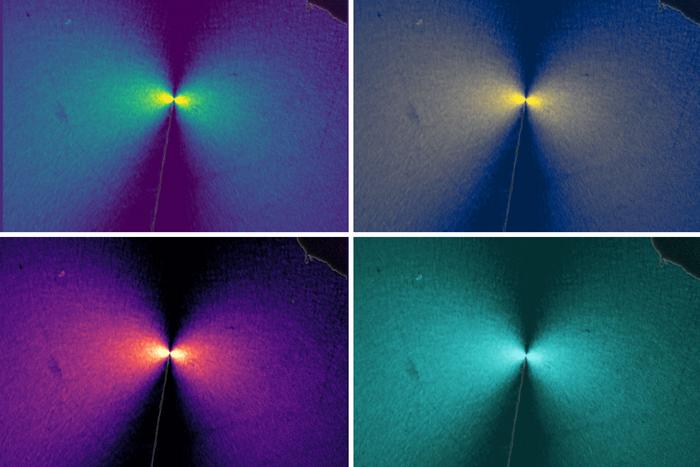
Batteries Are Stuck In The 1990s Because Solid-State Batteries Keep Short-Circuiting

The electric car industry is held back by reliance on conventional energy. Despite spending trillions...
Dogs Have Been 'Man's Best Friend' For 14,000 Years

The bond between humans and dogs is one of the oldest stories in anthropology. It may also be a...

Is This The D'Artagnan Made Famous In 'The Three Musketeers' By Dumas?

“I have lost D’Artagnan, in whom I had every confidence,” wrote King Louis XIV to his Queen...

User picture.
picture for Tommaso Dorigopicture for Fred Phillipspicture for picture for Hontas Farmerpicture for Atreyee Bhattacharyapicture for Patrick Lockerby
Hank CampbellRSS Feed of this column.

I founded Science 2.0® in 2006 and since then it has become the world's largest independent science communications site, with over 300,000,000 direct readers and reach approaching one billion. Read More »

Blogroll

Robin Thicke may have sung "Blurred Lines" and appeared in a teenage fantasy video with a lot of naked women, but when a photo was revealed of him in a suggestive situation with another woman, he found that the line was actually not all that blurry to his wife.(1)

What changed? She had been fine with his canoodling before. He has no idea and men meeting women across the nation are just as confused about where their blurred lines are. 

Science is not only compatible with spirituality; it is a profound source of spirituality - Carl Sagan

I missed the big Carl Sagan thing when it happened. I was in high school when Cosmos came out, we lived in the country and if you wanted to watch a different television network, you had to go up into the attic and turn a giant antenna with a pipe wrench. Sports and girls and D&D were more of a priority than television.

Yet even though I didn't watch it when it came out, shortly afterward I could still tell you who said "billions and billions" with that special emphasis.  That and riffs on "Who Shot J.R.?" were big that year.
Statisticians have a rule of thumb for calibrating claims made in humanities and science papers alike. Andrew Gelman, for example, talks about statistical significance filter - "If an estimate is statistically significant, it’s probably an overestimate."

A good thing to remember when you read weak observational studies, psychology surveys and, in modern times, a shocking number of epidemiology papers.

For health, you can use a different rule of thumb: Does Joe Mercola sell it?

If he does, it is probably suspect.

When I have done workshops for aspiring science journalists/writers, I have three pieces of advice. The first is: Don't defend science. It doesn't need defending.

But it's easier said then done. If you spend some time in science media culture, you will invariably find a person saying something pithy like "Science: It works, bitches" but then raging about some attack on science and defending it with shrill verbage and name-calling and conspiracy theories.

If science works, you don't need to defend it with claims that Big Oil is funding climate denial or that homeopaths and Big Organic fund vaccine and GMO denial.
Here's an intellectual puzzle; which is more real, the viability of wind power as anything more than a sustainable gimmick or Wind Turbine Syndrome?
While former Energy Secretary Stephen Chu is a fine scholar, he seemed to be lost when it came to drafting a federal energy policy that was evidence-based.

It's easy for an academic to postulate that $9 a gallon gas will be 'good' for us but when it comes to managing a national constituency, including a lot of people who will be ruined by expensive gasoline, there has to be some real thought before actions are taken. Government is not a sandbox.