Fake Banner
Living At The Polar Circle

Since 2022, when I got invited for a keynote talk at a Deep Learning school, I have been visiting...

Conferences Good And Bad, In A Profit-Driven Society

Nowadays researchers and scholars of all ages and specialization find themselves struggling with...

USERN: 10 Years Of Non-Profit Action Supporting Science Education And Research

The 10th congress of the USERN organization was held on November 8-10 in Campinas, Brazil. Some...

Baby Steps In The Reinforcement Learning World

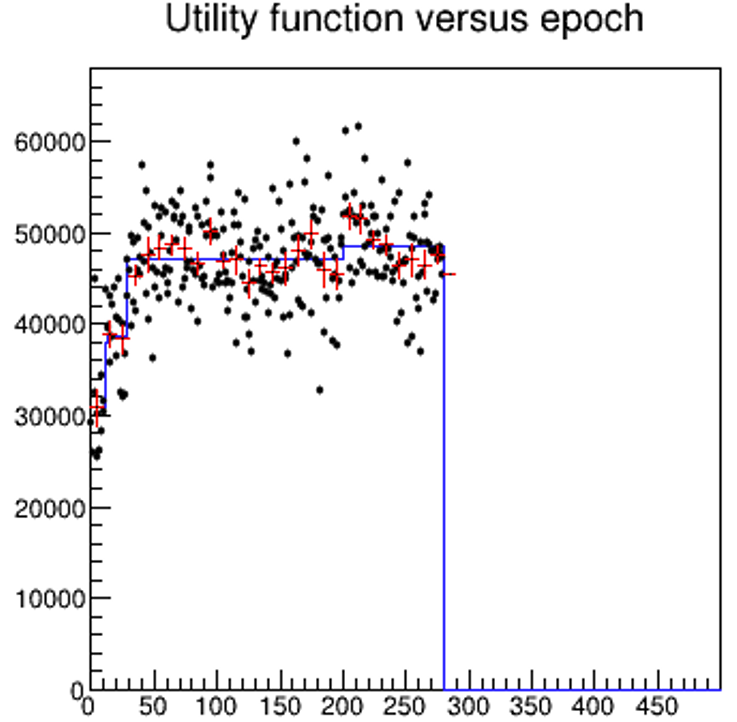
I am moving some baby steps in the direction of Reinforcement Learning (RL) these days. In machine...

User picture.
picture for Hank Campbellpicture for Patrick Lockerbypicture for Heidi Hendersonpicture for Bente Lilja Byepicture for Sascha Vongehrpicture for Johannes Koelman
Tommaso DorigoRSS Feed of this column.

Tommaso Dorigo is an experimental particle physicist, who works for the INFN at the University of Padova, and collaborates with the CMS and the SWGO experiments. He is the president of the Read More »

Blogroll
Next month I will be giving three lectures to high-school students on using artificial intelligence for research in fundamental physics, and as usual I am not yet worried by the schedule enough to start thinking at the presentations. Except that in one case the school professor who organizes the event asked me for some preliminary task for the students "to get them in the mood" of the contents of the lecture. 
A number of Master courses in the STEM area mandate students to find a research project abroad to which they participate for 3-6 months. Many of the students find projects that arise their interest through internet searches- at least this is the way I got to know a few of them: as I regularly put details of my research progress in this blog (among other places), I am evidently a visible target. I do not complain about this: many of the students who contact me end up contributing to the projects they get embedded in. In return, they usually get to add a few lines to their CV, and maybe authorship of one or two papers.

In recent times, artificial intelligence has become ubiquitous. Besides powering our cellphones, directing what advertisements we get when we browse internet or read our emails, and creating content in the media, AI-powered hardware is more and more widespread, including self-driving vehicles, home appliances, and a host of other systems for industrial use.

Did you recently finish a Master in a scientific discipline, and wish to do some research before deciding whether to embark in a Ph.D.? Do you fancy coming to Padova and work with me and a team of physicists, computer scientists, and astrophysicists on detector optimization? Do you like the idea of traveling to Kaiserslautern for significant periods during the internship, to work under guidance of Prof. Nicolas Gauger at RPTU? Or do you know somebody to which the above might apply? Then please read on.
The 8th Congress of the USERN Organization took place during the past three days (November 8-10, 2023) at the RAU University in Yerevan, Armenia, and it was a complete success, which has left me overwhelmed by the amount of great interdisciplinary science, fantastic art in multiple forms, and the intensity and rate of positive feelings I received throughout the event. I offer below a short report of the event and my impressions, which may of course be biased by being the President of this fantastic network, but does feel a rather trustworthy report now that I read it again.

Since most of the building blocks of our own body are protons, the above title might disturb sensitive readers. On the other hand, describing a proton as a bag of garbage has several merits, as it is a fruitful analogy that may be carried forward when we wish to examine experiments that studied the structure of matter. I will explain what I mean in a moment below.