Fake Banner
Travel With Two Infants

The other day I traveled with Kalliopi and our two newborns to Padova from Lulea. After six full...
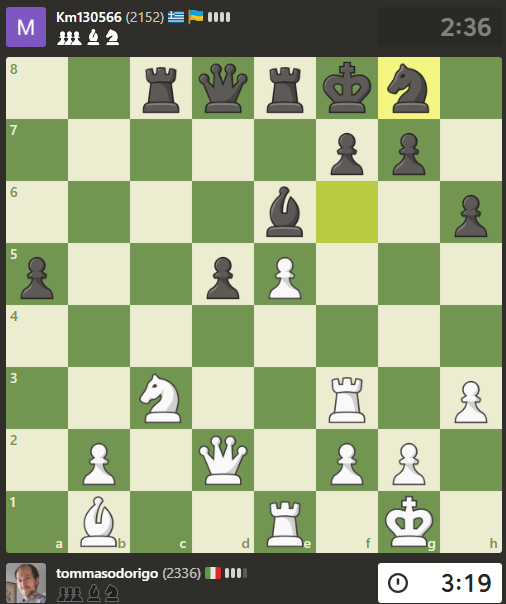
A Nice Little Combination

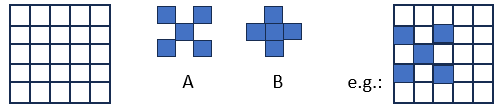
Although I have long retired from serious chess tournaments (they take too much time, a luxury...
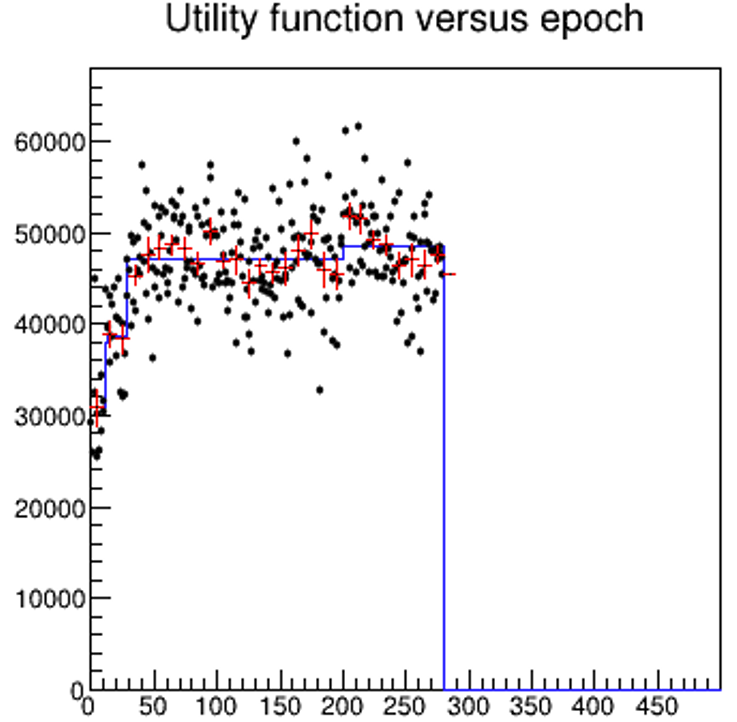
The Strange Case Of The Monotonous Running Average

These days I am putting the finishing touches on a hybrid algorithm that optimizes a system (a...
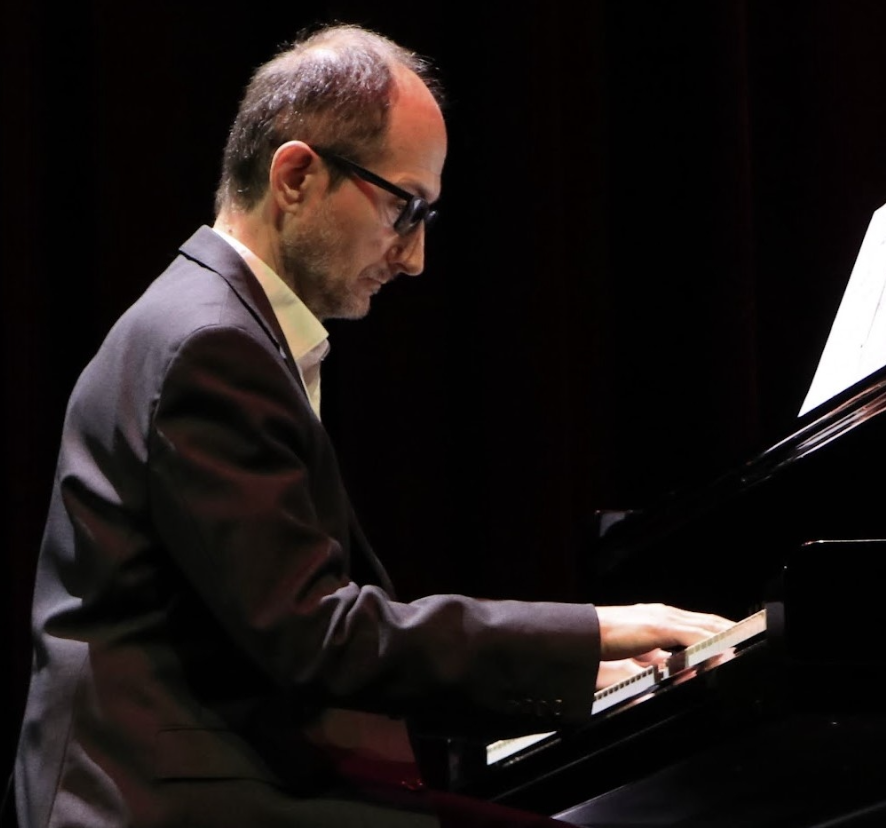
Turning 60

Strange how time goes by. And strange I would say that, since I know time does not flow, it is...

User picture.
picture for Hank Campbellpicture for Patrick Lockerbypicture for Heidi Hendersonpicture for Bente Lilja Byepicture for Sascha Vongehrpicture for Johannes Koelman
Tommaso DorigoRSS Feed of this column.

Tommaso Dorigo is an experimental particle physicist, who works for the INFN at the University of Padova, and collaborates with the CMS and the SWGO experiments. He is the president of the Read More »

Blogroll
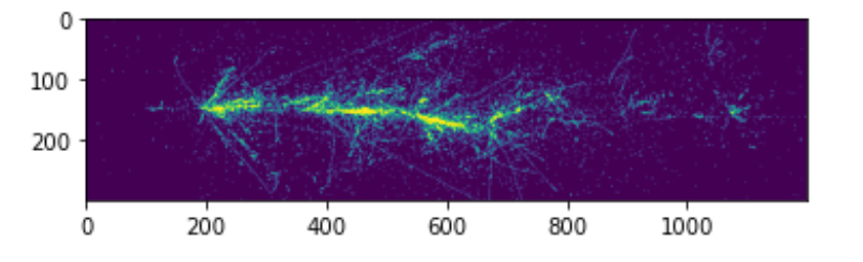
A calorimeter in physics is something that measures heat. However, there are mainly two categories of such objects: ones that measure macroscopic amounts of heat, and ones that measure the heat released by subatomic particles when they smash against matter. I am sure you guess which is the class of instruments I am going to discuss in this article.
A further distinction among calorimeters for particle physics is the one concerning the kind of particles these devices aim to measure. Electromagnetic calorimeters target electrons and photons, and hadronic calorimeters target particles made of quarks and gluons. Here I will discuss only the latter, which are arguably more complex to design.

Smashing protons
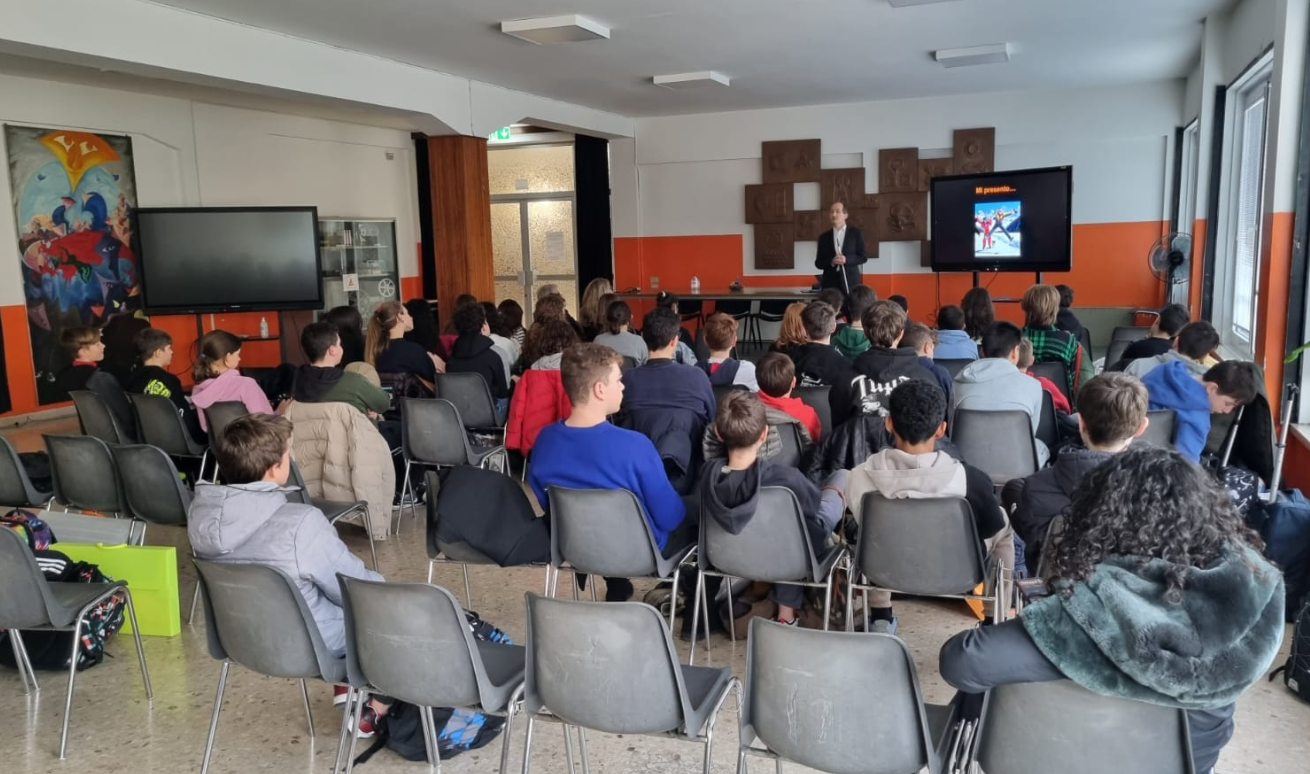
In the past two weeks I visited two schools in Veneto to engage students with the topic of Artificial Intelligence, which is something everybody seems to be happy to hear about these days: on the 10th of January I visited a school in Vicenza, and on the 17th a school in Venice. In both cases there were about 50-60 students, but there was a crucial difference: while the school in Venezia (the "Liceo Marco Foscarini", where I have been giving lectures in the past within the project called "Art and Science") was a classical liceum and the high-schoolers who came to listen to my presentation were between 16 and 18 years old, the one in Vicenza was a middle school, and its attending students were between 11 and 13 years old. 
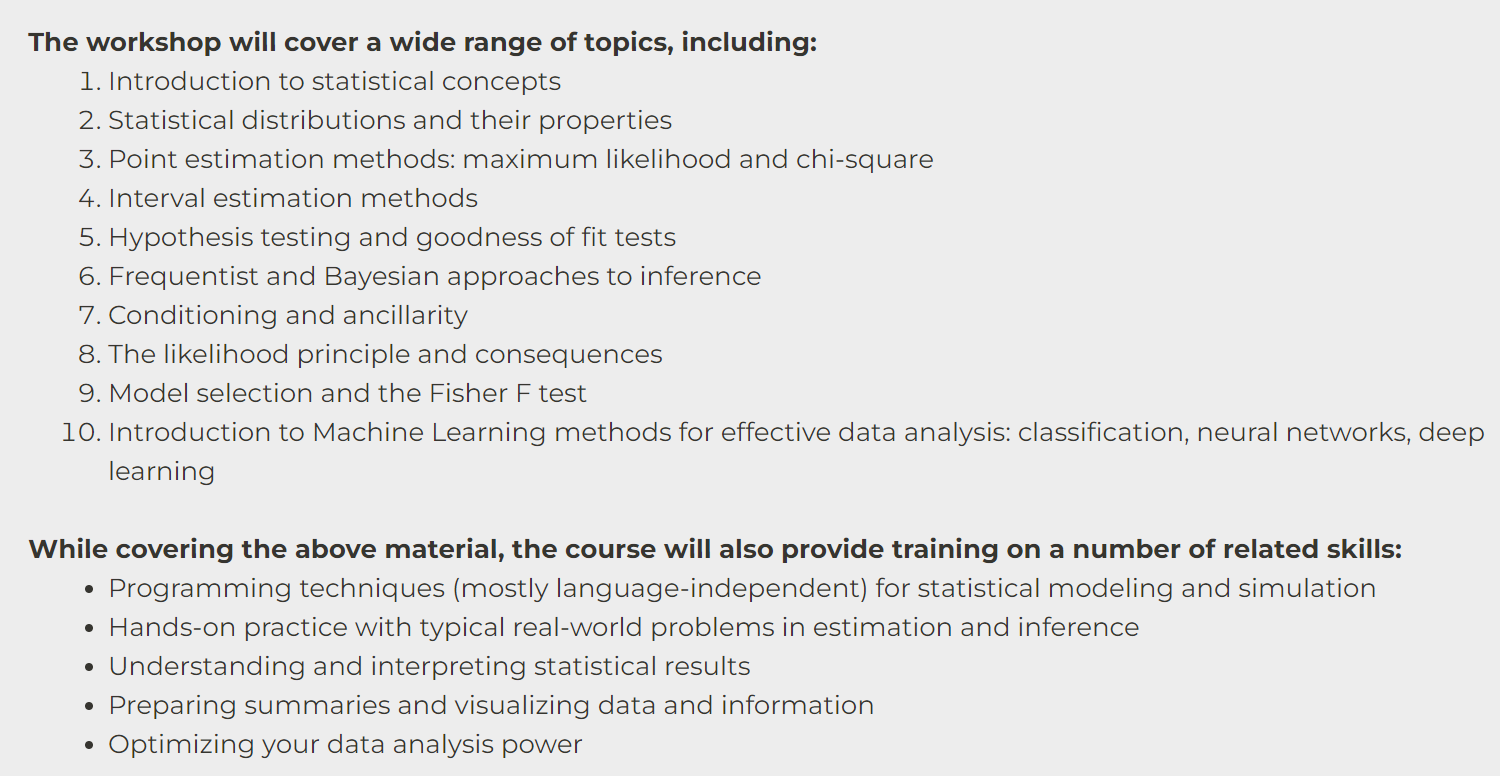
From tomorrow onwards (once or twice a week until February 5), I will be giving an online course on the topic of "Statistical Methods for Fundamental Science" for the INSTATS organization. This is a 5-day, 15-hour set of lectures that I put together to suit the needs of students and researchers who work in any scientific discipline, who wish to improve their understanding and practice of statistical methods for data analysis.
2023 is over and I am looking back at my achievements and failures, to take stock and try to learn something from the matter. This blog looks like a reasonably good place for such an exercise, so I am writing here an inventory of what happened to me in the past 12 months. Sorry if this sounds very boring!
Next month I will be giving three lectures to high-school students on using artificial intelligence for research in fundamental physics, and as usual I am not yet worried by the schedule enough to start thinking at the presentations. Except that in one case the school professor who organizes the event asked me for some preliminary task for the students "to get them in the mood" of the contents of the lecture. 
A number of Master courses in the STEM area mandate students to find a research project abroad to which they participate for 3-6 months. Many of the students find projects that arise their interest through internet searches- at least this is the way I got to know a few of them: as I regularly put details of my research progress in this blog (among other places), I am evidently a visible target. I do not complain about this: many of the students who contact me end up contributing to the projects they get embedded in. In return, they usually get to add a few lines to their CV, and maybe authorship of one or two papers.