Fake Banner
Travel With Two Infants

The other day I traveled with Kalliopi and our two newborns to Padova from Lulea. After six full...
A Nice Little Combination

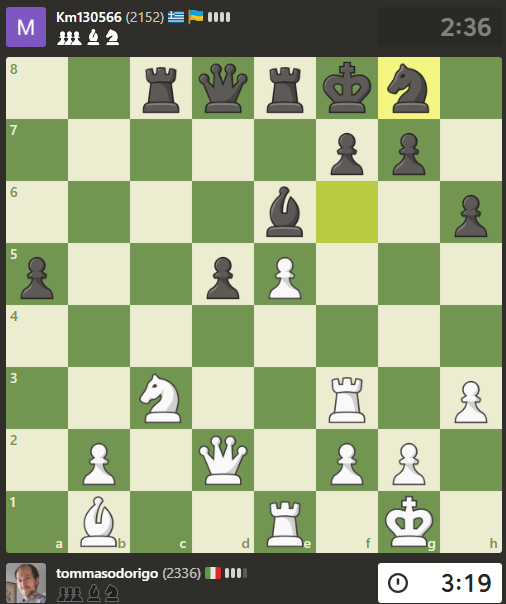
Although I have long retired from serious chess tournaments (they take too much time, a luxury...
The Strange Case Of The Monotonous Running Average

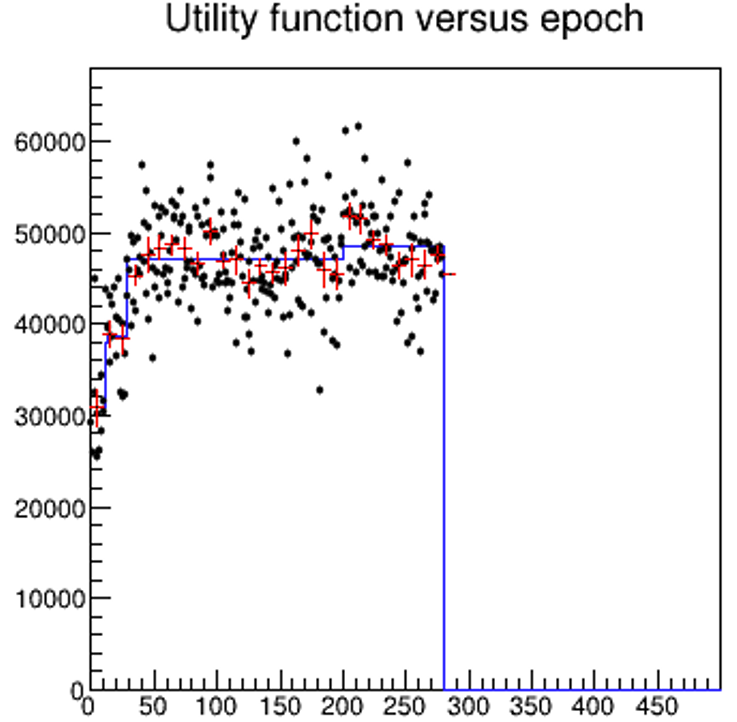
These days I am putting the finishing touches on a hybrid algorithm that optimizes a system (a...
Turning 60

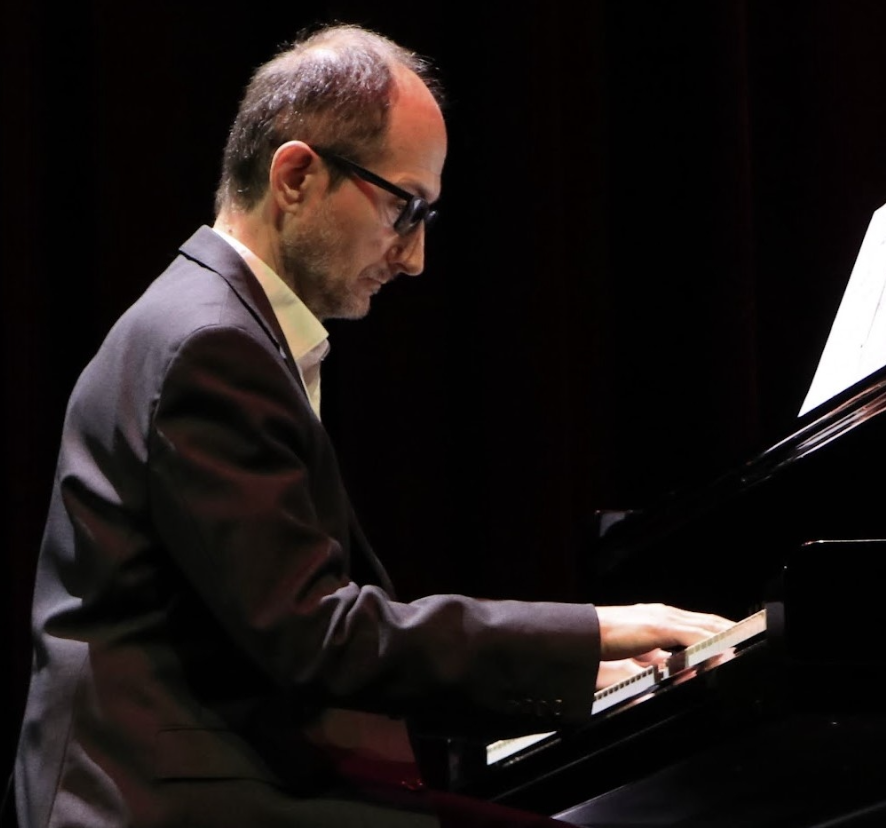
Strange how time goes by. And strange I would say that, since I know time does not flow, it is...

User picture.
picture for Hank Campbellpicture for Patrick Lockerbypicture for Heidi Hendersonpicture for Bente Lilja Byepicture for Sascha Vongehrpicture for Johannes Koelman
Tommaso DorigoRSS Feed of this column.

Tommaso Dorigo is an experimental particle physicist, who works for the INFN at the University of Padova, and collaborates with the CMS and the SWGO experiments. He is the president of the Read More »

Blogroll
... if you are a researcher in physics or astrophysics and you are working with machine learning, that is.

Between September 23 and 25 - just when summer is over - we will meet in Valencia, Spain, to discuss the latest developments in deep learning applications to optimization of experiments in fundamental science. This is the fourth workshop of the MODE Collaboration, which focuses on a new frontier of application of deep learning: co-design and high-level optimization, and the tools to pull it off.


By and large, particle physicists confronted with the need to awe and enthuse an audience of laypersons will have no hesitation in choosing to speak about the Higgs boson and its mysteries - undoubtedly a fascinating story that requires one to start with the 1960ies and the intuition of a handful of theoretical physicists, and then grows epic in a crescendo of colliders that sought and missed the Higgs boson, and then the LHC which finally found the elusive signal of production and decay of that particle.
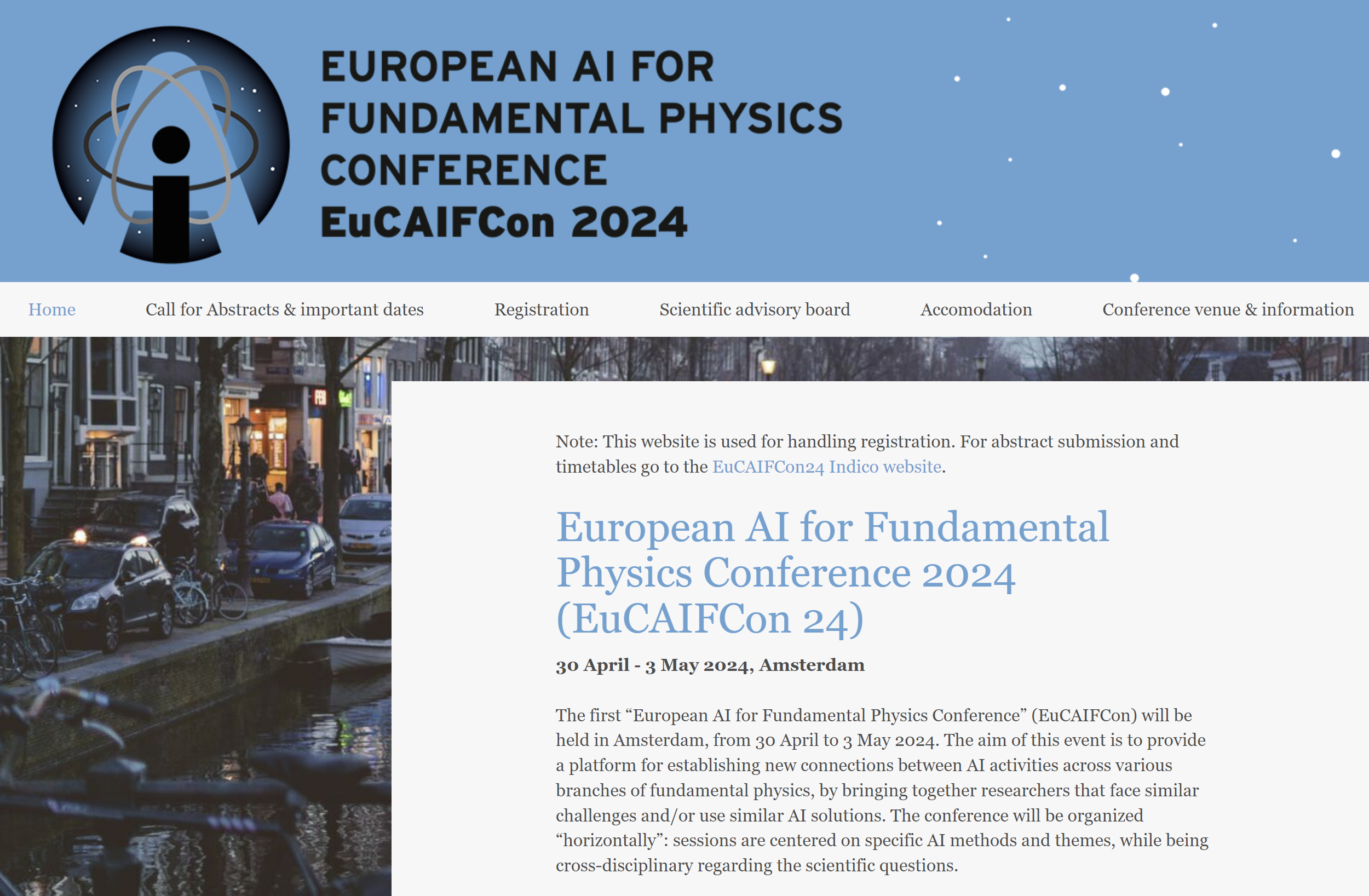
Last week I was in Amsterdam, where I attended the first European AI for Fundamental Physics conference (EUCAIF). Unfortunately I could not properly follow the works there, as in the midst of it I got grounded by a very nasty bronchial bug. Then over the weekend I was able to drag myself back home, and today, still struggling with the after-effects, am traveling to Rome for another relevant event.
From April 30 to May 3 more than 300 researchers in fundamental physics will gather in Amsterdam for the first edition of the EUCAIF conference, an initiative supported by the APPEC, NuPecc and ECFA consortia, which is meant to structure future European research activities in fundamental physics with Artificial Intelligence technologies.


In a world where we live hostages of advertisement, where our email addresses and phone numbers are sold and bought by companies eager to intrude in our lives and command our actions, preferences, tastes; in a world where appearance trumps substance 10 to zero, where your knowledge and education are less valued than your looks, a world where truth is worth dimes and myths earn you millions - in this XXI century world, that is, Universities look increasingly out of place. 
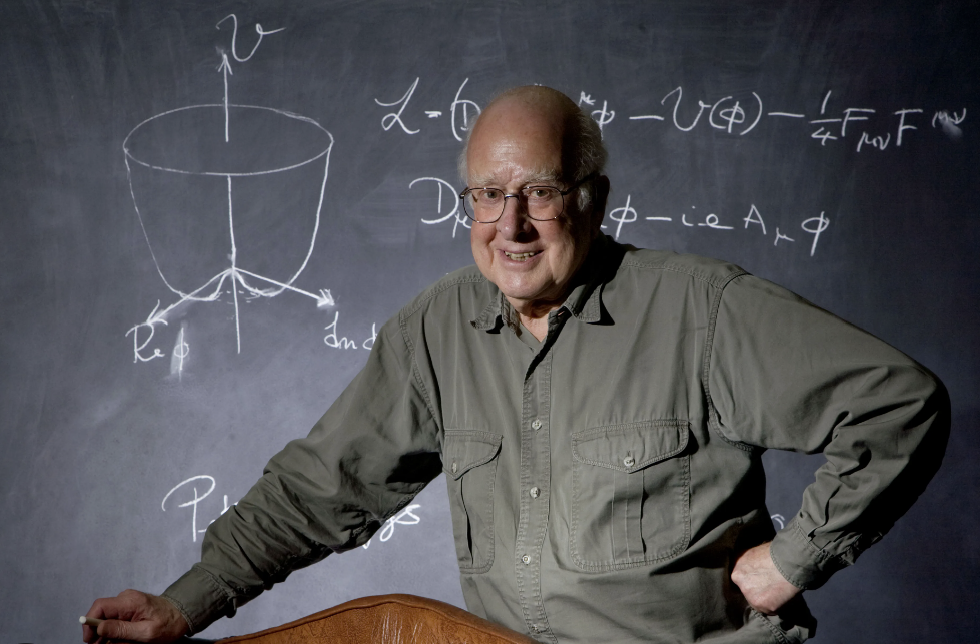
Peter Higgs passed away yesterday, at the age of 94. The scottish physicist, a winner of the 2013 Nobel Prize in Physics together with Francois Englert, hypothesized in 1964 the existence of the most mysterious elementary particle we know of, the Higgs boson, which was only discovered 48 years later by the ATLAS and CMS collaborations at the CERN Large Hadron Collider.