You may be wondering, upon reading the above title of this post, what I am after today: the top quark has been around for 25 years now, and there is no long-standing controversy on who discovered it -almost. Well, I will come to that in due time, but to explain quickly what I mean for those of you in a hurry, I am referring to how the top discovery is cited in the very important Wikipedia pages about that subatomic particle, as well as those of the relevant experiments that claimed its observation in 1995.
Quarks
I was very saddened the other day upon learning from a colleague that Teresa Rodrigo Anoro passed away. Teresa was a professor at IFCA, University of Cantabria in Santander, Spain, where she held the position since 1995. At the IFCA she led a strong team of experimental particle physicists who collaborate to the CMS experiment at the CERN LHC. Her premature loss leaves a very large void at her institution in particular, as well as in the development of Spanish particle physics in general, where she had a big role.
These days I have been writing a chapter of a book on machine learning for physics, and in so doing I have found myself pondering on how to best explain, in very simple terms, the nocuous effect that model uncertainty may have on the result of a classification task. So I decided to create a toy example with the purpose of introducing the discussion.
The example is meant to have two attractive properties: be analytically solvable in closed form - meaning that one may compute with paper and pencil all the relevant results - and be described by simple-to-interpret graphs. Below I will describe what I came up with, but first let me explain what are the points I wish to focus on.
The isolation that most of the civilized world has been subjected to, during the past few weeks, has produced a number of nasty effects, first and foremost on our economies, but it has also had a few positive ones. One of them is, at least in my case, an urge to use the extra time I have in my hands in a creative way.
In
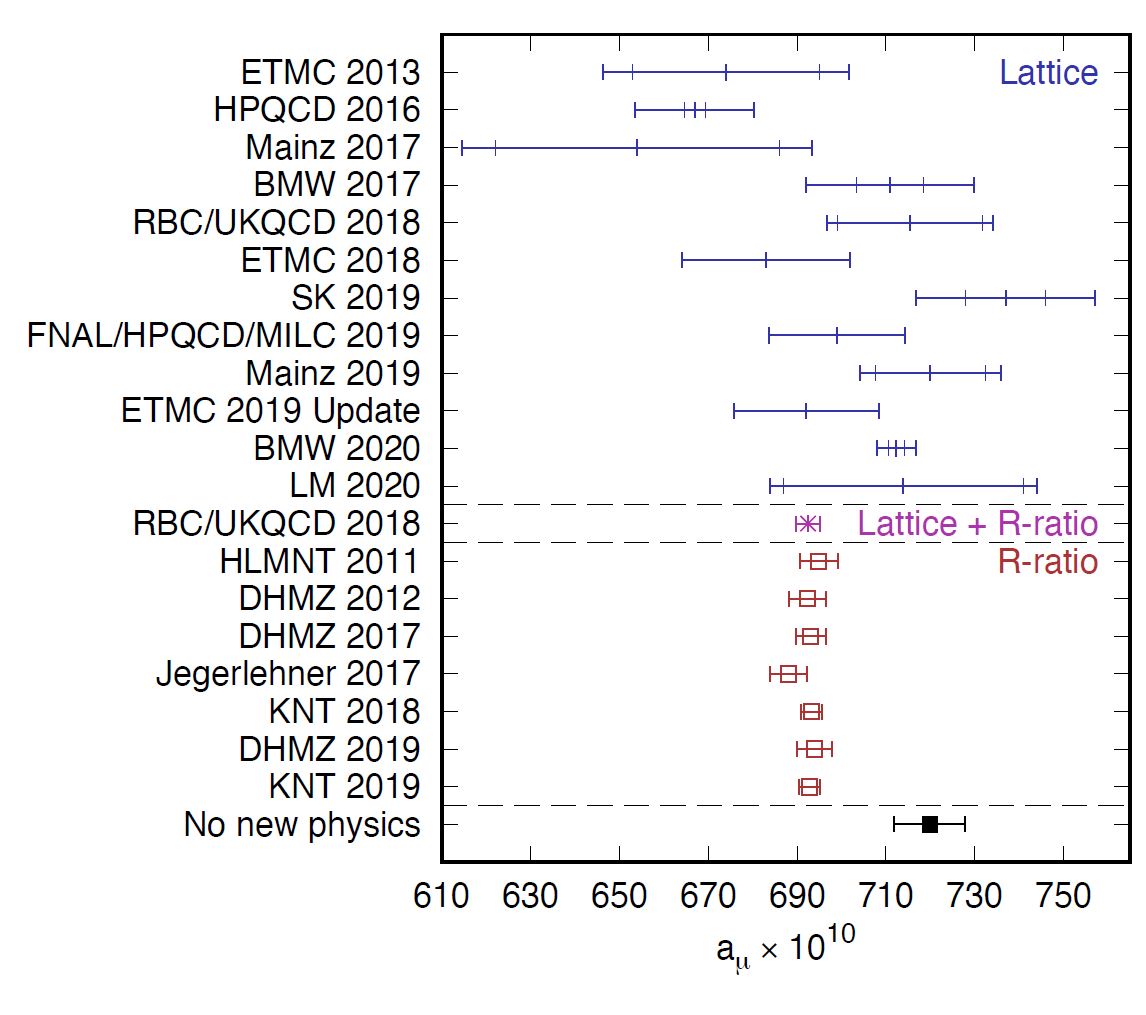
a recent post I discussed the conclusions of a study aimed at computing a small but very important correction to the theoretical prediction of the anomalous magnetic moment of the muon. The interest of this lays in the fact that the latter quantity is virtually the only one for which the Standard Model prediction exhibits a tension with the current experimental measurements among all the measurable parameters of the subnuclear world.
First off, let me say I do not wish to sound disrespectful to anybody here, leave alone my colleagues, to most of which goes my full esteem and respect (yes, not all of them, doh). Yet, I feel compelled to write today about a sociological datum I have paid attention to, in these difficult times of isolation, when all of us turn to the internet as our main outlet for rants, logorrhea, or to make the impending threat of a global catastrophe less heavy by sharing it with our peers, to exorcise our fears.


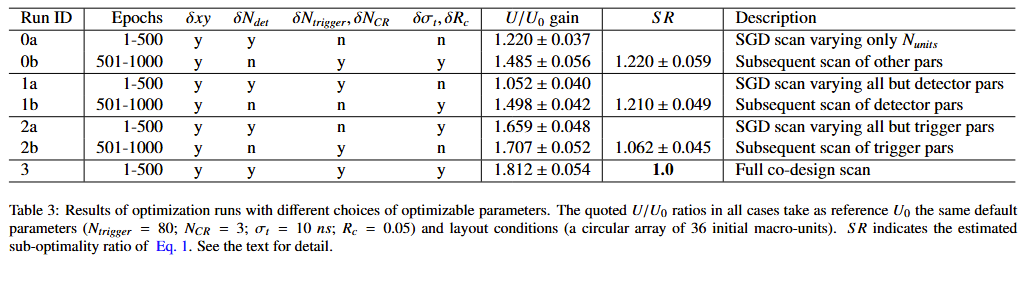 Co-Design Of Scientific Experiments
 Travel With Two Infants
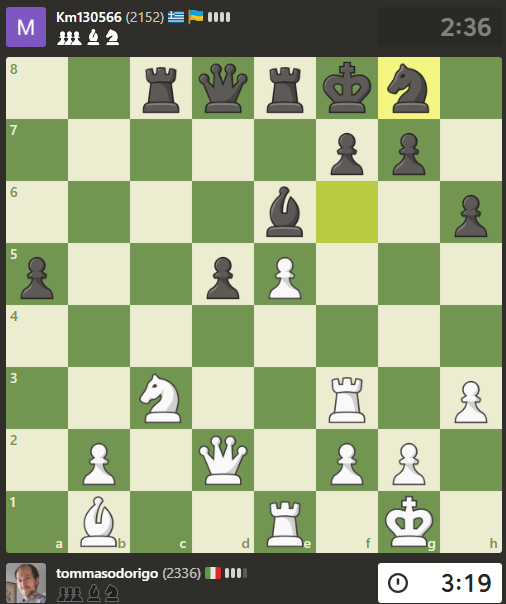 A Nice Little Combination
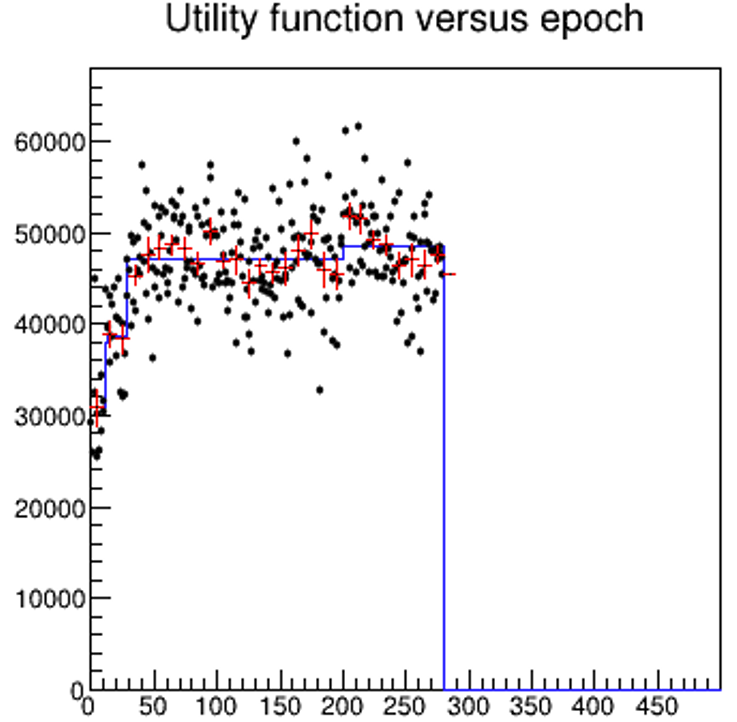 The Strange Case Of The Monotonous Running Average