Fake Banner
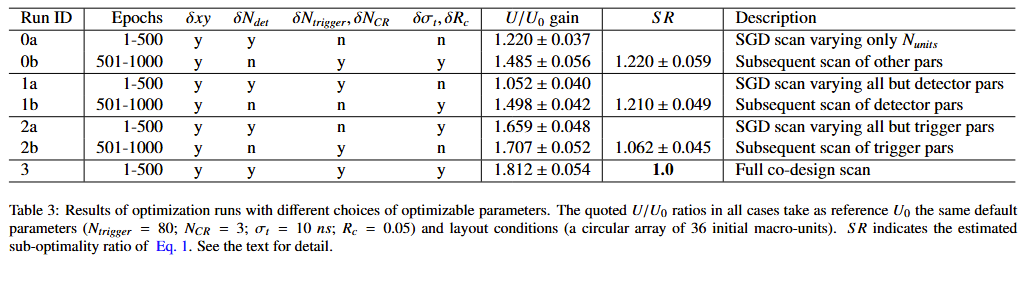
Co-Design Of Scientific Experiments

Next Monday, or Tuesday at the latest, you will find a new bulky paper in the arXiv. Titled "On...

Travel With Two Infants

The other day I traveled with Kalliopi and our two newborns to Padova from Lulea. After six full...
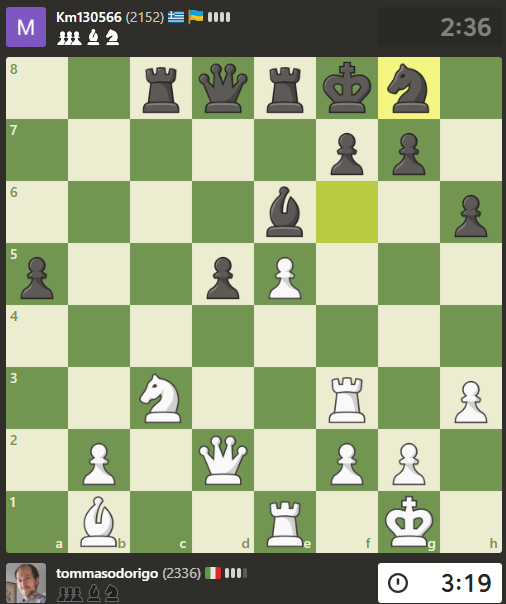
A Nice Little Combination

Although I have long retired from serious chess tournaments (they take too much time, a luxury...
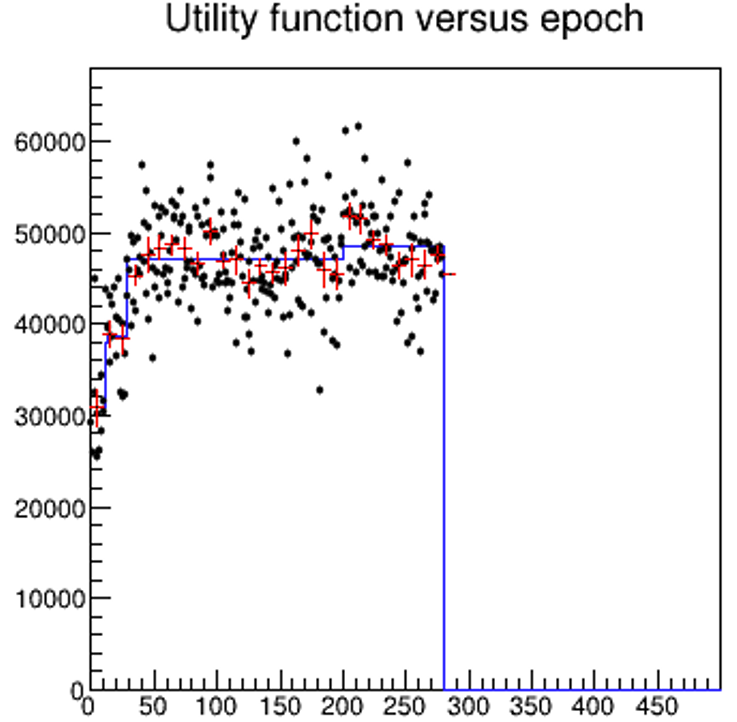
The Strange Case Of The Monotonous Running Average

These days I am putting the finishing touches on a hybrid algorithm that optimizes a system (a...

User picture.
picture for Hank Campbellpicture for Patrick Lockerbypicture for Heidi Hendersonpicture for Bente Lilja Byepicture for Sascha Vongehrpicture for Johannes Koelman
Tommaso DorigoRSS Feed of this column.

Tommaso Dorigo is an experimental particle physicist, who works for the INFN at the University of Padova, and collaborates with the CMS and the SWGO experiments. He is the president of the Read More »

Blogroll
On March 25 to 27 will be held the school titled "Data Science in (astro)particle physics and cosmology", in Braga (Portugal). The lecturers are prof. Glen Cowan (RHUL), who will cover Statistics, and myself, who will cover topics in Machine Learning. I thought I would mention this here, as for me it is a novelty - in the past years I have often given lectures in advanced statistics topics at various Ph.D. schools around the world, but I never focused explicitly and solely on ML.


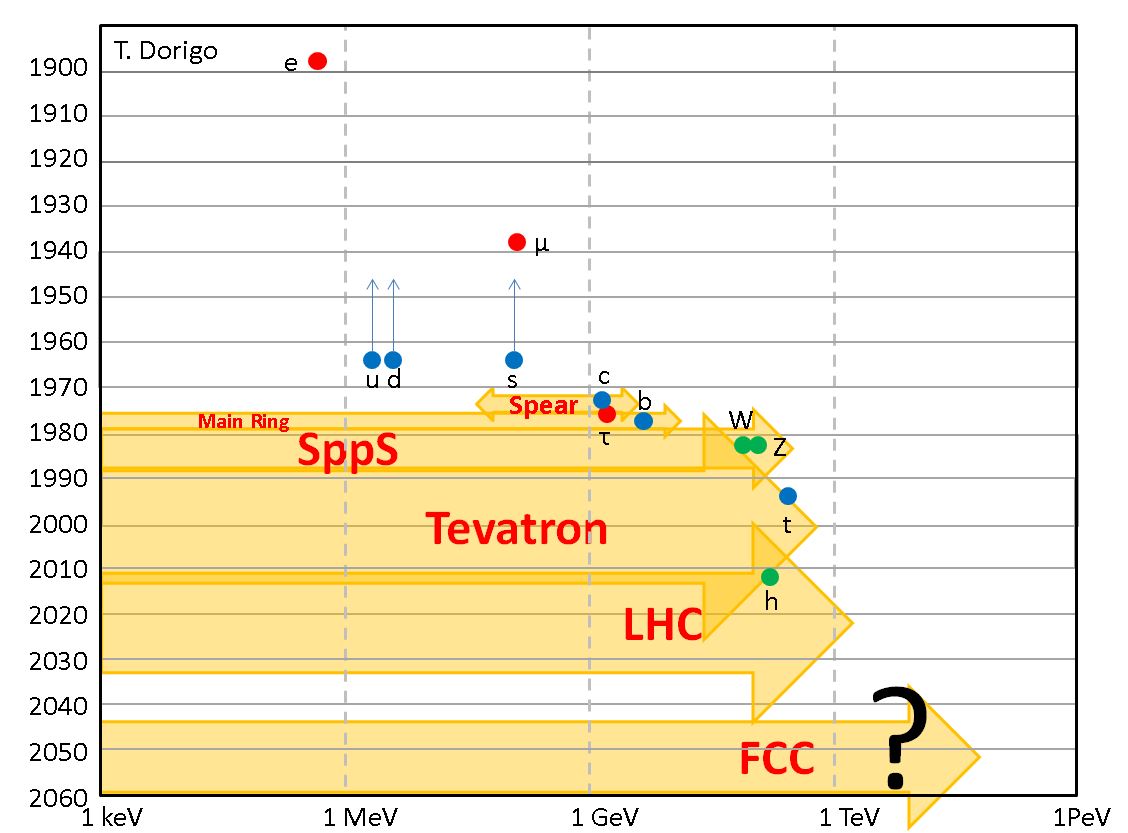
In the previous post I discussed, among other things, a purely empirical observation on the mass spectrum of elementary particles, which I summarized in a graph where on the vertical scale I put the year of discovery, and where I only cared to plot particles with a mass above a keV - in fact, we know that neutrinos have non-zero masses, but we have not measured them and they are of the order of an eV or below. Okay, for simplicity I will re-publish the graph below.

I have long been of the opinion that writing about science for the public requires the writer to simplify things down to a level which is sometimes dangerously close to mislead the uninformed readers. I think is a small price to pay if you want to keep open the channel of communication with the general public, but it is indeed a narrow path the one you sometimes find yourself walking on, and fallacy is always a possible outcome.
As the well-informed readers will realize, I am hat-tipping Hank Campbell and the catchy title of his best-selling book "Science Left Behind" with the title of this post, for lack of more imagination. What I want to discuss is, however, something only partly in line with the interesting topics of Hank's book. It is something that I see happening around these days, and which I ache for: the dumbing down of our decision making in science.
Given the use that people do of Google searches nowadays, and the rather special nature of my usual readership, I feel I may need to first of all apologize for the deceiving title of this post to the 80 to 90% of the visitors, who came to this page by searching for ways to become a member of a selection committee of miss Universe.  Sorry, you had it wrong - we are going to discuss parametric models here, not top models. But if you are happy to hear about the issues of fitting data with different functional forms, you are welcome to read on.
[Update: I found the time to add a few links to the post below, which I had previously omitted for lack of time (hey I'm on vacation!), and I also updated it to add some commentary of Sabine Hossenfelder's latest post on "the end of particle physics".]

In this age of short-term reward strategies (in politics, in society, and in individual behaviour) planning huge endeavours 20 years ahead is harder than it used to be. In the late eighties, when the Large Hadron Collider (LHC) was conceived and argued to be doable by a few visionaries, it immediately looked like a great idea to all.