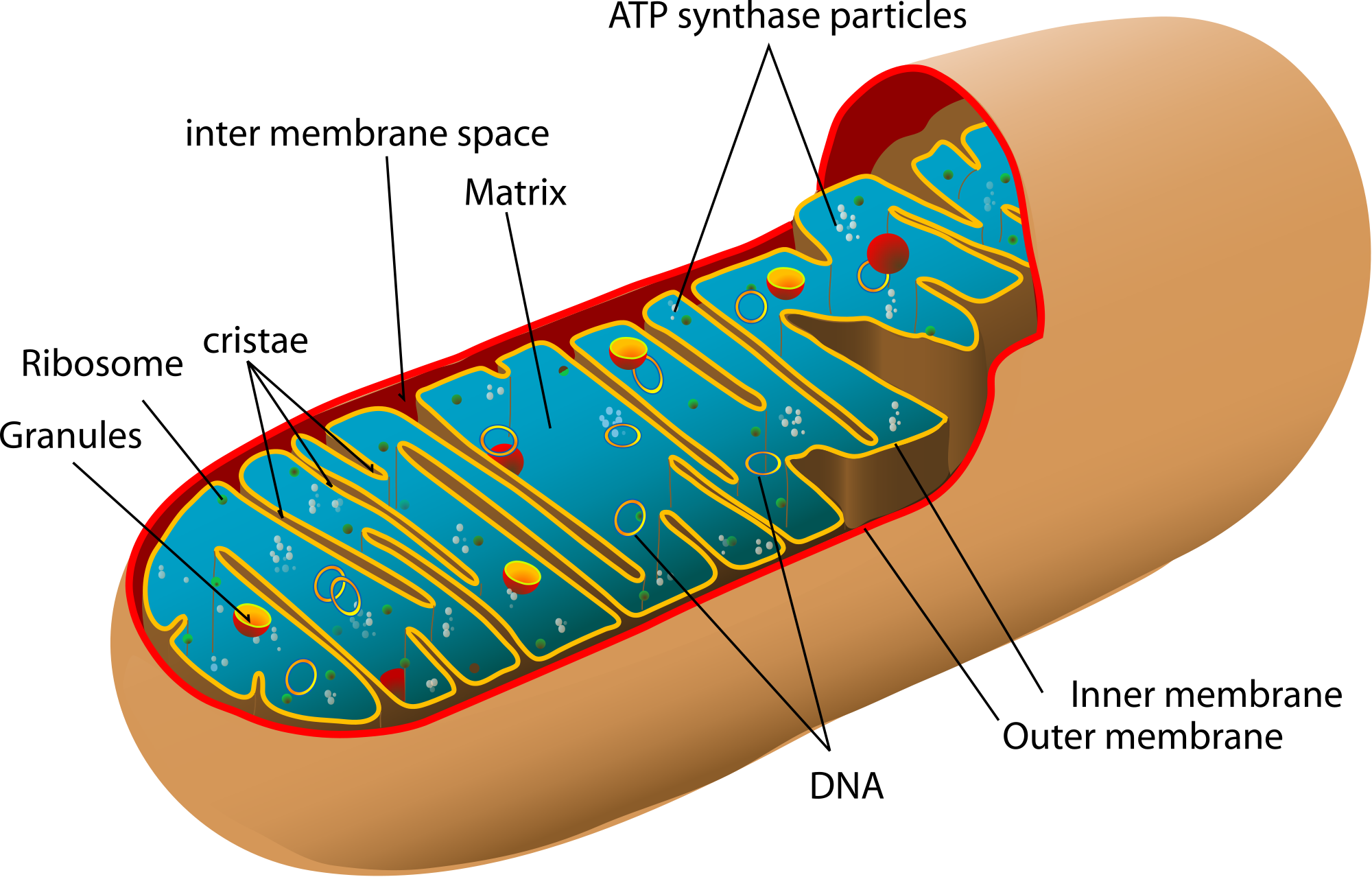
Mitochondria are better known as the power factories of the cell but in fact they are much more interesting than that. Contrary to the old image in textbooks of round static structures, mitochondria are now known to be incredibly dynamic, shape changing, fusing and dividing according to the multitude of functions they perform in the cell. And now, in a study to be published in the journal Nature Cell Biology, scientists in Italy and Portugal show that mitochondria can also be crucial for the survival of cells during stress.
Portuguese researchers have discovered a "broad spectrum" cancer suppressor gene called LRP1B which acts by removing proteins crucial for cancer development from the tumor environment.
The fact that LRP1B does not act on the tumor itself (in this study thyroid tumors) but, instead, on molecules which are known to be important to many different cancers is what makes it so interesting. Because this means that LRP1B, and also therapies capable of inducing it (or mimicking its effect), could in theory be used to treat a variety of cancers.
A study just published in the journal Nature by researchers in France, Portugal and Spain looks for the first time at the effects of climate change on the tree of life (that aggregates species according to their evolution/genetic similarity) to find that the whole of it will be affected.
But this is not all bad news because even if the tree is to become “thinner” it keeps its structure as there will be no major losses of biodiversity contrary to what other studies had suggested (this would occur if localized “branches” were totally eliminated).
A software that can drastically reduce CO2 emissions (and energetic costs) on computers all over the world has been developed by Portuguese scientists
and is freely available to anyone interested.
Contrary to what many of us would predict most female animals are not monogamous. Not even swans or penguins, those (supposedly) hallmarks of monogamy. Also surprising is the evidence that in most cases the female deliberately looks for the multiple sexual partners since female multiple mating (known as polyandry) is costly, risky and seems to bring no benefits to the females involved.
A major blow to the free radical theory of aging, which has lead the research in aging for more than 50 years and fuels a multimillionaire anti-aging industry has just been published by Portuguese scientists from the University of Minho.
According to the theory, free radicals provoke oxidative damage and this is the cause of aging. The new work, however, shows that not only is possible to slow down aging in cells with high levels of oxidation but more, that a free radical (H2O2) is behind the high longevity seen with low caloric diets (a well known method to increase lifespan) turning upside down the way we see anti-aging therapy and research with major implications for the field.


 A New Target For Machado Joseph Disease Treatment
 Mechanism To Delay Aging Identified
 New Treatment For The "Iron Overload Disease"
 Fluorescence Microscopy: New 2-D Images Can Detect Cancer Risk