




The ohm is the unit of electrical resistance. It is named in honor of the genius of Georg Ohm, who figured out that the flow of electricity in materials from a 'hot' source might just resemble the flow of heat from a hot source. Ever since we started measuring electrical resistance in ohms, electricians and engineers have been making up atrocious puns based on that term. I decided not to make an exception here.
Christmas is a time to be thinking about the wider implications of the laws of thermodynamics and the fact that the universe is made of stuff, that the stuff is made of atoms, and that atoms are made of at least one electron and a few other bits. You can forget the other bits, mostly. That's about it really: you can understand most of electronic and electrical engineering just by knowing a thing or two about why electrons tend to bite you if you crowd them into too tight a space. What has this to do with Christmas? Batteries! It seems to me that these days if you give any average kid any average toy it will need batteries. If you never learn anything else about electricity and electronics, a sound knowledge of the life and death of a battery will save you money. Your application of the laws of physics to the laws of bank balances will help you to learn something of economics. The fact that all of this will help address the problems of global warming and annoy the likes of Lord Monckton is an added bonus.
An all too brief history of the battery
The Baghdad battery may or may not have been a real battery. Like all obsolete batteries, it is of historic value only and likely will not fit inside your new radio-controlled helicopter. The first demonstrated and replicable chemical battery was Volta's pile, which he built in 1800. It is based on the use of two different metals, so it used to be easily replicated with copper and silver coins. Many modern 'copper' and 'silver' coins are pretty useless for making a voltaic pile. Some are just scrap iron. They are money by fiat, but nobody ever made electricity flow by fiat. (The electric chair doesn't count.)
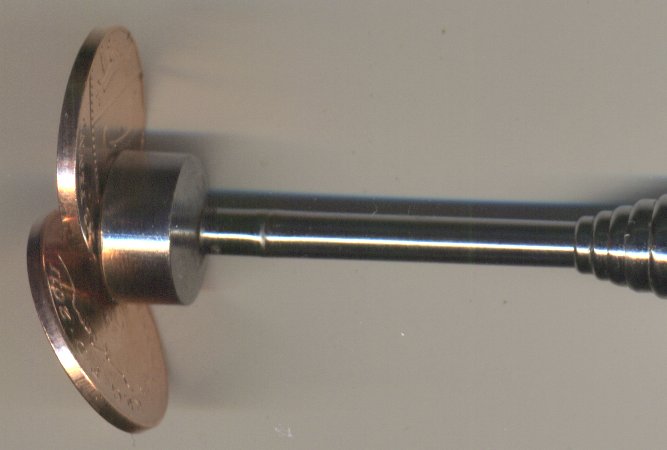
The attraction of shiny new pennies
Since Volta's day, many different methods have been invented to provide consumers with electricity in various pretty packages. And consumers have striven to keep pace with science and technology by finding new ways to kill those pretty batteries.

Batteries - some old, some new, and some killed - but not by me!
When I was a small child, growing up in Kent, England, a few householders were still using Leclanché cells to power their doorbells. At that time you could buy a big square cardboard-wrapped doorbell battery with brass nuts on top. Either battery would leak alkali and corrode the terminals.

Leclanché cell
Mains electricity on a national grid was a fairly new thing back then, and many people living out in the sticks had no mains. Their radios - which they called 'wireless sets' - were powered by a wet battery - known as an accumulator - and a big square cardboard-wrapped battery capable of giving unwary users a nasty shock. It was essential to have two batteries: one powered the heaters (filaments) in the vacuum tubes and the other provided the high voltage - known then as 'high tension' - which made the valve / vacuum-tube thingies work and which made the service engineer look incredibly brave as he worked on a live circuit.

A valve / vacuum-tube thingy
In those days, replacing the so-called 'dry' battery and recharging the wet battery were 'black arts' known only to the people in the radio shop that wireless owners gave money to. It was probably best to leave accumulator charging to the shop. Back then we had D.C. mains, which meant that you could string a heap of batteries across the mains and watch them until you could see bubbles through the glass case. Fragile glass + hydrogen gas + bare mains electricity cables = foobar! Today, we have plenty of standard sizes of rechargeable batteries that anyone can recharge safely, so there is really no need for any average user to buy disposable batteries. However, if you treat rechargeable batteries casually then they will die sooner rather than later.
I learned about radio and electronics by reading a lot and by taking old vacuum-tube radios to bits and then taking the bits to bits. I still take things to bits, but only in order to repair them or to salvage re-usable components. I also enjoy old books. One great thing about books is that you don't have to take them to bits to see how they work. Another great thing about books is that you get a sharper image than with bits of junk when you lay them on a flat bed scanner. Batteries are a lot different from books and electrical equipment: they make a huge mess when you take them to bits. You should not take a battery to bits unless you really know what you are doing, and probably not even then. Most especially you should not take a diesel locomotive battery to bits by shorting the terminals just after charging it - not even in the lecture hall, regardless of audience satisfaction.

It's a good thing that telecommunications devices have now improved to the point where you can dial at least 10 wrong numbers before the battery goes flat, but one of my major beefs is that there are so many different charger plugs, polarities and voltages. Why? You can stick a regulator on a pinhead now, so we could all use one standard type of charger regardless of battery voltage. No more wall-wart landfill mountains. Maybe, one day. In the meantime, I am in process of designing an intelligent battery management system for Nimh batteries. I also have other electronics projects in the pipeline, such as a solar panel orientation controller, a hot wire ammeter1, an analog computer2 and other such fun applied physics stuff3.
This article is intended to whet your appetite if you aren't already interested in electronics. As I build various gadgets I intend to write more articles about how they were designed and built, and the science behind them. Before anyone can understand how to make batteries last longer they need to understand how sources want to push electricity out and how loads want to draw it in. All sources in the known universe - and that includes batteries - have a limit to how fast they can pump out electrons. All loads have a limit to how fast they can draw electrons in. The best circuit designs match the source to the load. This is called impedance matching. In the real world, impedance mismatch means that if you plug a 12 volt gadget into the 110 or 220 volt mains it will do things that its designer never intended. Over the course of the next few articles I will try to explain why.
Oh yes: batteries. Batteries have internal resistance. That fact is very important. Dead batteries don't have zero electricity in them: they have higher resistance / impedance than usable batteries. Any electricity which they can supply is too feeble to do anything useful. All things which supply or conduct electricity have the property of resistance to the flow of current. I shall try to explain this in my next article on electronics.
-------------------------------------------------------------------------------
Footnotes
[1] - A heated wire expands in length. It also softens. A hot wire ammeter is a device which mechanically amplifies the tiny movements involved and indicates the electrical current on a scale.
[2] - A 'black box' which can be used to make interesting sounds and laser light shows and which can even do boring stuff such as maths if you like that sort of thing.
[3] - such as the Wimshurst machine, perhaps.



Comments