Banner
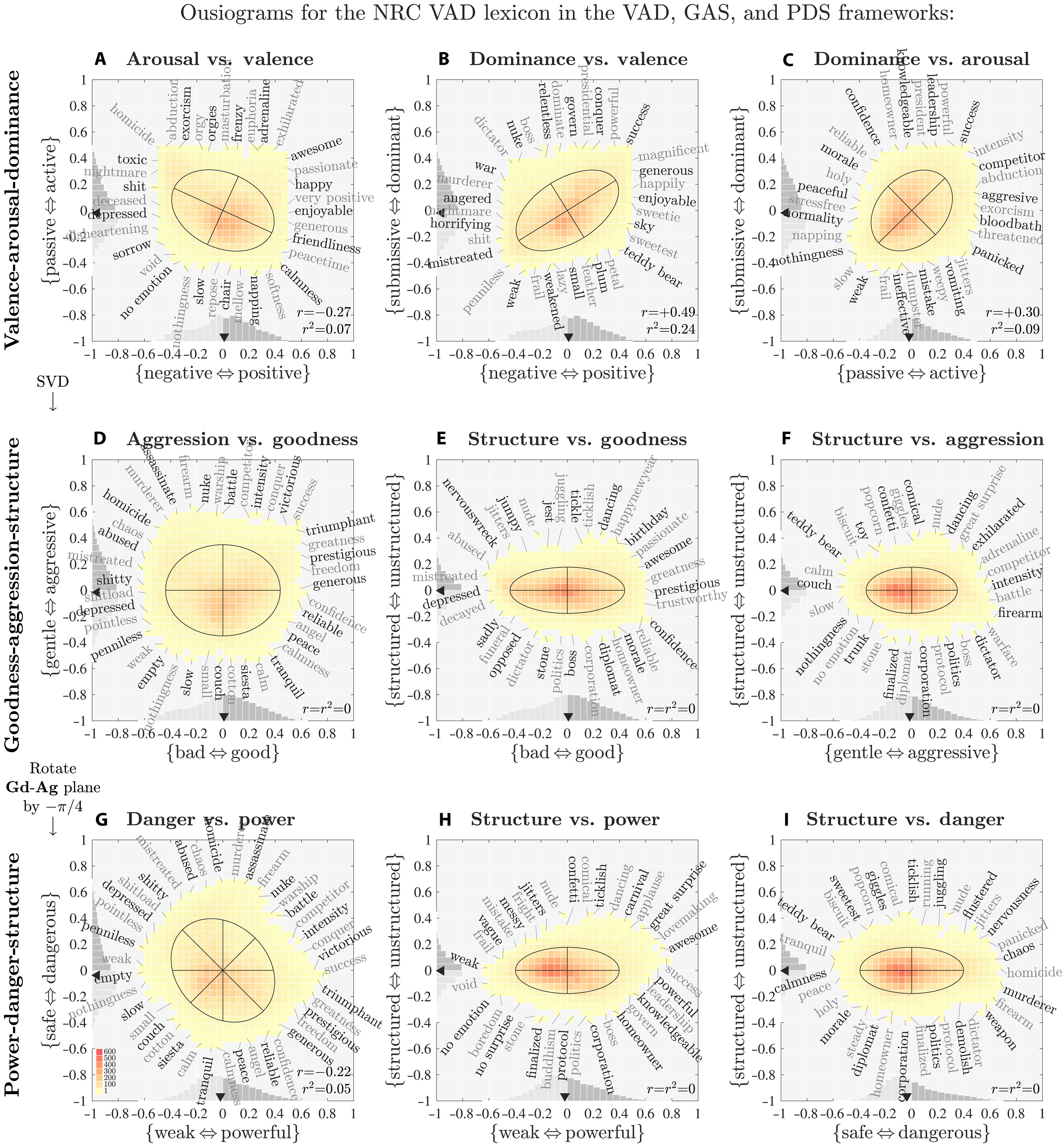
Ousiometrics Analysis Says All Human Language Is Biased

A new tool drawing on billions of uses of more than 20,000 words and diverse real-world texts claims...

Wavelengths Of Light Are Why CO2 Cools The Upper Atmosphere But Warms Earth

There are concerns about projected warming on the Earth’s surface and in the lower atmosphere...

Here's Where Your Backyard Was 300 Million Years Ago

We may use terms like "grounded" and terra firma to mean stability and consistency but geology...

Convergent Evolution Cheat Sheet Now 120 Million Years Old

One tenet of natural selection is a random walk of genes but nature may be more predictable than...

User picture.
News StaffRSS Feed of this column.

News Releases From All Over The World, Right To You... Read More »

Blogroll

With any pesticide, over-use can have harmful effects on the environment. 

DDT has not been used in America for over four decades but Rutgers scholars say that exposure to DDT may also increase the risk and severity of Alzheimer's disease in some people, particularly those over the age of 60. 

There are efforts to label obesity as a mental illness and a physical addiction. While that's good for psychologists who want get eating therapy paid by insurance claims, it may undermine healthy behaviors, according to a paper in Psychological Science.

Two of the world's most devastating plagues, the Justinian Plague and the famous Black Death hundreds of years later, were each responsible for killing as many as half the people in Europe.

A new study finds that they were caused by distinct strains of the same pathogen - one that faded out on its own, but the other spreading worldwide and then re-emerging in the late 1800s.  A form of that plague still kills thousands every year and these findings suggest a new strain of plague could emerge again in humans in the future.

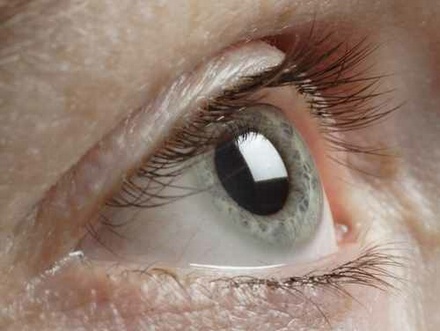
When we open our eyes, visual information floods the brain and it interprets what we're seeing. Researchers recently non-invasively mapped this flow of information in the human brain by combining two existing technologies, which allowed them to identify both the location and timing of human brain activity.

They scanned individuals' brains as they looked at different images and were able to pinpoint, to the millisecond, when the brain recognizes and categorizes an object, and where these processes occur. 

When and where

Backboned animals, at least the ones with jaws, have four fins or limbs, one pair in front and one pair behind.

Thanks to that random prankster known as evolution, these have been modified into a marvelous variety of fins, legs, arms, flippers, and wings. But how did our earliest ancestors settle into such a consistent arrangement of two pairs of appendages?

It's because we have a belly say theoretical biologists (yes, that's a real thing) at the University of Vienna and the Konrad Lorenz Institute for Evolution and Cognition Research. 

Can a big name lead to a boost, even for low-profile work?

Indeed it can, according to an analysis which found that scientific papers written by well-known scholars get more attention than they otherwise would receive because of their authors’ high profiles - but there are some subtle twists in how this happens.