Fake Banner
Choosing Your Bets: The Selection Bias

As some of the long-time readers of this blog know, in this column I have occasionally discussed...

Have A Master In Science, Want A Post-Doc Position Directly?

Do you have a master in Science, and want to start a Post-Doc position directly? You can have it...
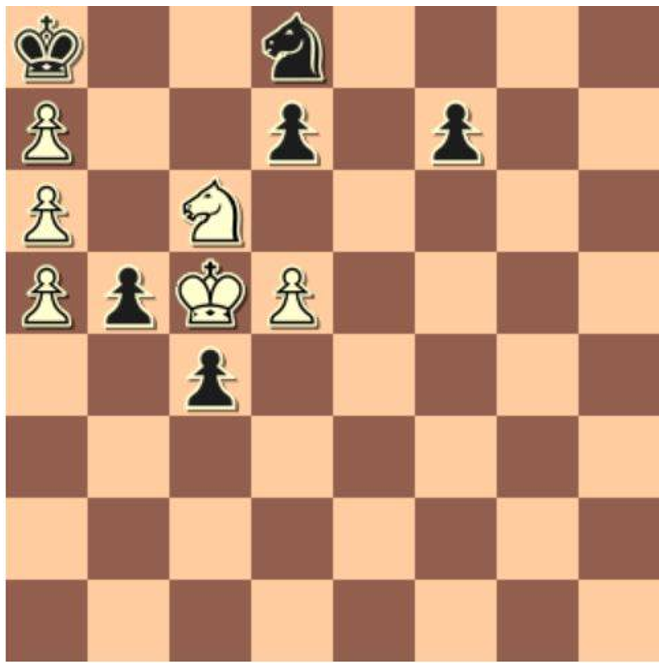
A Chess Study Requiring Backpropagation

The following position is a win for white. But how?It seems like white is able to grab a knight...
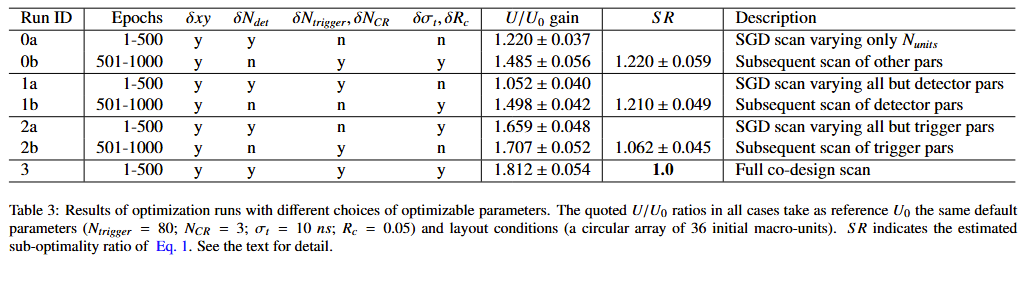
Co-Design Of Scientific Experiments

Next Monday, or Tuesday at the latest, you will find a new bulky paper in the arXiv. Titled "On...

User picture.
picture for Hank Campbellpicture for Heidi Hendersonpicture for Patrick Lockerbypicture for Bente Lilja Byepicture for Sascha Vongehrpicture for Johannes Koelman
Tommaso DorigoRSS Feed of this column.

Tommaso Dorigo is an experimental particle physicist, who works for the INFN at the University of Padova, and collaborates with the CMS and the SWGO experiments. He is the president of the Read More »

Blogroll
The terrorist attack of two days ago in Paris to the satirical newspaper Charlie Hebdo left most of us hit hard by the blow to freedom of the press and freedom of thought, which are among that core set of rights on which we have built our society and which we feel we really cannot give up.

I confess I have never unfolded a copy of the Charlie Hebdo newspaper, but I am quite familiar with the work of Wolinski, the 80-year-old cartoonist, who perished in the attack along with his colleagues. I liked his sense of humor and his cartoons a lot, and I am quite pissed off by those two morons taking that away from me.
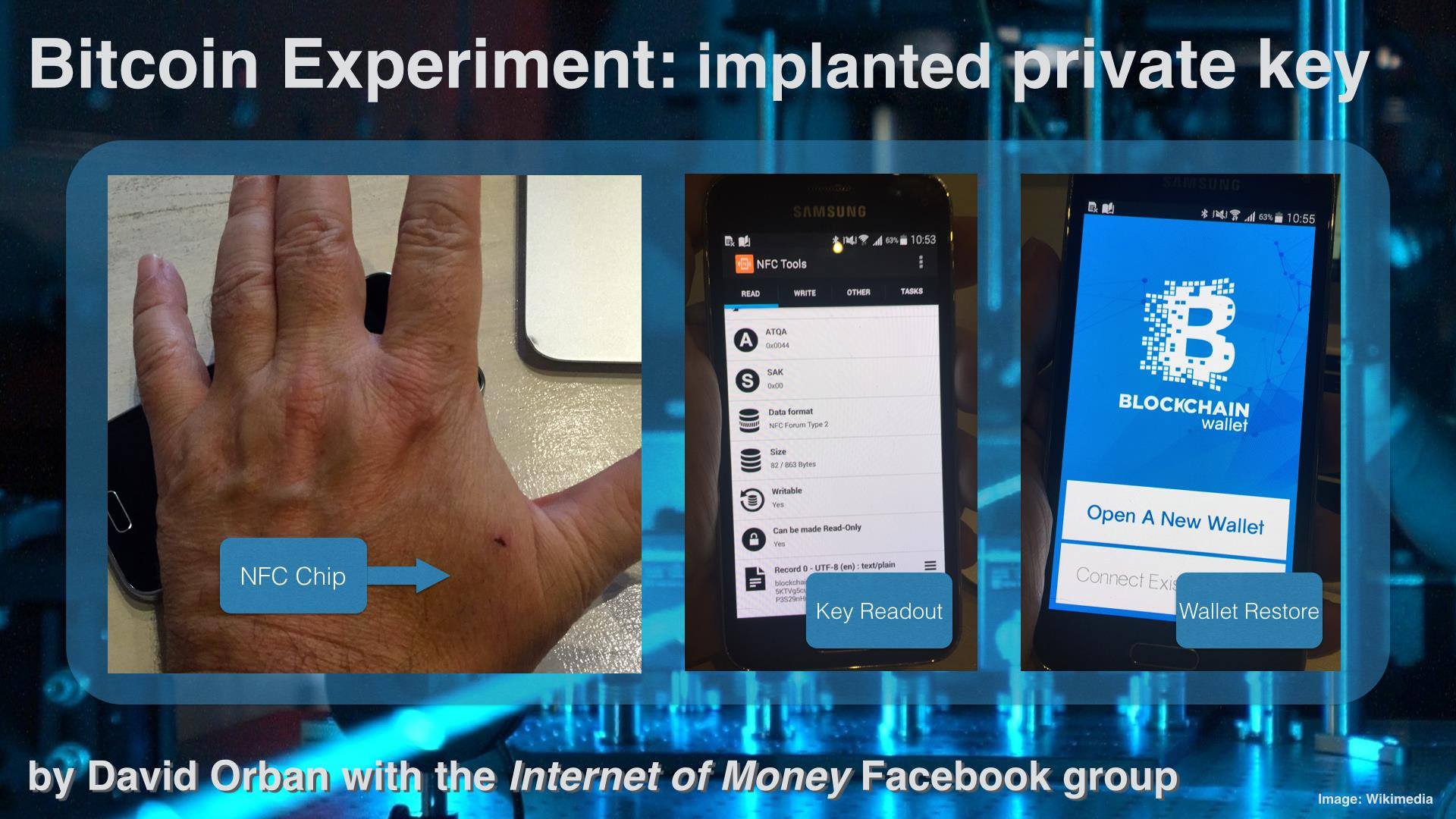
The following is a guest post by David Orban, CEO at Dotsub, faculty and advisor at Singularity University, and trustee of Network Society Research.

When I implanted an NFC chip in my left hand about two months ago at the Singularity University Summit Europe in Amsterdam, I followed the tradition of our species that a hundred thousand years or more ago decided to become a cyborg.

Apologizing for the silence of last week, due not so much to Christmas holidays but to my working around the clock to write a grant proposal, I wish to show you today a graph which describes very well the complexities of modern day frontier theoretical calculations. That graph is the collection of some of the Feynman diagrams that have to be calculated in order to evaluate a property of the electron called its "anomalous magnetic moment".

Ben Allanach, guest blogger, is a Professor of Theoretical Physics at the University of Cambridge. He is grumpy about the way that public funds are being unnecessarily directed to scientific publishing houses. So I am offering this space to him to hear what he has to say about that...


Alas, for once I must say I am not completely happy of one new result by the CDF collaboration - the experiment to which I devoted 18 years of my research time, and where I learned almost everything I know about experimental particle physics.
The latest paper by the ATLAS Collaboration is a very detailed report of the search for Higgs boson decays to W boson pairs in Run 1 data. The H->WW* process contributes significantly to the total bounty of Higgs boson candidates that the two CERN experiments have been able to collect in the 2011 7-TeV and 2012 8-TeV proton-proton collisions, but the presence of neutrinos in the final state prevents the clean reconstruction of an invariant mass peak, hence the WW* final state has remained a bit "in the shadows" with respect to the cherished ZZ* and gamma-gamma final states.