I guess every profession has its own kind of personalized spam. Here is a couple of recent samples from my own:
- From a Fermilab address: "According to the TRAIN database training for course FN000508 / CR - Workplace Violence and Active Shooter/Active Threat Awareness Training expired on 07/01/2014. Please make arrangements to take this class. If this training is no longer required then you or your supervisor should complete the Individual Training Needs Assessment [...]"
Note that
(1) I am not a user any longer, so their database is at fault. They still send out these notifications anyway.
In the process of revising a chapter of my book, I found a clip I would like to share here, as it contains an analogy I cooked up and which I find nice enough to be proud of. Well, two analogies, as you'll soon find out; here I am speaking of the cat weighing trouble at the end of the piece - the other is quite trivial.
The topic is the widely different masses of fermions, the building blocks of our universe, and the trouble in making sense of it and of measuring precisely their values. Comments welcome!
Two years have passed since the discovery of the Higgs boson (on July 4th, 2012), and the young particle still causes excitement. Originally it was the excess of Higgs decays to photon pairs as seen by the ATLAS experiment - but that anomaly has vanished with more data and more careful analyses. Then, it was the turn of the twin peaks: ATLAS again saw an inconsistent mass measurement with photon pairs and Z boson pairs.
Among the many more-or-less boring news from the ICHEP conference (International Conference on High Energy Physics), which is presently going on in Valencia (Spain), one bit today is sending good vibrations through the spine of many of the few phenomenologists who have chosen to remain faithful to the idea of Supersymmetry all the way to the bitter end. It is the excess of diboson events that ATLAS has just reported there.
A couple of weeks ago I
reported here about the new measurement of the Higgs boson mass produced by the ATLAS experiment. That determination, which used the full dataset of Run 1 proton-proton collisions produced by the LHC in 2011-2012, became and remained for two weeks the most precise one of the Higgs mass. Alas, as I wrote the piece I already knew that CMS was going to beat that result very soon, but of course I could not say anything about it... It ached a bit!
Forty-eight centuries ago, a bronze-age settlement flourished on the southern coast of Peloponnese, about 30 miles south of what would two thousand years later become the important town of Sparta. The city had a harbour facing east on calm waters, and had a few dozen buildings, roads, a burial site, and probably more. We do not know its ancient name, so the place has been called with the name of the modern-times place, Pavlopetri.


 Choosing Your Bets: The Selection Bias
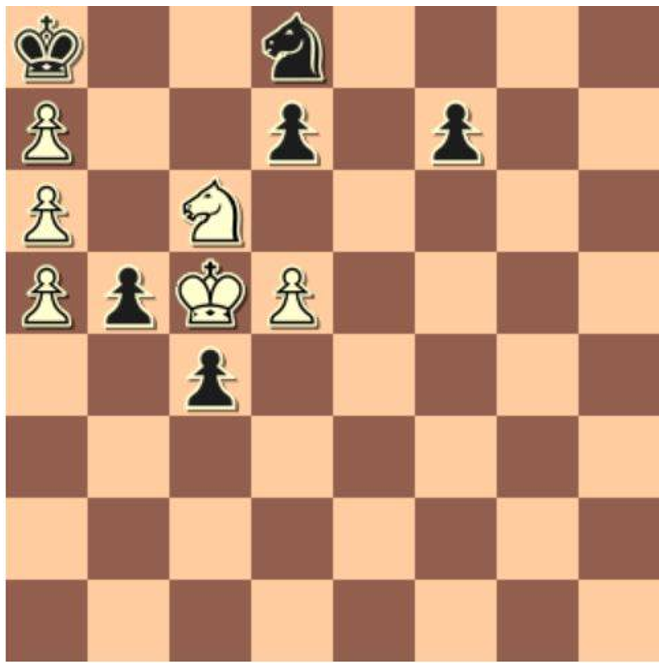 A Chess Study Requiring Backpropagation
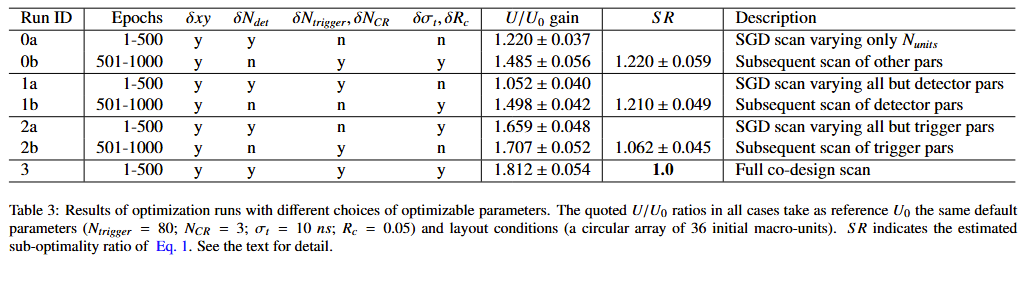 Co-Design Of Scientific Experiments