Fake Banner
Travel With Two Infants

The other day I traveled with Kalliopi and our two newborns to Padova from Lulea. After six full...

A Nice Little Combination

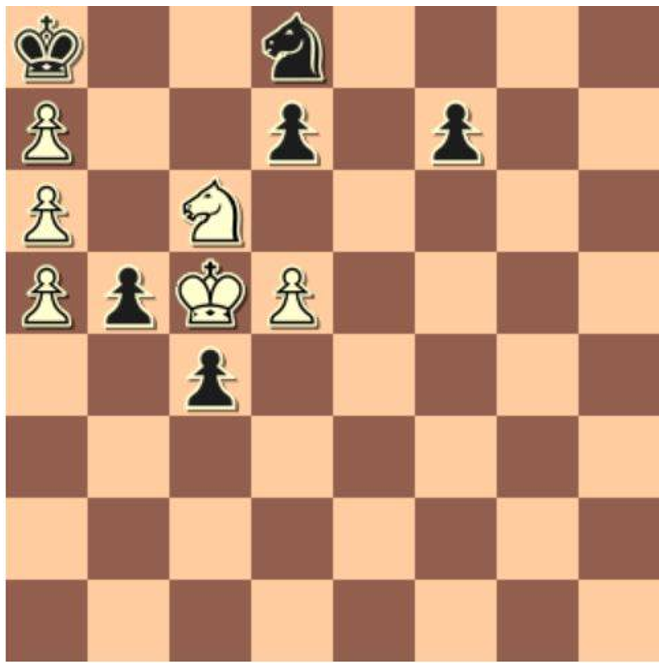
Although I have long retired from serious chess tournaments (they take too much time, a luxury...

The Strange Case Of The Monotonous Running Average

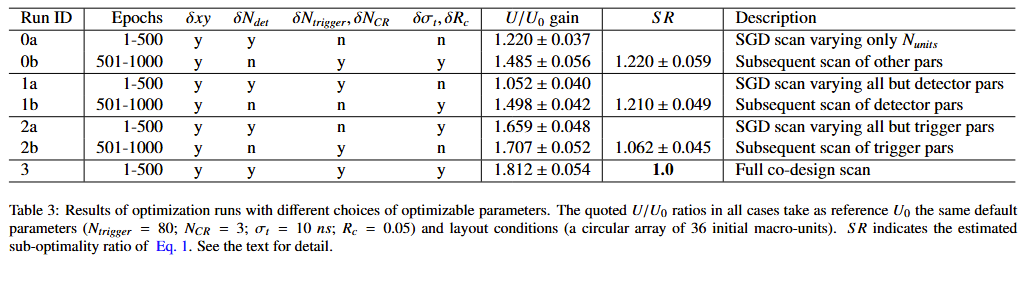
These days I am putting the finishing touches on a hybrid algorithm that optimizes a system (a...

Turning 60

Strange how time goes by. And strange I would say that, since I know time does not flow, it is...

User picture.
picture for Hank Campbellpicture for Patrick Lockerbypicture for Heidi Hendersonpicture for Bente Lilja Byepicture for Sascha Vongehrpicture for Johannes Koelman
Tommaso DorigoRSS Feed of this column.

Tommaso Dorigo is an experimental particle physicist, who works for the INFN at the University of Padova, and collaborates with the CMS and the SWGO experiments. He is the president of the Read More »

Blogroll
The querelle on the device patented by Andrea Rossi, the E-CAT, which allegedly produces heat from nuclear fusion processes inside a small cylindrical reactor fueled with Hydrogen and Nickel powder, continues to draw the attention of the gullible as well as that of the knowledgeable. It is just entertaining to both!
Thanks to a Facebook friend, I got to give a look today at a very interesting pair of graphs. The first one shows the number of researchers per million inhabitants divided by country, in a world map. The second shows the fraction of female researchers. The data comes from UNESCO, and is based on surveys dated 2011.
This morning I had a funny dream, and as I woke up at the end of it and watched the clock with the only eye I had managed to open, I realized it was not yet really time to wake up. On the other hand, I really liked the dream I had had: it was quite vivid and detailed, plus it lent an occasion for a blog post!

Hence I crawled out of the bed and reached for the nearest laptop in order to download the contents of my mind before it made room for something else and the dream got lost forever.
Goodbye CDF

Goodbye CDF

Jul 02 2013 | comment(s)

Like HAL 9000 in the wonderful movie "2001 -  the space odyssey", the CDF detector is being disassembled piece by piece, losing its functionality bit by bit, and turning from one of the most complex electronics systems ever built into a pile of junk in the course of a long, slow process. The central part of the detector has been transported out of the collision hall on rails, into the assembly hall, which is now serving the opposite purpose. If you ever visited Fermilab, the assembly hall is inside the big orange building you drove by as you got to the Wilson Hall from the east entrance.
Jacques Distler is a Professor of Physics at the University of Texas at Austin, and a distinguished theorist, as well as a physics blogger. Along with experimentalist Gordon Watts (who covered $250) he took my $1000 bet that the LHC would not discover new physics in its first 10/fb of proton-proton collision data. I discussed my take on the bet in a previous post; here Jacques explains his point of view, why he took the bet, and what he thinks of the present situation with new physics searches at the high-energy frontier.
The article below has appeared today at Distler's blog, and I reproduce it here with his permission.

In September 2006 I was in Ponta Delgada, the main town of the island of San Miguel in the Azores, for a physics conference where I was presenting results of the CDF experiment.

I remember listening to a very nice talk by Guido Martinelli, who was discussing the status of flavour physics, and getting rather depressed at the view of a very consistent picture of agreement between B physics observables and Standard Model predictions. This came at a moment when the CDF experiment had been probing the high-energy frontier with very detailed measurements, none of which appeared to show even the smallest glimpse of a departure from model predictions.