Fake Banner
Travel With Two Infants

The other day I traveled with Kalliopi and our two newborns to Padova from Lulea. After six full...

A Nice Little Combination

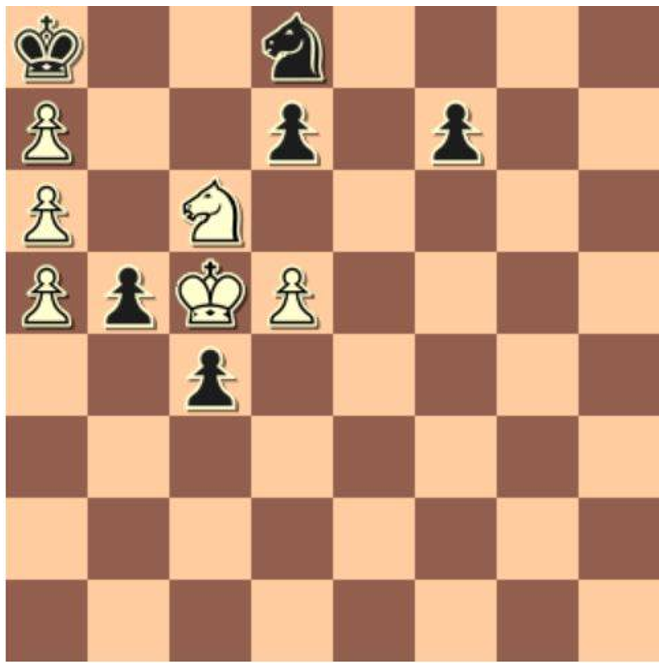
Although I have long retired from serious chess tournaments (they take too much time, a luxury...

The Strange Case Of The Monotonous Running Average

These days I am putting the finishing touches on a hybrid algorithm that optimizes a system (a...

Turning 60

Strange how time goes by. And strange I would say that, since I know time does not flow, it is...

User picture.
picture for Hank Campbellpicture for Patrick Lockerbypicture for Heidi Hendersonpicture for Bente Lilja Byepicture for Sascha Vongehrpicture for Johannes Koelman
Tommaso DorigoRSS Feed of this column.

Tommaso Dorigo is an experimental particle physicist, who works for the INFN at the University of Padova, and collaborates with the CMS and the SWGO experiments. He is the president of the Read More »

Blogroll
This is a post about basics. That's because I think a point needs to be made which is surprisingly not as well-known as its elementary nature would have you guess.

Correlation -in its most used version, due to Pearson- is a measure of how two quantities can be observed to be in linear dependence on one another. It is a very common quantity to report the results of scientific studies, particularly but not exclusively in the social sciences. Researchers try to evidence the presence of a correlation between two phenomena as a preliminary step to investigating whether one can be the cause of the other.
The news of the prizes to theorists and experimentalists are going to receive million-dollar prizes ($3M and $1M, details everywhere else -but see Peter's blog for insightful comment and discussion) are shaking the CERN experiments. While arguable (as in any case of a prize) whether they deserve the prizes for their work, nobody really ventures to discuss what they should or shouldn't do with the money. In the case of ATLAS and CMS spokespersons and past spokespersons, however, opinions vary widely.
In High-Energy Physics the small p-value of an observation may be the first hint of a discovery about to be made. Here by p-value I just mean the probability, just to be fancy (or brief). Because we rely on the assessment of the rarity of observations to decide whether we have discovered something or not, we physicists are (or should be) really careful with p-values. Today's article aims at demonstrating how easy it is to be carried away into giving more relevance to an observation than we should.
A new preprint is out in the arxiv today, detailing the results of a new analysis of neutrino speeds performed by the OPERA collaboration using proton spills of the CNGS beam produced during dedicated runs in May this year.
Chess News

Chess News

Dec 06 2012 | comment(s)

About one year ago I started playing competitive chess again, after a hiatus of almost a decade. Because of the hiatus and some change in the organization of chess in Italy, my status from that of candidate master (with an Elo rating of about 2120, which however would correspond to something like 2020-2050 in fide rating) was taken back to the status of a first national category, with an Elo in the lower 1800's.
Venice is a wonderful place to visit, if you have a week or even a weekend to spend immersed in art and history, or just to get lost in it and enjoy the romanticism of the place. However, if you live there you tend to hate the town as much as you love it.

Take a house move for instance: nowhere is a house move a kid's game -it is in fact a well-known cause of stress in any circumstance. But in Venice it may become a real trauma. The problem is multi-fold: houses do not usually have an elevator; stairs are usually too narrow for any piece of furniture; space in front of one's windows may be too limited for any manouver.