Fake Banner
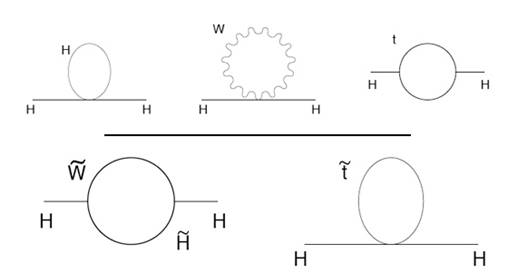
Choosing Your Bets: The Selection Bias

As some of the long-time readers of this blog know, in this column I have occasionally discussed...

Have A Master In Science, Want A Post-Doc Position Directly?

Do you have a master in Science, and want to start a Post-Doc position directly? You can have it...
A Chess Study Requiring Backpropagation

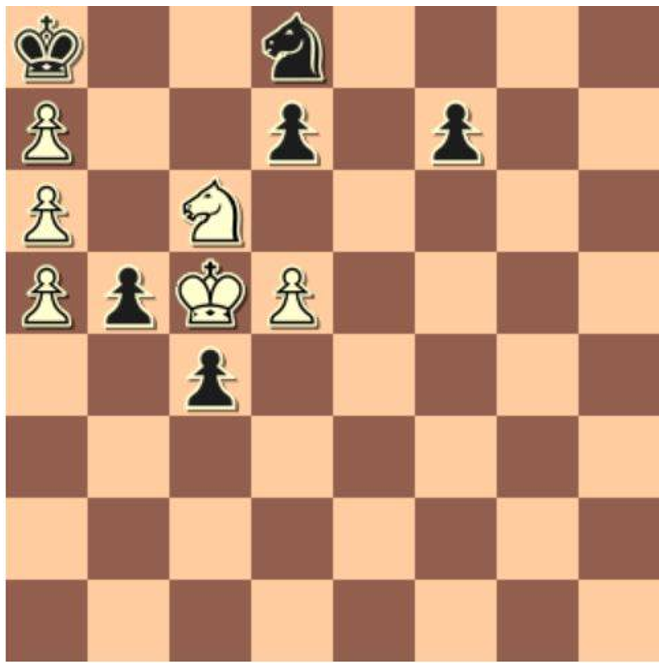
The following position is a win for white. But how?It seems like white is able to grab a knight...
Co-Design Of Scientific Experiments

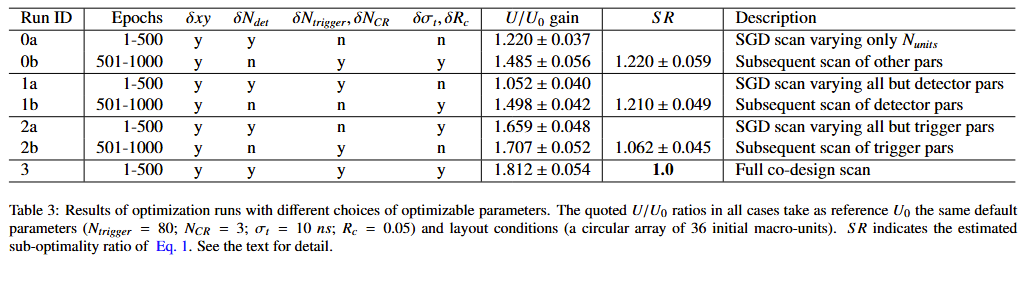
Next Monday, or Tuesday at the latest, you will find a new bulky paper in the arXiv. Titled "On...

User picture.
picture for Hank Campbellpicture for Heidi Hendersonpicture for Patrick Lockerbypicture for Bente Lilja Byepicture for Sascha Vongehrpicture for Johannes Koelman
Tommaso DorigoRSS Feed of this column.

Tommaso Dorigo is an experimental particle physicist, who works for the INFN at the University of Padova, and collaborates with the CMS and the SWGO experiments. He is the president of the Read More »

Blogroll
Five years ago I was fascinated by an analogy used by my friend Michelangelo Mangano to explain the problem of naturalness, a crucial issue in fundamental physics, and maybe the biggest single indicium we have that new physics beyond the standard model of particle physics should exist, and be not too far away from our current experimental reach.
In particle physics searches (and elsewhere) the word "significance" is associated with the quantitative measure of how discrepant is one observation with a so-called "null hypothesis". That is, one searches for a new effect in some dataset, and defines what one expects to see in the absence of anything discrepant from theoretical predictions: that is the null hypothesis. A new particle in the data will usually manifest itself as an excess of events, and this will cause the data to deviate from expectations.
"A good speech should be like a woman's skirt: long enough to cover the subject and short enough to create interest."

W. Churchill
As my twenty three affectionate readers will probably remember, I enjoyed a very pleasant week in Kolymbari (Crete) last June, attending the first International Conference of Frontier Physics. Now, after you attend a conference and give there a presentation, you are supposed to produce a writeup of your talk for the proceedings book. So while October arrives unannounced with critically important errands to attend to, I find myself in the need to produce a 12-page document describing the most recent and important results of the CMS experiment. 
UPDATE: what a difference a small typo makes! In the report below I claimed that the CDF top mass measurement was yet to be stripped of the record of being the most precise in the world, given that the total uncertainty on the mass was 1.01 GeV, while the newest CMS result has a total error of 1.07 GeV... I however realized this morning that the total CDF uncertainty of the quoted measurement is 1.10, not 1.01 ! So the CMS result mentioned at the bottom of this article is indeed the most precise single measurement in the world of the top quark mass !

--
In a few weeks I will speak in Torino, Italy at Comunicare Fisica 2012, a conference devoted to the communication of Physics in the media, in schools, through web sites, etcetera. And I need your help !

Let me explain. I have submitted an abstract which reads as follows: