Fake Banner
Choosing Your Bets: The Selection Bias

As some of the long-time readers of this blog know, in this column I have occasionally discussed...

Have A Master In Science, Want A Post-Doc Position Directly?

Do you have a master in Science, and want to start a Post-Doc position directly? You can have it...
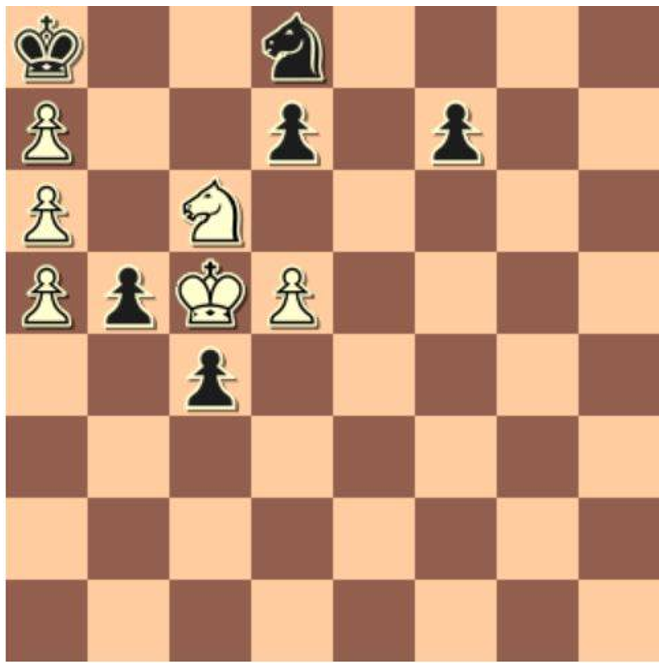
A Chess Study Requiring Backpropagation

The following position is a win for white. But how?It seems like white is able to grab a knight...
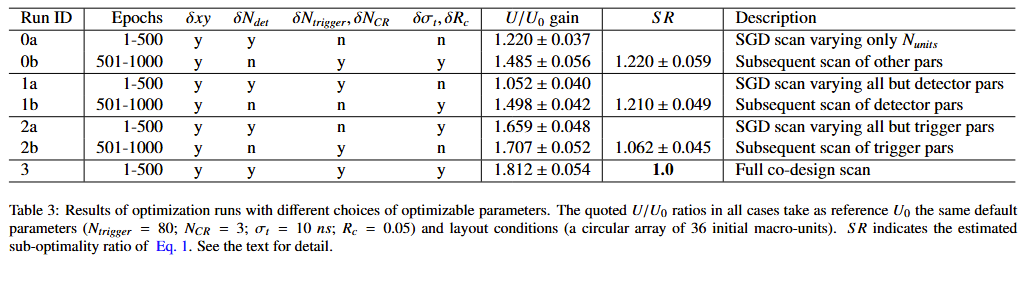
Co-Design Of Scientific Experiments

Next Monday, or Tuesday at the latest, you will find a new bulky paper in the arXiv. Titled "On...

User picture.
picture for Hank Campbellpicture for Heidi Hendersonpicture for Patrick Lockerbypicture for Bente Lilja Byepicture for Sascha Vongehrpicture for Johannes Koelman
Tommaso DorigoRSS Feed of this column.

Tommaso Dorigo is an experimental particle physicist, who works for the INFN at the University of Padova, and collaborates with the CMS and the SWGO experiments. He is the president of the Read More »

Blogroll
Large collaborations of physicists have a consolidated habit of meeting three or four times per year for a full week of discussions and talks. This has multiple purposes, one of them being the possibility to bring together members who live and work off-site (which may mean several thousand miles away from CERN). So, to alleviate a little the lab-centered life of experiments, one of these events every year is typically held away from the lab, in the site of one of the institutions participating in the experiment.
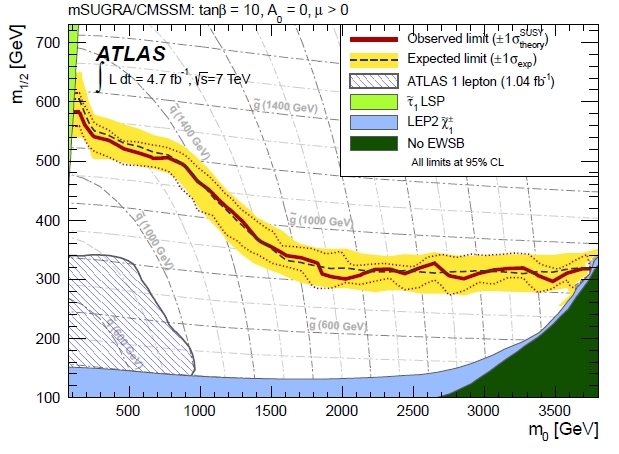
A new ATLAS search for supersymmetric signatures in 2011 LHC data has appeared last week in the arxiv. The result ? No hint of a signal, not even for ready money.

So if you are on a hurry, you can just have a glance at the graph below, which summarizes the measurement in terms of excluded regions of a slice of the complicated parameter space of SUSY theories.

Otherwise, if you want to know a bit more of what this is about, I can provide some detail.
Okay, I am coming out for the interest of Science.

I read today this article, which does not really say anything new to me, but for some reason triggered my wish to speak up about the condition. The article explains clearly that some people have a twisted connection in their nerves, sort of a short-circuit, which makes them sneeze when they think about sex (others have the same kind of problem making them sneeze when they are looking at bright light sources, e.g. the sun).
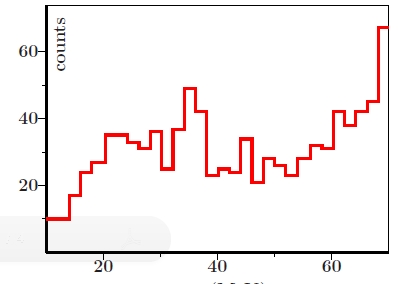
Everybody seems to be talking about this new would-be particle, allegedly observed in diphoton decays in this paper by Kh. Abraamyan et al. at JINR, and consistent with an earlier claim of two physicists (van Beveren and Rupp) who had considered several distributions published by different collaborations.
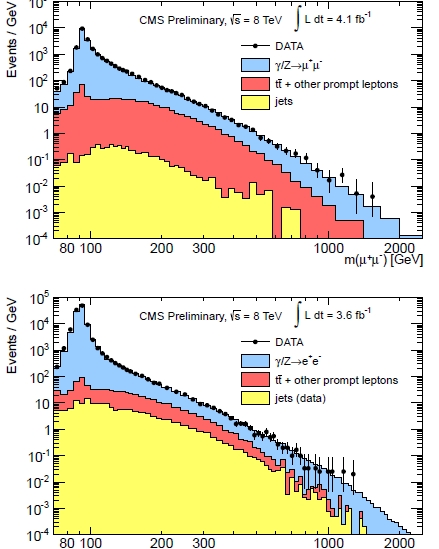
Perhaps a bit too simple, but certainly appealing. Extensions of the Standard Model which imply the existence of a new U(1) gauge group to complement the SU(2)xU(1) structure of electroweak interactions have been put forth in a number of slightly different versions. All imply the existence of a new Z' boson, a heavier version of the Z0. For those not yet introduced to the latter, the Z0 is the neutral vector boson hypothesized by Glashow, Salam and Weinberg in the sixties to complete a triplet of weak currents and thereby allow the unification of weak and electromagnetic interactions.
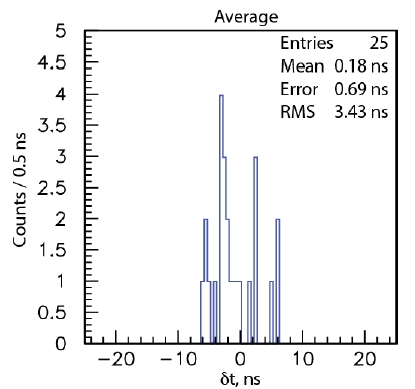
Little less than one year ago the world of fundamental physics was shaken by the bold claim of the OPERA collaboration, which produced a measurement of the time of flight of neutrinos traveling underground from Geneva to the Gran Sasso mine in central Italy. The beam of neutrinos, produced by the CERN SpS proton synchrotron, was observed to produce interactions in the large mass of the OPERA detector with about 60 nanosecond anticipation with respect to what would be expected for a particle traveling at exactly the speed of light (2439096.1+-0.3 nanoseconds, since the flight path is of 731221.95+-0.09 meters).