Fake Banner
Choosing Your Bets: The Selection Bias

As some of the long-time readers of this blog know, in this column I have occasionally discussed...

Have A Master In Science, Want A Post-Doc Position Directly?

Do you have a master in Science, and want to start a Post-Doc position directly? You can have it...
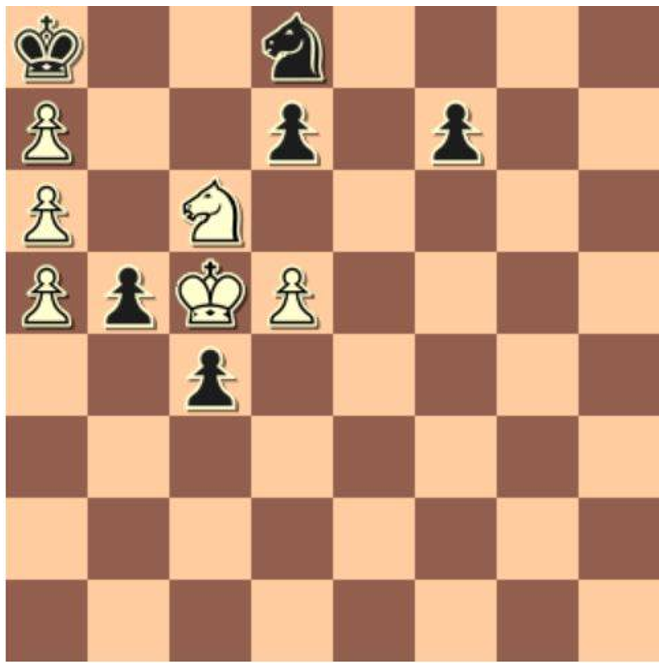
A Chess Study Requiring Backpropagation

The following position is a win for white. But how?It seems like white is able to grab a knight...
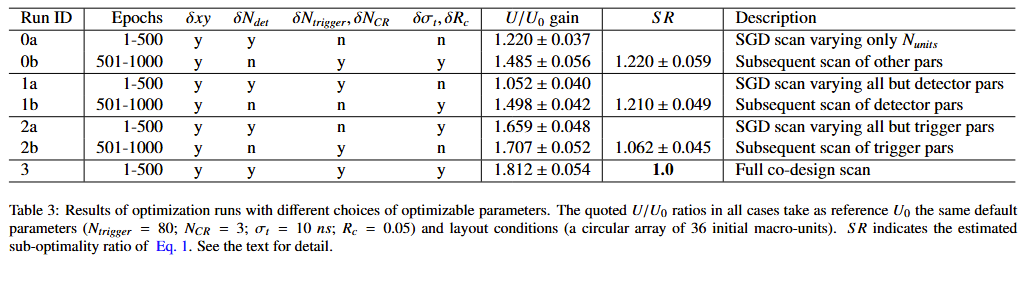
Co-Design Of Scientific Experiments

Next Monday, or Tuesday at the latest, you will find a new bulky paper in the arXiv. Titled "On...

User picture.
picture for Hank Campbellpicture for Heidi Hendersonpicture for Patrick Lockerbypicture for Bente Lilja Byepicture for Sascha Vongehrpicture for Johannes Koelman
Tommaso DorigoRSS Feed of this column.

Tommaso Dorigo is an experimental particle physicist, who works for the INFN at the University of Padova, and collaborates with the CMS and the SWGO experiments. He is the president of the Read More »

Blogroll
5.30 AM. Getting in at CERN through the B entrance I see no living soul. "Ha" -I tell myself- "I have been worrying too much".

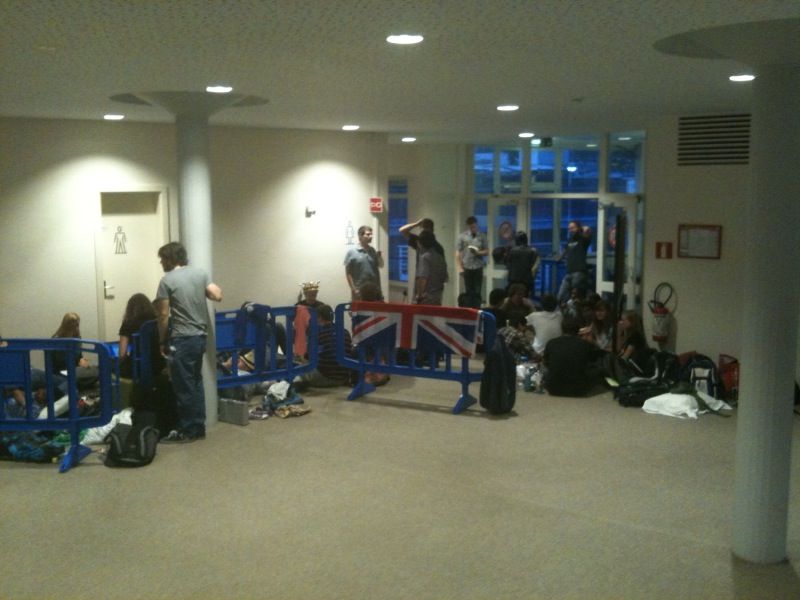
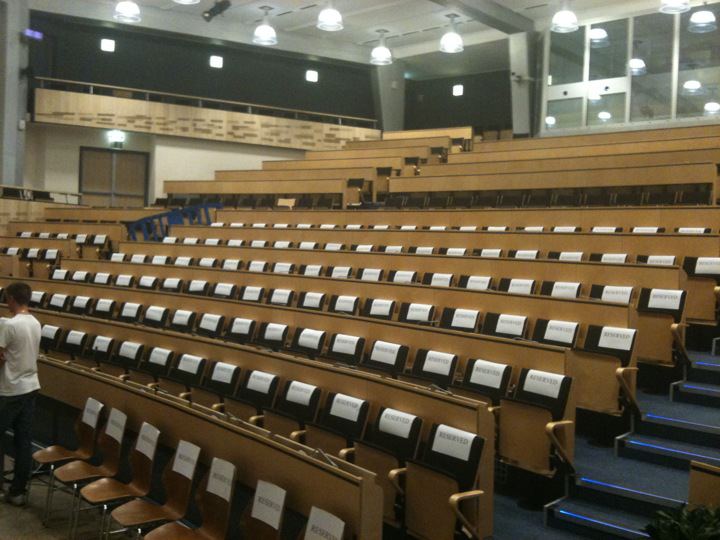
5.36 AM. But the people is all here since last night ! There is a huge queue of 180 people already, extending from the doors of the Main Auditorium all the way up the aisle and back down on the other side. Most of the higgs enthusiasts have camped since last night here, and there is even a couple of guys with wide shoulders (but a polite smile) that direct newcomers to the end of the line.

Here are a couple of pictures of the queue as of now: the head of the queue close to the doors of the auditorium,

By now it's been written on so many newspapers and magazines -including Nature (the magazine, not the bitch)- that if a colleague of mine tries to reproach me for writing about the impending seminar at CERN, where ATLAS and CMS are vented to be showing observation-level signals of a new particle which smells like the Higgs and quacks like the Higgs, I will publically send him or her to hell.

Besides, I have been cited as a "tease" in a nice summary which appeared in the Atlantic Wire site today. The line describing me (next to a picture that is N years old but which is dear to me for some reason) is the following:
Robbing the LHC experiments of media attention for 41 hours, the CDF and DZERO experiments are presenting today the results of their searches of the Higgs boson in the full datasets of proton-antiproton collisions acquired in the course of the last 10 years. You can follow the live streaming of the Tevatron seminar at this link.

UPDATE: the live streaming is here.

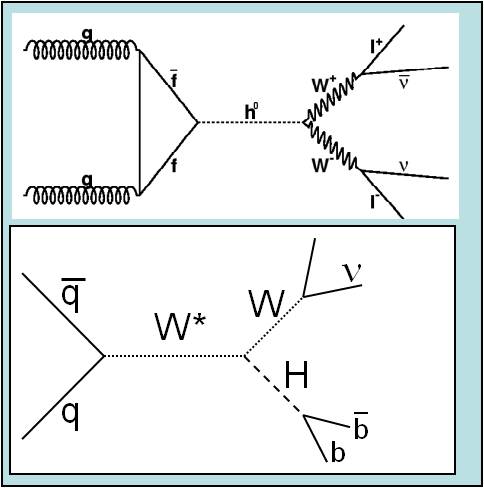
Below I will give some introductory notions on Higgs physics at the Tevatron; at the bottom of this post I am discussing the actual results.

Introduction
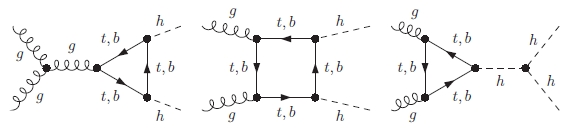
A very interesting paper appeared one week ago in the Arxiv. It is titled "Higgs Self-Coupling Measurements at the LHC", and it is authored by M.Dolan, C.Englert, and M.Spannovsky. The idea is that once and if a Higgs boson is found at the LHC, the next natural step of the research would be its characterization as a pure standard model object or a more complex, or just different, beast.

Of course, once a signal were established, the LHC experiments would certainly want to measure all its properties as precisely as possible: mass, angular distributions, cross section in all the production mechanisms, and decay modes.
I am endlessly amazed by observing, time and again, that even experienced colleagues fall in the simplest statistical traps. Mind you, I do not claim to be any better - sorry, let me rephrase: to have been any better in the early days of my career as an experimentalist. But then, I started to appreciate that to really understand physics results I needed to at least get familiar with a small set of notions in basic Statistics.
"There is nothing new to be discovered in physics now. All that remains is more and more
precise measurement"
Lord Kelvin, 1900