Fake Banner
Choosing Your Bets: The Selection Bias

As some of the long-time readers of this blog know, in this column I have occasionally discussed...

Have A Master In Science, Want A Post-Doc Position Directly?

Do you have a master in Science, and want to start a Post-Doc position directly? You can have it...
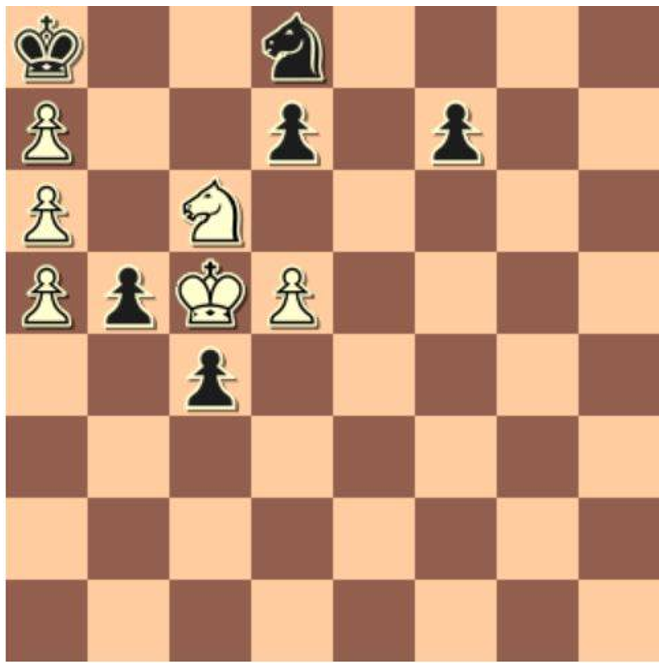
A Chess Study Requiring Backpropagation

The following position is a win for white. But how?It seems like white is able to grab a knight...
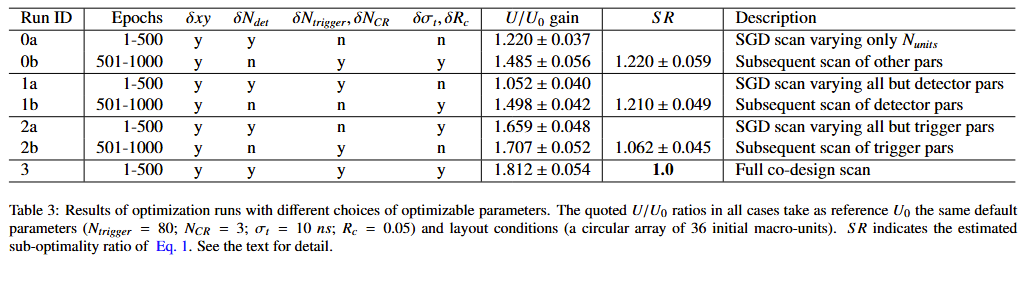
Co-Design Of Scientific Experiments

Next Monday, or Tuesday at the latest, you will find a new bulky paper in the arXiv. Titled "On...

User picture.
picture for Hank Campbellpicture for Heidi Hendersonpicture for Patrick Lockerbypicture for Bente Lilja Byepicture for Sascha Vongehrpicture for Johannes Koelman
Tommaso DorigoRSS Feed of this column.

Tommaso Dorigo is an experimental particle physicist, who works for the INFN at the University of Padova, and collaborates with the CMS and the SWGO experiments. He is the president of the Read More »

Blogroll
Just a short post to mention that the Large Hadron Collider has reached tonight the top instantaneous luminosity of 1.075 * 10^33 cm^-2 s^-1. This is a new record for high-energy hadron colliders, improving over precedent records already set this year by the CERN machine. The peak luminosity is 2.5 times larger than the highest reached at the Tevatron (which, one needs to remember, collides protons against antiprotons, and the difficulty in producing the latter makes the comparison between LHC and Tevatron luminosity a bit deceiving).
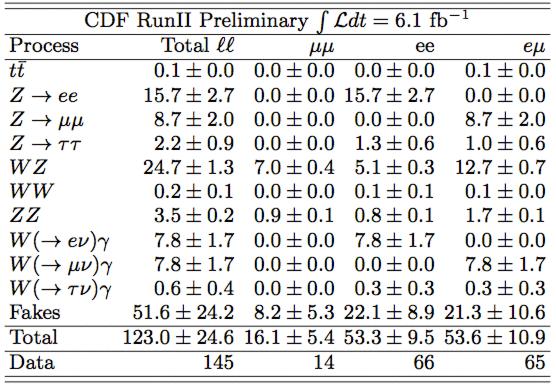
The plot of the week is actually a table this week. A histogram with several background components can be extremely informative, but sometimes a table provides more detail and one can focus better on interesting features.

The table below has been produced in a CDF search for events containing same-sign lepton pairs: a striking signature of new physics, faked by very few processes. Because of the paucity of Standard Model sources, even relatively small new physics signals can emerge in such a sample. The CDF analysis is based on 6.1 inverse femtobarns of proton-antiproton collisions collected at the Tevatron during Run II. Let us see what the table tells us.


Last night I had the pleasure to visit Mauro, a friend of mine and an amateur astronomer. Mauro owns a 24" dobson telescope with a mirror crafted by the superb hands of Romano Zen, the same who made my own 16". The precision of the optics of Romano is legendary, and as far as my limited capabilities allow me to judge, his reputation is entirely deserved. With my dobson scope I have been able, in nights of lucky seeing, to discern details on Jupiter of the order of half an arcsecond in angular extension. And with Mauro's 24"...
A question posed by Tony Smith in the thread of the previous post (which dealt with the choice of the bin width in histograms) triggered me to do a little work to produce a convincing answer to him.

The issue is the following. Tony got interested in a few top candidate events in a few mass distributions published by CDF and DZERO quite some time ago, which seemed to all cluster in the surroundings of 145 GeV. Could those eight candidate events (once summed across the various channels and experiments) be the signal of some resonance different from top quarks ?
I was unaware of the following story, which was brought to my attention by Monica Pepe-Altarelli yesterday. Since I totally agree that nobody should be detained without proof of guilt for long periods of time, and since we are talking of a physicist, I am glad to broadcast the story here.
The presentation of data is a very rich subject, on which there is a whole lot to discuss, even by restricting to the issues relevant to our dear field of experimental high-energy physics. Usually too little thought is given to it, even by expert researchers, so I thought that maybe today I would offer here some ideas on one very basic issue, the one of how to choose the width of the bins of a histogram.