Fake Banner
Travel With Two Infants

The other day I traveled with Kalliopi and our two newborns to Padova from Lulea. After six full...

A Nice Little Combination

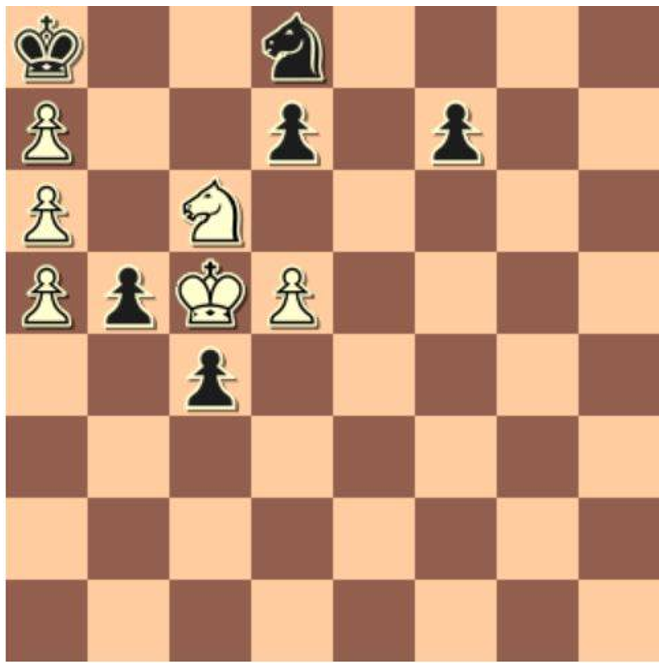
Although I have long retired from serious chess tournaments (they take too much time, a luxury...

The Strange Case Of The Monotonous Running Average

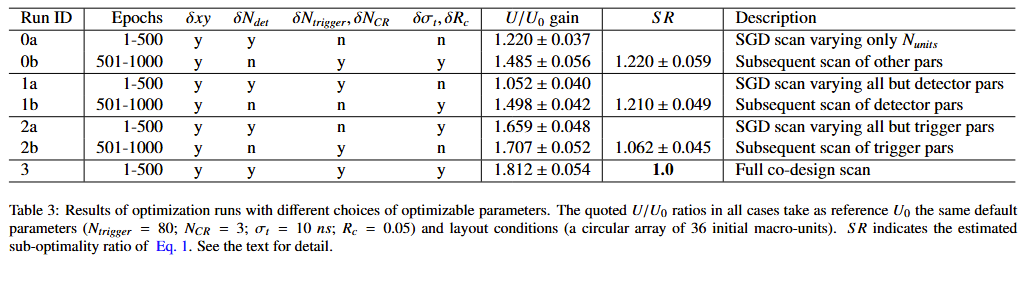
These days I am putting the finishing touches on a hybrid algorithm that optimizes a system (a...

Turning 60

Strange how time goes by. And strange I would say that, since I know time does not flow, it is...

User picture.
picture for Hank Campbellpicture for Patrick Lockerbypicture for Heidi Hendersonpicture for Bente Lilja Byepicture for Sascha Vongehrpicture for Johannes Koelman
Tommaso DorigoRSS Feed of this column.

Tommaso Dorigo is an experimental particle physicist, who works for the INFN at the University of Padova, and collaborates with the CMS and the SWGO experiments. He is the president of the Read More »

Blogroll
A reader of this blog asked in the comments thread of a recent piece the following interesting question:

"Assuming mH = 201 GeV/c2, how many Higgses shoud have been produced at
the Tevatron by now with an integated luminosity of 10 inverse
femtobarns? And how many H -> ZZ -> µµµµ would one expect to see?"
As sure as death and taxes, and as timely as a Swiss watch, the Tevatron collider never ceases to awe us. Well into its twentysixth year of life, the aged and celebrated proton-antiproton collider sitting just a few meters underground in the west Chicago suburbs hit the mark of 10 inverse femtobarns of collisions delivered to the core of the CDF and DZERO detectors.

10 inverse femtobarns! Ten inverse femtobarns of proton-antiproton collisions is a HELL of a lot of them. Plus, you should multiply that number by two, since the same number of collisions happened inside two different collision areas -those manned by the two competing collaborations.
An expert is a man who has made all of the mistakes which can be made, in a narrow field.
Niels Bohr
A faithful reader of this blog has been asking me for answers to some of the 42 questions which were given at an exam for particle physics researcher wannabes in Italy in 2005. I already provided some answers in a separate post a few months back, but the reader asked for an answer to some specific exercises which I had not bothered to deal with here. I will do so now.
A new result for the production cross section of Z boson pairs in proton-antiproton collisions at the 2-TeV Tevatron collider is now public, thanks to the efforts of the CDF collaboration. The measurement, in a nutshell, confirms Standard Model predictions nicely: the cross section is determined to be 1.45 picobarns, with an asymmetric error bar of of +0.60-0.51. The Standard Model, on the other hand, predicts that the cross section is 1.21 picobarns. The agreement of the two numbers, within uncertainties, says that all is well in the searched final state, and no unforeseen effects are at work.
In the past weeks I have been writing a piece about the Large Hadron Collider for a science popularization magazine, and I found myself squeezing my brain for a good analogy to the work of particle hunters. The idea I had was to convey the importance of energy and intensity, two parameters which must both be maximized by a particle accelerator in order to reach deeper in the structure of matter.