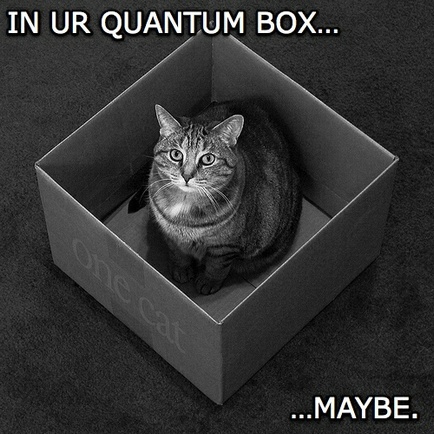
Choosing Your Bets: The Selection Bias
As some of the long-time readers of this blog know, in this column I have occasionally discussed...
Have A Master In Science, Want A Post-Doc Position Directly?Do you have a master in Science, and want to start a Post-Doc position directly? You can have it...
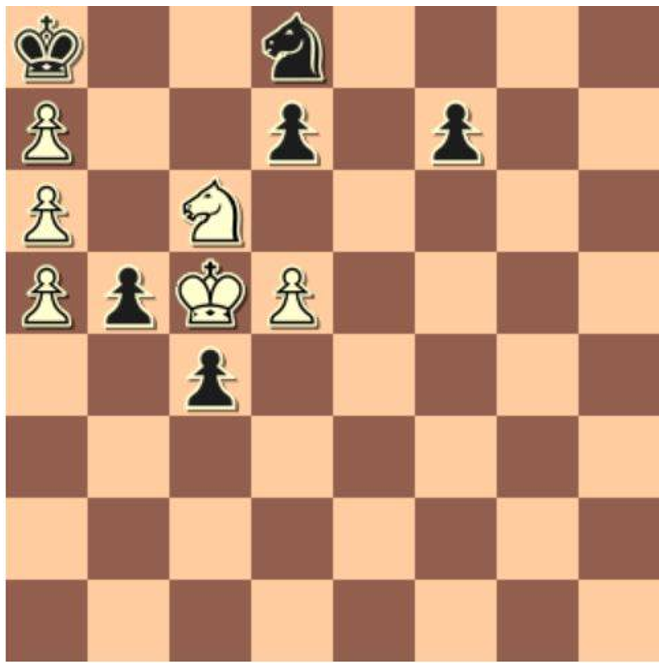 A Chess Study Requiring Backpropagation
The following position is a win for white. But how?It seems like white is able to grab a knight...
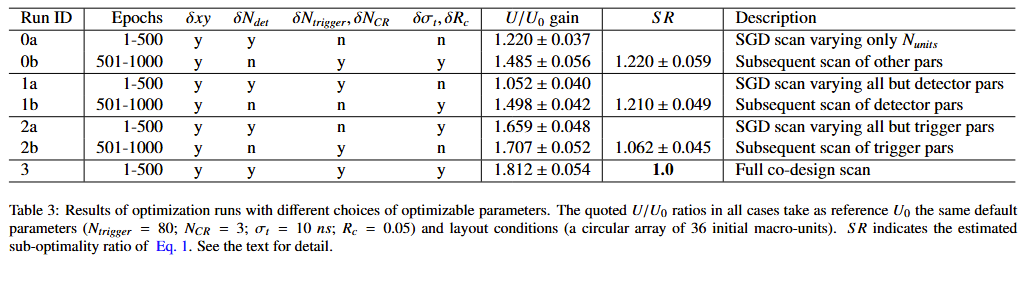 Co-Design Of Scientific Experiments
Next Monday, or Tuesday at the latest, you will find a new bulky paper in the arXiv. Titled "On...
       |
Tommaso Dorigo Tommaso Dorigo is an experimental particle physicist, who works for the INFN at the University of Padova, and collaborates with the CMS and the SWGO experiments. He is the president of the Read More » |
Blogroll |

 Giorgio Chiarelli is a particle physicist. His research activity has been based largely at the Fermi laboratory near Chicago, US, at the CDF experiment. In 1994-96 he actively participated in the discovery of the top quark and in the first measurements of that particle's properties. Later, after directing the construction of a part of the new CDF detector, he moved its research interests toward the search for the Higgs boson. Currently he is a INFN research director in Pisa, where he leads the CDF-Pisa group. In the most recent years he dealt with problems connected with the communication of science.