Fake Banner
Travel With Two Infants

The other day I traveled with Kalliopi and our two newborns to Padova from Lulea. After six full...

A Nice Little Combination

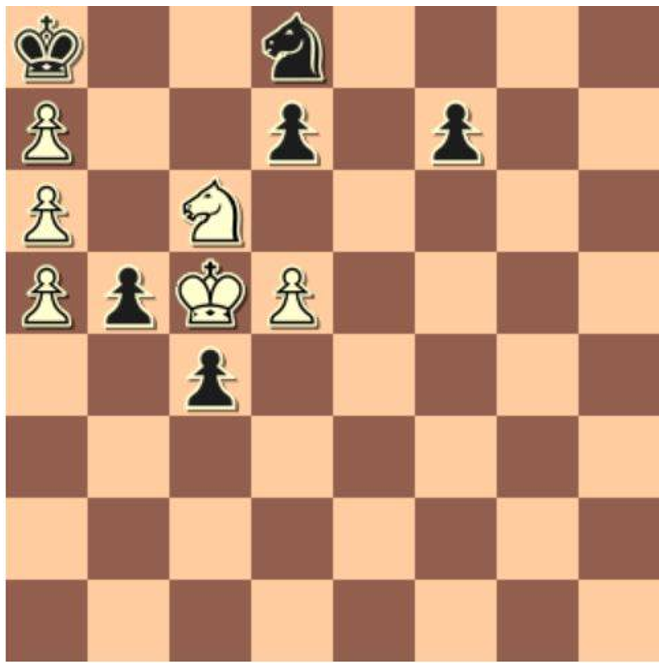
Although I have long retired from serious chess tournaments (they take too much time, a luxury...

The Strange Case Of The Monotonous Running Average

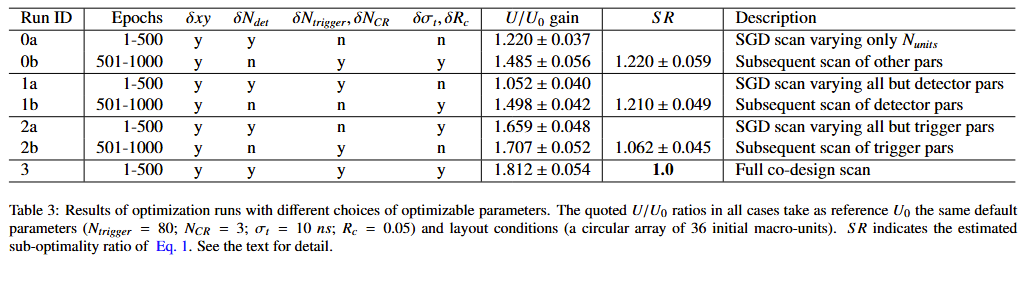
These days I am putting the finishing touches on a hybrid algorithm that optimizes a system (a...

Turning 60

Strange how time goes by. And strange I would say that, since I know time does not flow, it is...

User picture.
picture for Hank Campbellpicture for Patrick Lockerbypicture for Heidi Hendersonpicture for Bente Lilja Byepicture for Sascha Vongehrpicture for Johannes Koelman
Tommaso DorigoRSS Feed of this column.

Tommaso Dorigo is an experimental particle physicist, who works for the INFN at the University of Padova, and collaborates with the CMS and the SWGO experiments. He is the president of the Read More »

Blogroll
"Wise men speak because they have something to say; fools because they have to say something."

Plato
Yesterday somebody asked me here if I could explain how does a muon really decide when and how to decay. I tried to answer this question succintly in the thread, and later realized that my answer, although not perfectly correct in the physics, was actually not devoid of some didactic power. So I decided to recycle it and make it the subject of an independent post.

Before I come to the discussion of how, exactly, does a muon choose when and how to decay, however, let me make a few points about this fascinating particle, by comparing its phenomenology to that of the electron.
Cannot resist posting the following paperclip, grabbed from a news site this afternoon (it's a Sunday, a critical detail you should not overlook; and this is an Italian newspaper, as should be obvious).


The piece reports news on the Chilean earthquake. Here is a quick-and-dirty translation of the relevant part: "In Conception 350 buried under the rubble. Jackals in action. The government imposes the offside."
The CDF collaboration has recently released new results from a search for what is probably the clearest signature of Higgs boson decay: pairs of high-mass photon candidates. I am very glad to see this new analysis out for publication, since so far only DZERO, CDF's competitor at the Tevatron, had produced results on this particular final state.
"We were not yet prepared to claim that we had found a new charged lepton, but we were ready to claim that we had found something new. To accentuate our uncertainty I denoted the new particle by U for unknown in some of our 1975-1977 papers. The name came later. This name was suggested by Rapidis, who was then a graduate student and had worked with me in the early 1970s on the problem. The letter is from the Greek for "third" -the third charged lepton".
One of the few physics measurements that the LHC experiments are already in the position of producing, with the week-worth of proton-proton collision data they have collected last December, is that of the Bose-Einstein intereference between identical bosons.