

Fake Banner
Choosing Your Bets: The Selection Bias

As some of the long-time readers of this blog know, in this column I have occasionally discussed...

Have A Master In Science, Want A Post-Doc Position Directly?

Do you have a master in Science, and want to start a Post-Doc position directly? You can have it...
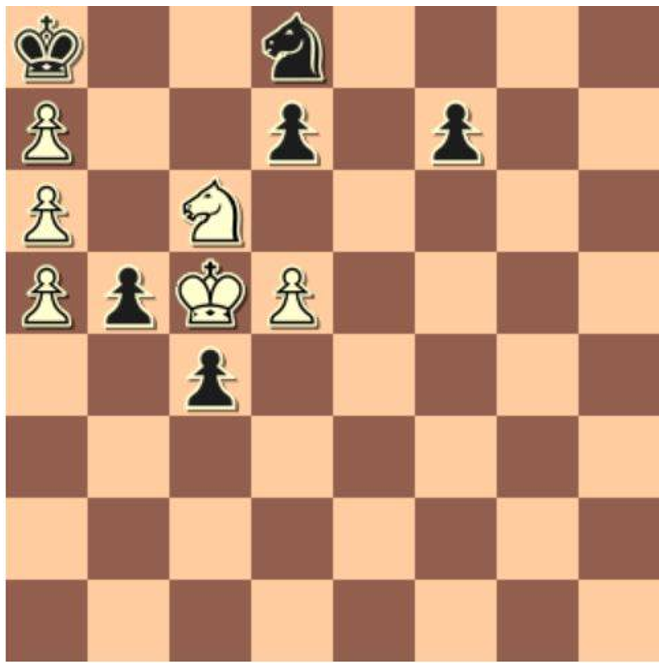
A Chess Study Requiring Backpropagation

The following position is a win for white. But how?It seems like white is able to grab a knight...
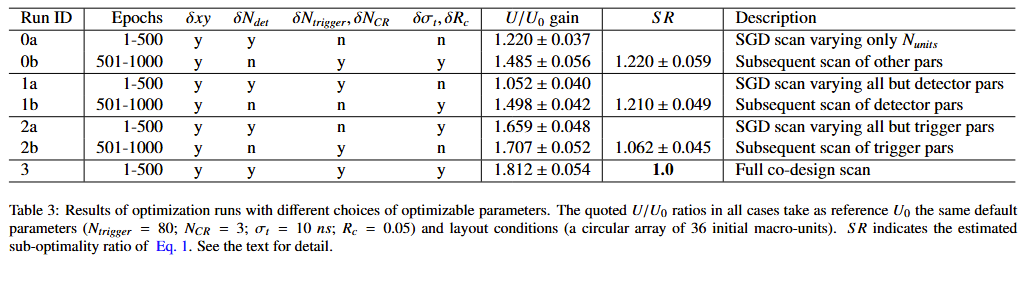
Co-Design Of Scientific Experiments

Next Monday, or Tuesday at the latest, you will find a new bulky paper in the arXiv. Titled "On...

User picture.
picture for Hank Campbellpicture for Heidi Hendersonpicture for Patrick Lockerbypicture for Bente Lilja Byepicture for Sascha Vongehrpicture for Johannes Koelman
Tommaso DorigoRSS Feed of this column.

Tommaso Dorigo is an experimental particle physicist, who works for the INFN at the University of Padova, and collaborates with the CMS and the SWGO experiments. He is the president of the Read More »

Blogroll
I remember very well the very first meeting of the Heavy Flavour Working Group in CDF that I attended in the summer of 1992. I was a summer student back then, and my understanding of spoken English was not perfect, so as a graduate student started discussing with his slides the results he was getting on the top quark mass reconstructed in simulated single-lepton top pair decays, I struggled to follow his talk -the physics was just as hard to follow as the English.
"In 1934, L.E.Kinsler at the California Institute of technology was studying the Zeeman effect as a means for evaluating the charge-to-mass ratio of the electron, e/m. The deduction of e/m from the measured wavelength differences involves, in addition to a high-precision measurement of the magnetic field, a knowledge of the way in which the individual electron spins and orbital angular momenta are coupled. However, there are certain quantities or combinations of quantities that are independent of the nature of the coupling.
One of the positive side-effects of preparing a seminar is being forced to get up-to-date with the latest experimental and theoretical developments on the topic. And this is of particular benefit to lazy bums like myself, who prefer to spend their time playing online chess than reading arxiv preprints.

It happened last week, in the course of putting together a meaningful discussion of the state of the art in global electroweak fits to standard model observables, and their implications for the unknown mass of the Higgs boson: by skimming the hep-ph folder I found a very recent paper by a colleague in Padova, which I had shamefully failed to notice in the last couple of careless visits.
This morning, upon leaving Brussels to go back home after my seminar in Louvain-la-Neuve, my attention was caught by a big green banner hanging from a tall building at Place Schuman. It said "Safe Internet Day" and below, in smaller fonts, "think before you blog". I found it inspiring.

A blog, if used correctly, is a very nice tool which enhances one's possibility to express one's ideas, or to do scientific outreach, as in my case. It may also be used for self-promotion at times (and the opportunity does not escape me, although I try to self-contain these outbursts). But a blog, if it attracts traffic, may become also a dangerous instrument, which must be handled with care.
This afternoon I am leaving to Belgium. I have been invited by the Université Catholique de Louvain to give a seminar on the status and the future of the Higgs boson searches at the Tevatron collider. This was a good pretext to sit down and learn the latest details of the analyses carried out by CDF and DZERO, and to do some real work of my own, mainly to understand what are the discovery or exclusion prospects for the Higgs in the US in the next few years. I have somehow described my conclusions in a recent article.
Earlier today I reported about the publication of a paper by a non-professional physicist, Carl Brannen. Now I have to do the same for a paper -the first one in a long and groundbreaking series, you can bet- from the CMS collaboration, one of the two main experiments at the CERN Large Hadron Collider.






