Fake Banner
Travel With Two Infants

The other day I traveled with Kalliopi and our two newborns to Padova from Lulea. After six full...

A Nice Little Combination

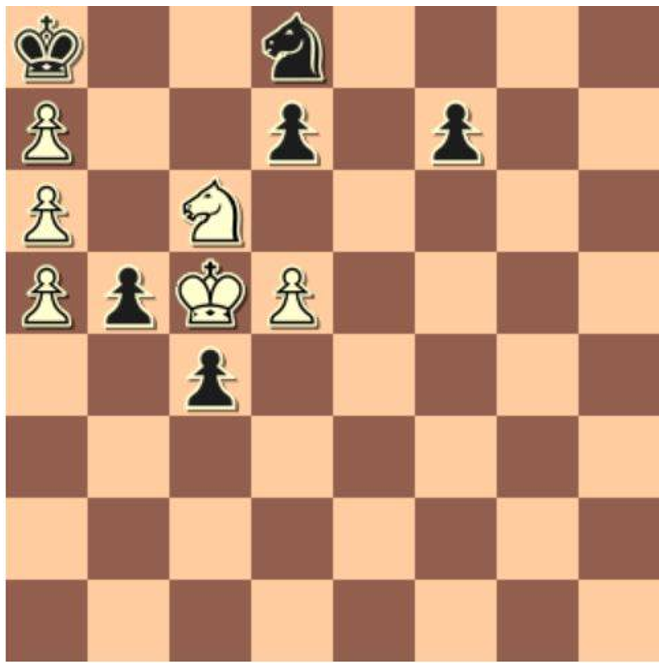
Although I have long retired from serious chess tournaments (they take too much time, a luxury...

The Strange Case Of The Monotonous Running Average

These days I am putting the finishing touches on a hybrid algorithm that optimizes a system (a...

Turning 60

Strange how time goes by. And strange I would say that, since I know time does not flow, it is...

User picture.
picture for Hank Campbellpicture for Patrick Lockerbypicture for Heidi Hendersonpicture for Bente Lilja Byepicture for Sascha Vongehrpicture for Johannes Koelman
Tommaso DorigoRSS Feed of this column.

Tommaso Dorigo is an experimental particle physicist, who works for the INFN at the University of Padova, and collaborates with the CMS and the SWGO experiments. He is the president of the Read More »

Blogroll
The CDF Collaboration has recently produced a new analysis of proton-antiproton collisions at the now second-world-best collision energy of 1.96 TeV. They searched for very rare decays of the B mesons, particles composed of, would you guess, a b-quark and a lighter partner orbiting around each other.
As if taken by a spell, my joking claim to be on strike in the last post grew to become one of the longest streaks of absence from blogging of the last few months, for a series of irrelevant reasons tightly packed together.

In the meantime I have tried to put together an article on a recent very interesting measurement performed by the CDF collaboration: a study of very rare decays of B mesons, which can now not only determine the rate of said decays, but also have a taste at subtle kinematical effects in the distribution of the final states. The distributions are a new key to discriminate the existence of new physics in these rare processes.
Shoot. Today I am on strike.

This morning I decided to post here an article describing the details of a new result just approved by the CMS collaboration, the observation of a nice signal of phi meson decays. It is a result of which I am quite proud, and although not really a big deal, it is a nice way to start the new year, while we wait for more data from the LHC.

I had just finished writing the 200-lines piece describing the likelihood fit to the mass distribution, when I decided to save the draft with the "publish" box unmarked, to give it a last reading before submitting it. And the crazy web interface logged me off the site instead!
Today's visit to the Cornell Arxiv, the repository where scientific papers on physics, astrophysics, mathematics, and a few other disciplines are made publically accessible before getting published on paper, was a productive one. Some casual browsing allowed me to learn a few random things on topics I know little or nothing about; but what really made my day was reading study by a few distinguished theorists (Vernon Barger, Wai-Yee Keung, and Brian Yencho), who considered a collider signature I had been fantasizing about in the past.
"Blondes make the best victims. They're like virgin snow that shows up the bloody footprints."

Alfred Hitchcock
Note to self. The list of countries to avoid visiting grows in 2010 with the entry of Ireland, a green country where people speak with a funny accent and drink good spirits. These are not at all reasons to avoid a visit. Instead, I find it sufficient the new law in force since January 1st against blasphemy. The law condemns the publishing or expression of content offensive or insulting religions (not just the Catholic one) with fines up to 25,000 euros.