When subnuclear particles traverse matter they give rise to a multitude of physical phenomena. The richness of the different processes is a crucial asset for the construction of sensitive particle detectors, and it is interesting in its own right. Indeed, it has been a very vigorously pursued field of research of its own ever since the end of the nineteenth century, with the discovery of X rays
(produced when electrons released their kinetic energy as they reached the cathode of an accelerating tube), and then after Rutherford's team bombarded gold foils with alpha particles (helium nuclei) emitted by a radioactive substance.
With the delta variant of Covid-19 surging in many countries - e.g., over 100,000 new cases per day foreseen in the UK in the next few days, and many other countries following suit - we may feel depressed at the thought that this pandemic is going to stay with us for a lot longer than some originally foresaw.
In truth, if you could sort out your sources well, you would have predicted this a long time ago: epidemiologists had in fact foreseen that there would continue to be waves of contagions, although at some point mitigated by the vaccination campaigns. However, so much misinformation and falsehood on the topic has been since dumped on all media, and in particular on the internet, that it is easy to pick up wrong information.
Following my strong belief that science dissemination, and open borders science, is too important to pursue as a goal to constrain it by fears of being stripped of good ideas and scooped by fast competitors, I am offering here some ideas on a reserch plan I am going to follow in the coming months.
The benefits of sharing thoughts early on is evident: you may, by reading about them below, be struck with a good idea which may further improve my plan, and decide to share it with me; you might become a collaborator - which would add to the personpower devoted to the research. You might point out problems, issues to address, or mention that some or all of the research has already been done by somebody else, and published - which would save me a lot of time!
After over one year of forced confinement, due to the still ongoing Covid-19 pandemic, academics around the world seem to have settled down on the idea that after all, we can still do our job via videoconferencing. We had to adapt to the situation as everybody else, of course, and in a general sense we are a privileged minority - other human occupations which are only possible in person suffered way more.
One of the reasons why I love my job as a researcher in experimental physics is that every day brings along a new problem to solve, and through decades of practice I have become quick at solving them, so I typically enjoy doing it. And it does not matter whether the problem at hand is an entirely new, challenging one or a textbook thing that has been solved a million times before. It is your problem, and it deserves your attention and dedication.
In
the previous post I mentioned a research project that I was about to conclude, centered on the detection of anomalies in multidimensional data. Here I would like to give some more detail of that research, as the article I wrote on the subject is now
publically accessible in the Cornell preprint arXiv (and is being sent to a refereed journal).


 Choosing Your Bets: The Selection Bias
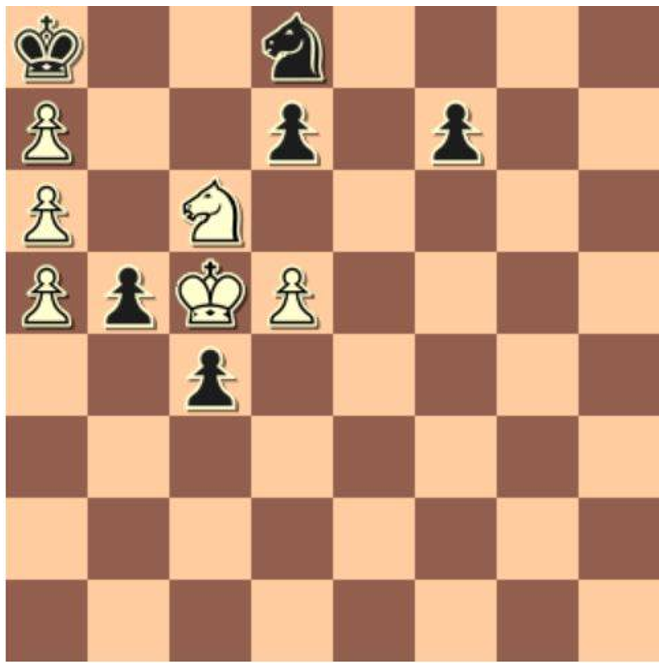 A Chess Study Requiring Backpropagation
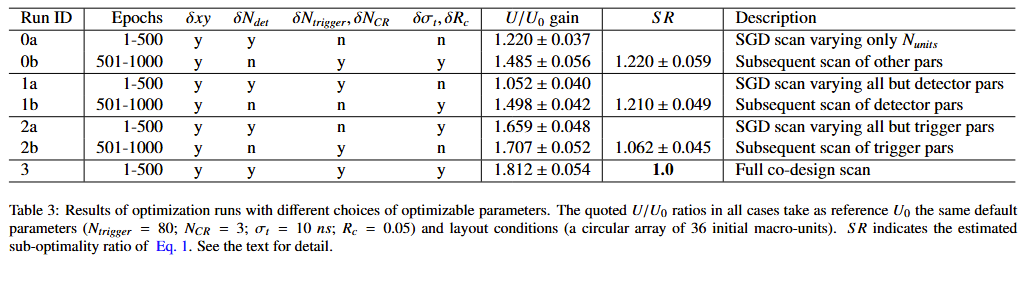 Co-Design Of Scientific Experiments