Fake Banner
A Chess Study Requiring Backpropagation

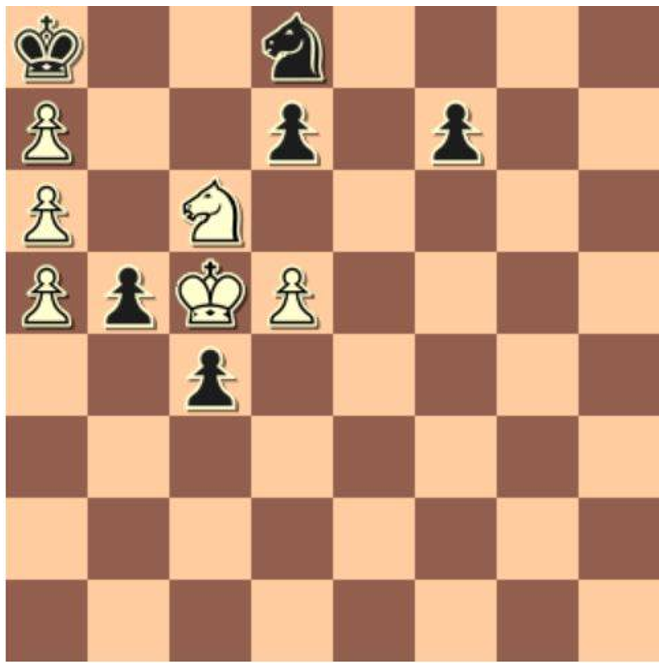
The following position is a win for white. But how?It seems like white is able to grab a knight...
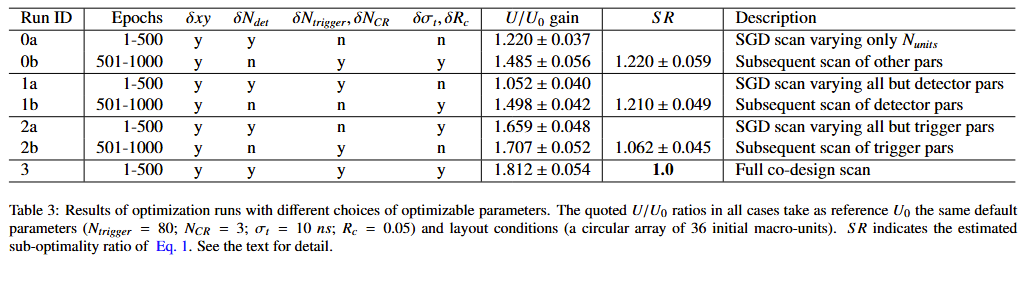
Co-Design Of Scientific Experiments

Next Monday, or Tuesday at the latest, you will find a new bulky paper in the arXiv. Titled "On...
Travel With Two Infants

The other day I traveled with Kalliopi and our two newborns to Padova from Lulea. After six full...
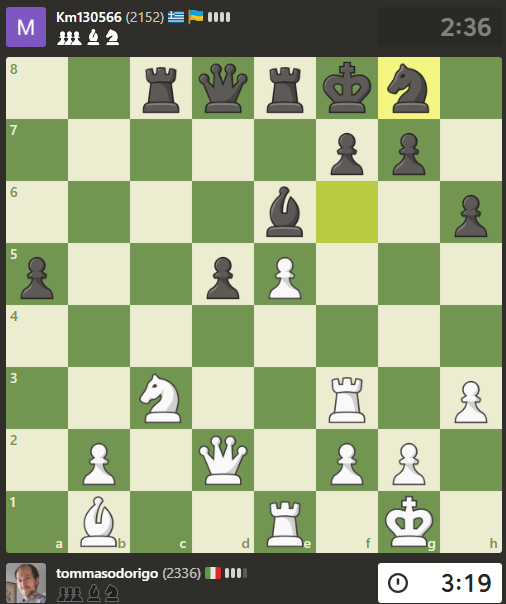
A Nice Little Combination

Although I have long retired from serious chess tournaments (they take too much time, a luxury...

User picture.
picture for Hank Campbellpicture for Heidi Hendersonpicture for Patrick Lockerbypicture for Bente Lilja Byepicture for Sascha Vongehrpicture for Johannes Koelman
Tommaso DorigoRSS Feed of this column.

Tommaso Dorigo is an experimental particle physicist, who works for the INFN at the University of Padova, and collaborates with the CMS and the SWGO experiments. He is the president of the Read More »

Blogroll

This article continues the series of postings in this blog on the results of artistic work by high-school students of three schools in Venice (out of five who took part initially) that participate in a contest and exposition connected to the initiative "Art and Science across Italy", an initiative of the network CREATIONS, funded by the Horizon 2020 programme of the EU.

Today I gave a seminar at the Physics Department of the University of Helsinki, to talk of "Controversial Phenomena in Collider Data and the 5-Sigma Criterion in HEP", invited by Juska Pekkanen and Mikko Voutilanen, two CMS colleagues. 
The seminar is more or less the same I have given several times in the past year around Europe and the US. It contains some statistics, some HEP history, and some material taken from my recent book, "Anomaly!".
The CMS collaboration at the CERN Large Hadron Collider has pulled off an extremely neat new measurement of the Higgs boson production rate - one which, for some reasons, is extraordinary in its own right.

Despite being the decay mode with the highest probability (two thirds of Higgs bosons die that way), the H->bb process is among the most elusive to put in evidence in LHC data, because b-quarks are quite commonplace there. 

As I explained in the previous post of this series, students in high schools of the Venice area have been asked to produce artistic works inspired by LHC physics research, and in particular the Higgs boson.

This is the first of a series of posts that will publish the results of artistic work by high-school students of three schools in Venice, who participate in a contest and exposition connected to the initiative "Art and Science across Italy", an initiative of the network CREATIONS, funded by the Horizon 2020 programme

The European Commission has launched a couple of weeks ago the campaign "Europe in my region 2017", an initiative aimed at getting the general public informed on the projects funded by the European Community in their area of residence or activity. There are open day events scheduled a bit everywhere, a blog contest, a photo contest, and other initiatives of interest.