This evening I am blogging from a residence in Sesto val Pusteria, a beautiful mountain village in the Italian Alps. I came here for a few days of rest after a crazy work schedule in the past few days -the reason why my blogging has been intermittent. Sesto is surrounded by glorious mountains, and hiking around here is marvelous. But right now, as I sip a non-alcoholic beer (pretty good), chilling off after a day out, my thoughts are focused 500,000,000 kilometers away.
Snow is melting in the Alps, and particle physicists, who have flocked to La Thuile for exciting ski conferences in the past weeks, are now back to their usual occupations. The pressure of the deadline is over: results have been finalized and approved, preliminary conference notes have been submitted, talks have been given. The period starting now, the one immediately following presentation of new results, when the next deadline (summer conferences!) is still far away, is more productive in terms of real thought and new ideas. Hopefully we'll come up with some new way to probe the standard model or to squeeze more information from those proton-proton collisions, lest we start to look like accountants!
Where by "It" I really mean the Future of mankind. The human race is facing huge new challenges in the XXI century, and we are only starting to get equipped to face them.
The biggest drama of the past century was arguably caused by the two world conflicts and the subsequent transition to nuclear warfare: humanity had to learn to coexist with the impending threat of global annihilation by thermonuclear war. But today, in addition to that dreadful scenario there are now others we have to cope with.
While I was busy reporting the talks at the "Neutrino Telescope" conference in Venice, LHCb released a startling new result, which I have not much time to describe in much detail this evening (it's Friday evening here in Italy and I'm going to call the week off), and yet wish to share with you as soon as possible.
The spectroscopy of low- and intermediate-mass hadrons (whatever this means) is a complex topic which either enthuses particle physicists or bores them to death. There are two reasons for this dycothomic behaviour.


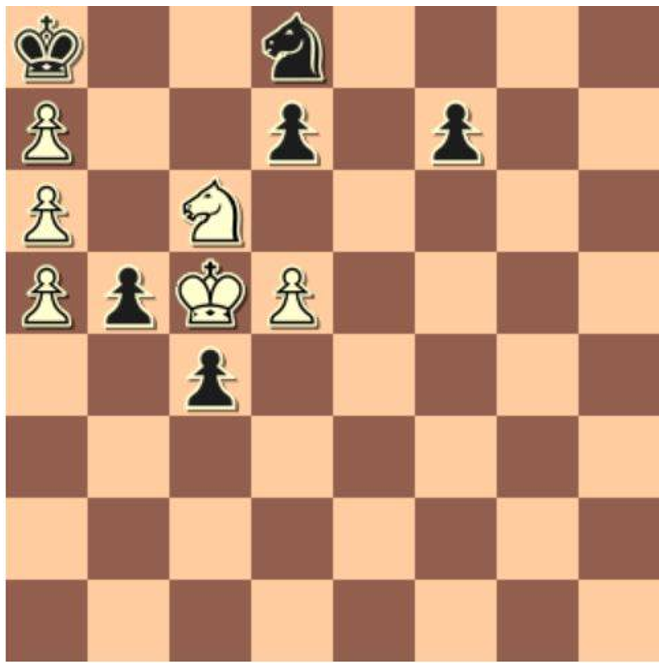 A Chess Study Requiring Backpropagation
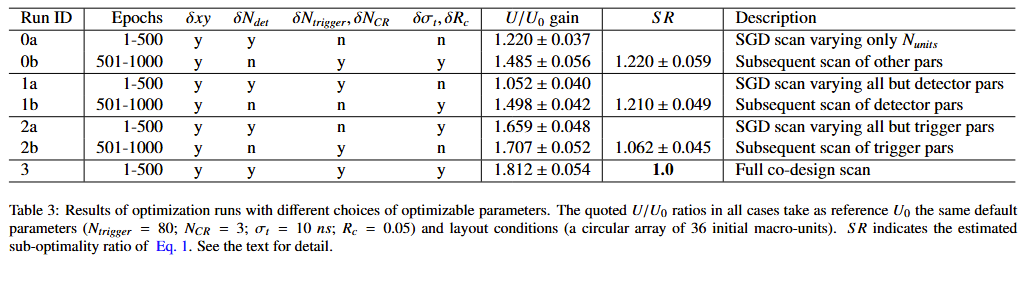 Co-Design Of Scientific Experiments
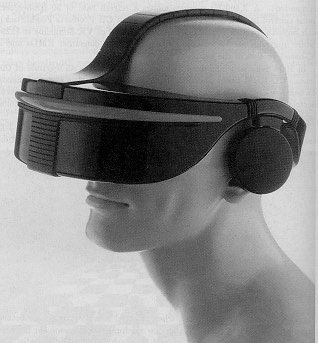 Travel With Two Infants
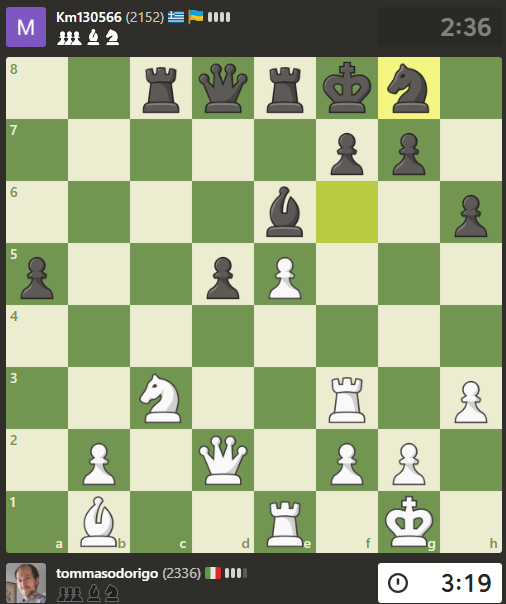 A Nice Little Combination