The mediatic effect of the Higgs boson discovery of last July is clear to everybody. And CERN has been very good at exploiting it, making fundamental physics a familiar topic and creating interest worldwide. Yet I think we can do more. The gap between basic research in physics and the public is wide, and we are doing still too little to fill it.
What looks like a tantalizing signal of the rare two-muon decay of the Higgs boson has been evidenced in an analysis of 2011+2012 data just sent to PRL by the CMS collaboration. This analysis targeted supersymmetric neutral Higgs bosons, whose decay to muon pairs is enhanced for some values of the SUSY parameters, but was not expecting to see any signal in the 25 inverse femtobarns of collisions that the CMS experiment has so far collected.
I think I wrote a post about the "definitive results" of the CDF and DZERO experiments on the search for the Higgs boson at least a couple of times already in the past, but you know, these busy experimentalists continue to improve their analyses, adding previously incomplete information, combining results, tweaking and improving things here and there. It is only natural that on such an important topic as the observation of the Standard Model Higgs boson the Tevatron folks were not ready to give up just yet.
The number of conferences held every year around the world to present and discuss topics in frontier particle physics is surprisingly large: over a hundred per year. Just look at the following list of conferences scheduled in the last three weeks for a proof (and no, March is not very different from other months):
2/3 Moriond EWK
4/3 KEKPH 2013
4/3 DPG 2013
9/3 Moriond QCD
10/3 Aspen 2013
10/3 HiJetsUSC 2013
13/3 LHCC
17/3 LISHEP 2013
18/3 MITP 2013
21/3 HFMCW 2013
21/3 DPHEP7 2013
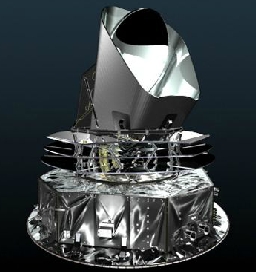
The Planck collaboration has released today data from the first 16 months of operation of their space instrument (see left). There will be a live streaming of their announcements to the public in 1.5 hours
at this link.
"...spend one year one mile underground to stare at a bucket of xenon ...
only to come out for your zen moment and profoundly declare "nothing
happened" ... and then you spend twice as long wondering how you allowed
yourself to be talked into doing that sort of nonsense ... one has to
admit to being duped"
Deluded Experimentalist, circa 2013


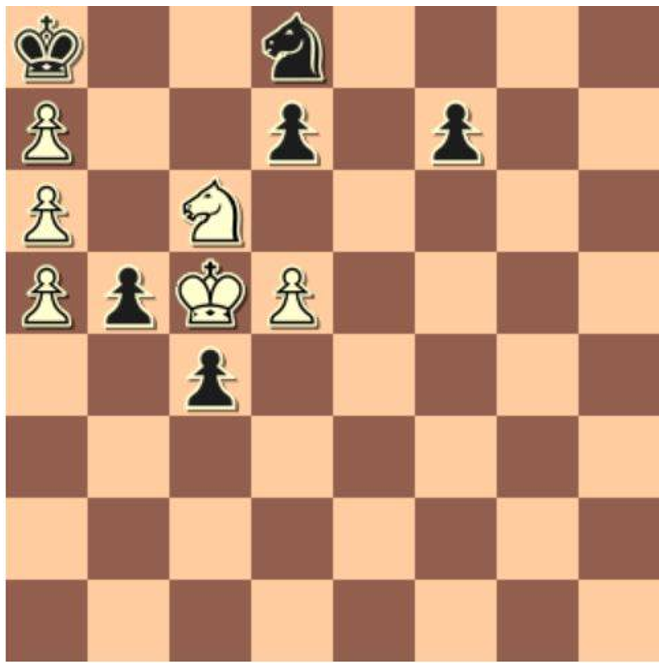 A Chess Study Requiring Backpropagation
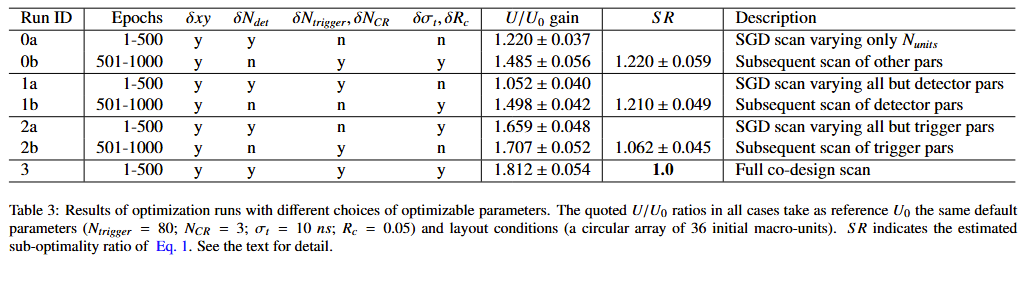 Co-Design Of Scientific Experiments
 Travel With Two Infants
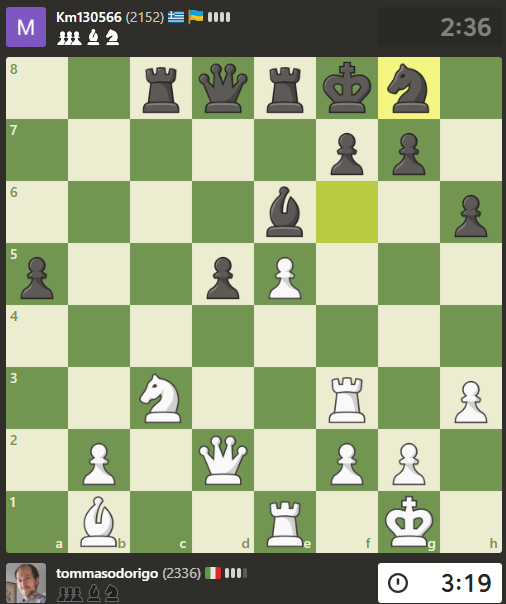 A Nice Little Combination