Fake Banner
Letter To A Demanding PhD Supervisor

A fundamental component of my research work is the close collaboration with a large number of scientists...

Letter To A Future AGI

I am writing this letter in the belief that the development of an artificial general intelligence...

A Great Year For Experiment Design

While 2025 will arguably not be remembered as a very positive year for humankind, for many reasons...

Living At The Polar Circle

Since 2022, when I got invited for a keynote talk at a Deep Learning school, I have been visiting...

User picture.
picture for Hank Campbellpicture for Patrick Lockerbypicture for Heidi Hendersonpicture for Bente Lilja Byepicture for Sascha Vongehrpicture for Johannes Koelman
Tommaso DorigoRSS Feed of this column.

Tommaso Dorigo is an experimental particle physicist, who works for the INFN at the University of Padova, and collaborates with the CMS and the SWGO experiments. He is the president of the Read More »

Blogroll
The news of the prizes to theorists and experimentalists are going to receive million-dollar prizes ($3M and $1M, details everywhere else -but see Peter's blog for insightful comment and discussion) are shaking the CERN experiments. While arguable (as in any case of a prize) whether they deserve the prizes for their work, nobody really ventures to discuss what they should or shouldn't do with the money. In the case of ATLAS and CMS spokespersons and past spokespersons, however, opinions vary widely.
In High-Energy Physics the small p-value of an observation may be the first hint of a discovery about to be made. Here by p-value I just mean the probability, just to be fancy (or brief). Because we rely on the assessment of the rarity of observations to decide whether we have discovered something or not, we physicists are (or should be) really careful with p-values. Today's article aims at demonstrating how easy it is to be carried away into giving more relevance to an observation than we should.
A new preprint is out in the arxiv today, detailing the results of a new analysis of neutrino speeds performed by the OPERA collaboration using proton spills of the CNGS beam produced during dedicated runs in May this year.
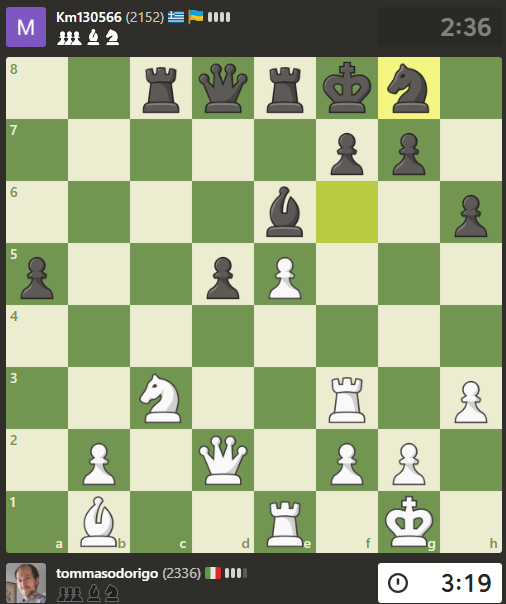
Chess News

Chess News

Dec 06 2012 | comment(s)

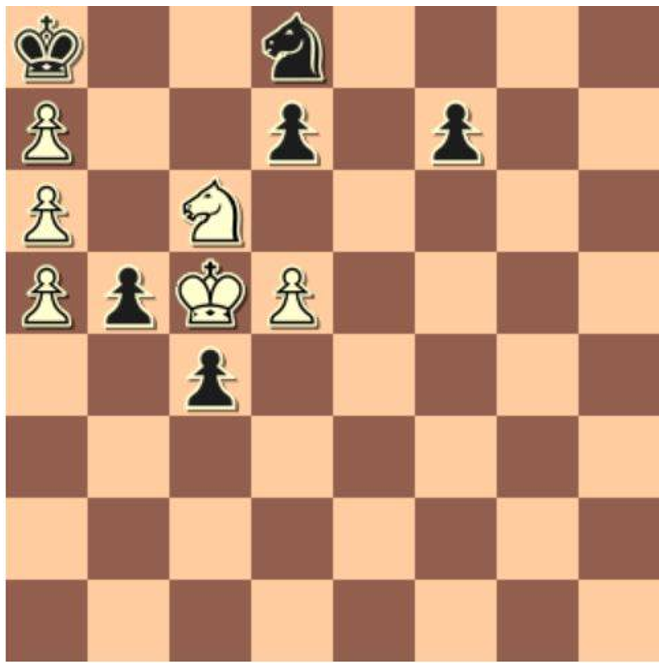
About one year ago I started playing competitive chess again, after a hiatus of almost a decade. Because of the hiatus and some change in the organization of chess in Italy, my status from that of candidate master (with an Elo rating of about 2120, which however would correspond to something like 2020-2050 in fide rating) was taken back to the status of a first national category, with an Elo in the lower 1800's.
Venice is a wonderful place to visit, if you have a week or even a weekend to spend immersed in art and history, or just to get lost in it and enjoy the romanticism of the place. However, if you live there you tend to hate the town as much as you love it.

Take a house move for instance: nowhere is a house move a kid's game -it is in fact a well-known cause of stress in any circumstance. But in Venice it may become a real trauma. The problem is multi-fold: houses do not usually have an elevator; stairs are usually too narrow for any piece of furniture; space in front of one's windows may be too limited for any manouver.
The conceptual design report of the Mu2E experiment at Fermilab is out in the arxiv for you to browse. Mind you - it is a rather thick document, 562 pages in all, so if all you have is 15' of lunch break you have better try something lighter.