
Fake Banner
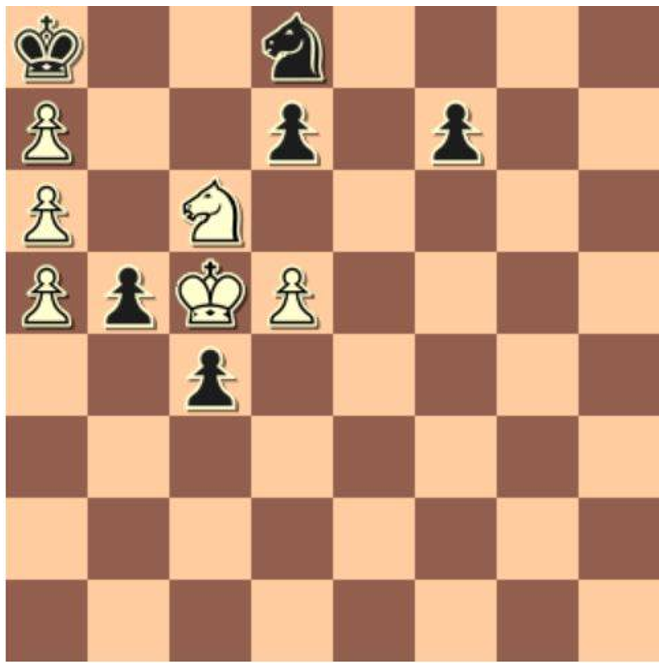
A Chess Study Requiring Backpropagation

The following position is a win for white. But how?It seems like white is able to grab a knight...
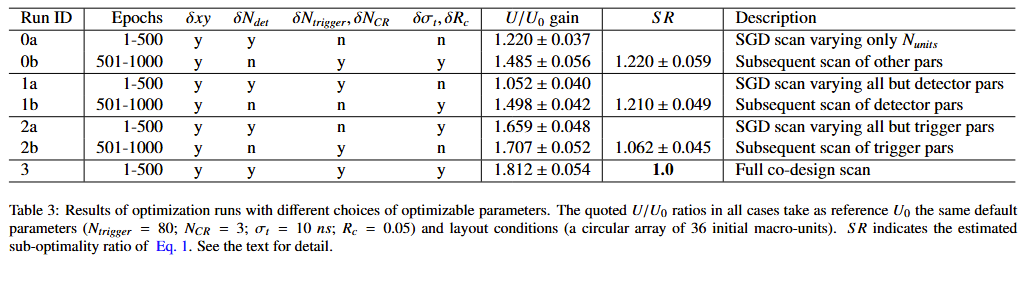
Co-Design Of Scientific Experiments

Next Monday, or Tuesday at the latest, you will find a new bulky paper in the arXiv. Titled "On...

Travel With Two Infants

The other day I traveled with Kalliopi and our two newborns to Padova from Lulea. After six full...
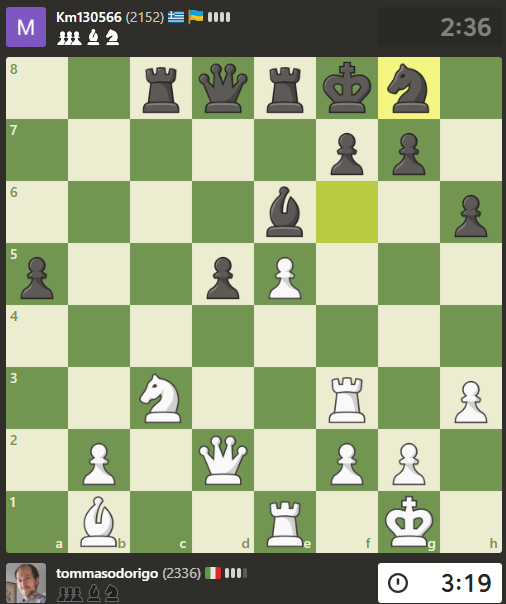
A Nice Little Combination

Although I have long retired from serious chess tournaments (they take too much time, a luxury...

User picture.
picture for Hank Campbellpicture for Patrick Lockerbypicture for Heidi Hendersonpicture for Bente Lilja Byepicture for Sascha Vongehrpicture for Johannes Koelman
Tommaso DorigoRSS Feed of this column.

Tommaso Dorigo is an experimental particle physicist, who works for the INFN at the University of Padova, and collaborates with the CMS and the SWGO experiments. He is the president of the Read More »

Blogroll
I just left the following comment in the thread of my most recent posting, but thought it was more visible here, so I am cut-pasting it:

sorry for leaving comments unattended here for long. The fact is I am playing a chess tournament and have no internet connection at home because of a move, so I am a bit disconnected for a while. Will be back at full speed next week.
So maybe I can complement the information here about the chess tournament.

This is the XVth "Città di Padova" tournament, and it runs from December 16th to December 23rd. It is very strong (for my standards) with 11 grandmasters and 10 international masters, plus a few lesser souls such as yours truly acting as a mattress.
UPDATE: for more on this, I only now realize that my friend at Resonaances had written about it yesterday... It is nice to see that he agrees with my conclusions, anyway. Also Peter has news on it, and as usual additional links...

---

My ATLAS colleagues will have to pardon me for the slightly sensationalistic title of this article, but indeed the question is one which many inside and outside CERN are asking themselves upon looking into the new public material of ATLAS Higgs boson searches using the 2011 dataset in conjunction with the first part of 2012 data.
This is a post about basics. That's because I think a point needs to be made which is surprisingly not as well-known as its elementary nature would have you guess.

Correlation -in its most used version, due to Pearson- is a measure of how two quantities can be observed to be in linear dependence on one another. It is a very common quantity to report the results of scientific studies, particularly but not exclusively in the social sciences. Researchers try to evidence the presence of a correlation between two phenomena as a preliminary step to investigating whether one can be the cause of the other.
The news of the prizes to theorists and experimentalists are going to receive million-dollar prizes ($3M and $1M, details everywhere else -but see Peter's blog for insightful comment and discussion) are shaking the CERN experiments. While arguable (as in any case of a prize) whether they deserve the prizes for their work, nobody really ventures to discuss what they should or shouldn't do with the money. In the case of ATLAS and CMS spokespersons and past spokespersons, however, opinions vary widely.
In High-Energy Physics the small p-value of an observation may be the first hint of a discovery about to be made. Here by p-value I just mean the probability, just to be fancy (or brief). Because we rely on the assessment of the rarity of observations to decide whether we have discovered something or not, we physicists are (or should be) really careful with p-values. Today's article aims at demonstrating how easy it is to be carried away into giving more relevance to an observation than we should.
A new preprint is out in the arxiv today, detailing the results of a new analysis of neutrino speeds performed by the OPERA collaboration using proton spills of the CNGS beam produced during dedicated runs in May this year.






