"A good speech should be like a woman's skirt: long enough to cover the subject and short enough to create interest."
W. Churchill
As my twenty three affectionate readers will probably remember, I enjoyed a very pleasant week in Kolymbari (Crete) last June, attending the first International Conference of Frontier Physics. Now, after you attend a conference and give there a presentation, you are supposed to produce a writeup of your talk for the proceedings book. So while October arrives unannounced with critically important errands to attend to, I find myself in the need to produce a 12-page document describing the most recent and important results of the CMS experiment.
UPDATE: what a difference a small typo makes! In the report below I claimed that the CDF top mass measurement was yet to be stripped of the record of being the most precise in the world, given that the total uncertainty on the mass was 1.01 GeV, while the newest CMS result has a total error of 1.07 GeV... I however realized this morning that the total CDF uncertainty of the quoted measurement is 1.10, not 1.01 ! So the CMS result mentioned at the bottom of this article is indeed the most precise single measurement in the world of the top quark mass !
--
In a few weeks I will speak in Torino, Italy at
Comunicare Fisica 2012, a conference devoted to the communication of Physics in the media, in schools, through web sites, etcetera. And
I need your help !Let me explain. I have submitted an abstract which reads as follows:
If you chance to take part in a conversation with people arguing that they do not want their tax money to go into building huge science gadgets whose utility for humanity is doubtful and null to them in particular, you have better be equipped with a sound way to shut their mouth.
Of course, one way is to explain with patience the importance of basic science, the investment in the future, etcetera. You might like to insert well-learned quotes, such as "Fatti non foste a viver come bruti, ma per seguir virtute e canoscenza" ("You were not made to live like beasts, but to follow virtue and knowledge" - Ulysses in Dante Alighieri's "Inferno"). Well, good luck with that - I bet your argument will not go very far with the kind of opposition I have in mind.
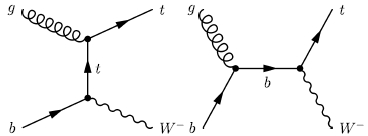
In the last few days CMS released four new publications, which you can download from the Cornell arxiv site. These are exquisite new measurements in the fields of top physics, exotica searches, and higgs physics, and so I thought I would give you the coordinates here, and comment briefly on the first result in the list:
paper 1,
paper 2,
paper 3,
paper 4.


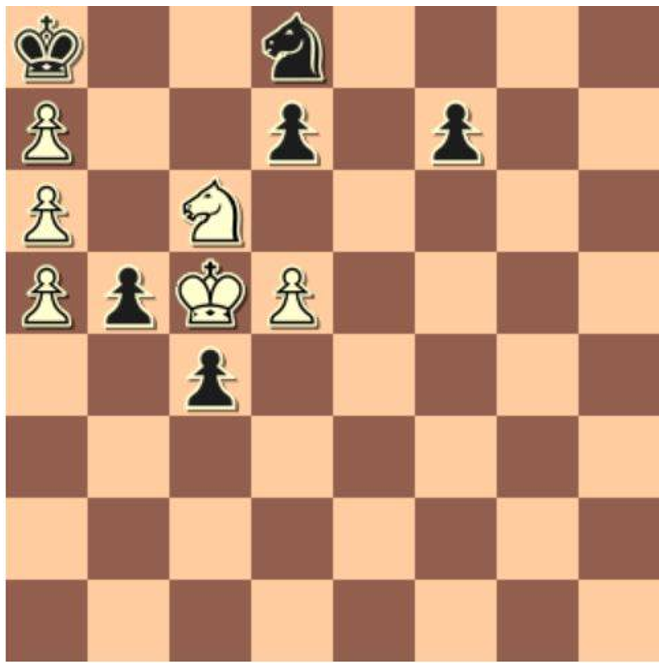 A Chess Study Requiring Backpropagation
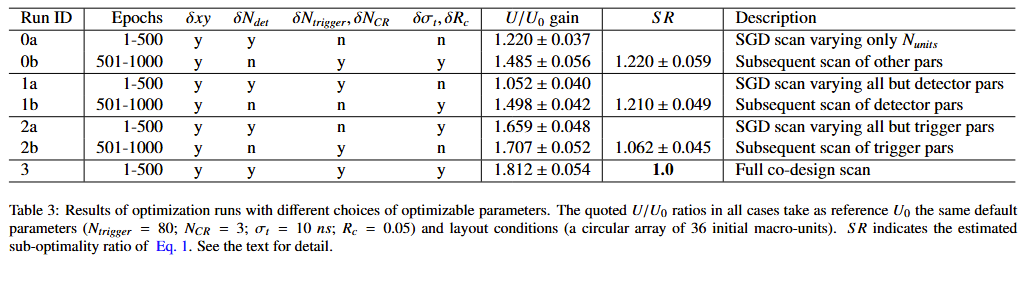 Co-Design Of Scientific Experiments
 Travel With Two Infants
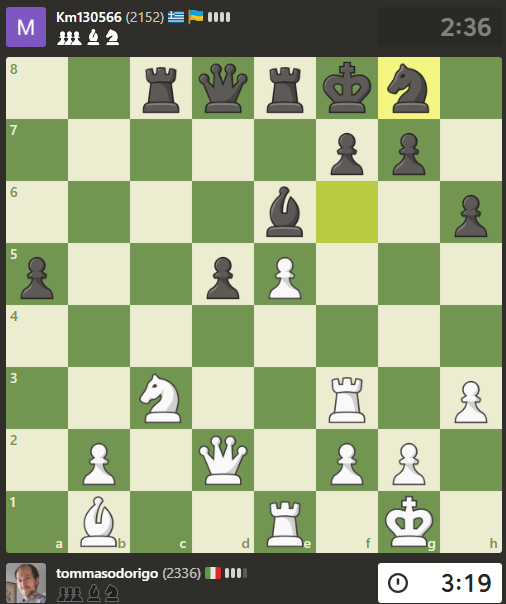 A Nice Little Combination