Fake Banner
A Chess Study Requiring Backpropagation

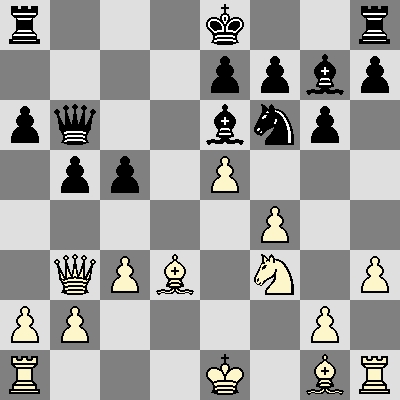
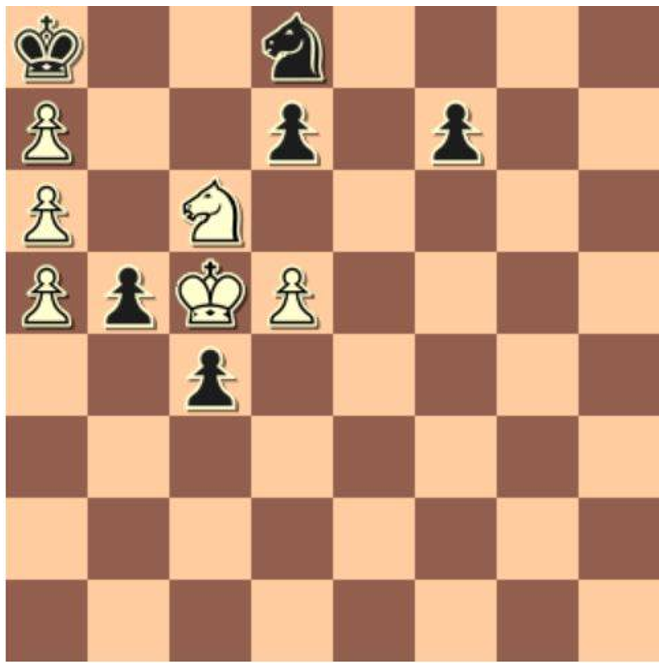
The following position is a win for white. But how?It seems like white is able to grab a knight...
Co-Design Of Scientific Experiments

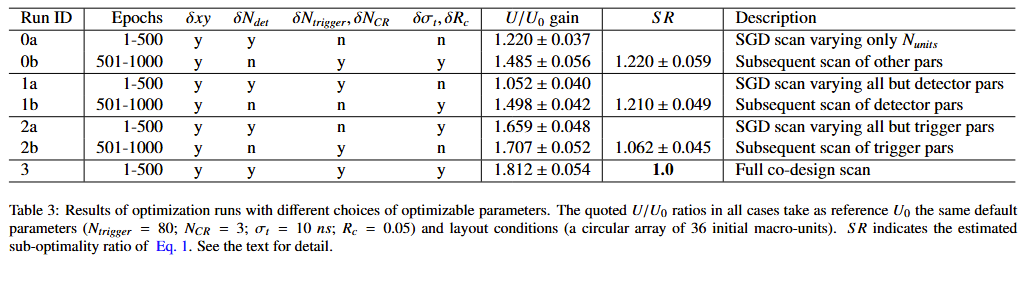
Next Monday, or Tuesday at the latest, you will find a new bulky paper in the arXiv. Titled "On...
Travel With Two Infants

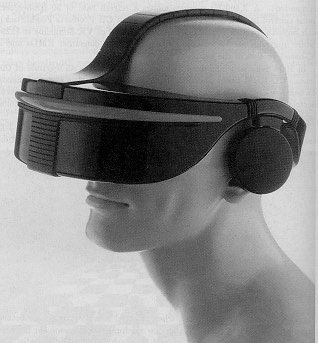
The other day I traveled with Kalliopi and our two newborns to Padova from Lulea. After six full...
A Nice Little Combination

Although I have long retired from serious chess tournaments (they take too much time, a luxury...

User picture.
picture for Hank Campbellpicture for Patrick Lockerbypicture for Heidi Hendersonpicture for Bente Lilja Byepicture for Sascha Vongehrpicture for Johannes Koelman
Tommaso DorigoRSS Feed of this column.

Tommaso Dorigo is an experimental particle physicist, who works for the INFN at the University of Padova, and collaborates with the CMS and the SWGO experiments. He is the president of the Read More »

Blogroll
For the second and last time this century, the planet Venus will pass over the visible disk of our Sun for observers located in the Americas (in the evening of June 5th) and western Europe (in the morning of June 6th). The event has a noteworthy scientific value -particularly for exoplanetary searches-, but it is also quite spectacular to observe, if you have some modest equipment (but you should be able to spot it with your naked eye, provided you only look through a thick-smoked glass; never look at the Sun directly!). The added value is that probably none of us will be around the next time this event occurs, in 2117.
"The decay widths have higher-order perturbative QCD corrections, and these are particularly important for the  decay which dominates over a wide range of (light) Higgs masses. The main effect is to cause the quark mass to run from its "constituent quark" value at  to a lower value at ."
Dear readers, your input is appreciated. Please read the following quotes and let me know what are your thoughts on the matter in the comments thread. You need not leave your name if you wish to remain anonymous, but I'd appreciate it if you mentioned your degree of education and whether you are/were/will be a scientist.

Quote 1:
Measuring the value and the impact of a scientist on her field of research using as data her scientific papers, the number of citations these papers got, and the prestige of the scientific journals where these were published is no easy matter.

Grading Researchers: The H-Index

There is a large body of literature on how best to account for all these factors together: the discipline is called "scientometrics". Of course, the goal is to summarize the productivity of a scholar in a single number; possibly one with at most double digits, since decision-makers who hire or fund are usually incapable of handling more complex data. One notable attempt is the Hirsch Index, proposed in 2005 by a physicist, Jorge Hirsch.
Top quarks are most often produced in pairs at hadron colliders. The reason of this fact is that the strong interaction, which produces most of the reactions between the projectiles, is flavor-blind, and it cannot create a single new flavor of quarks out of nothing. In other words, physical processes mediated by strong interactions conserve the quantum numbers describing the difference between the number of quarks and antiquarks of any given kind: U, D, C, S, T, and B.
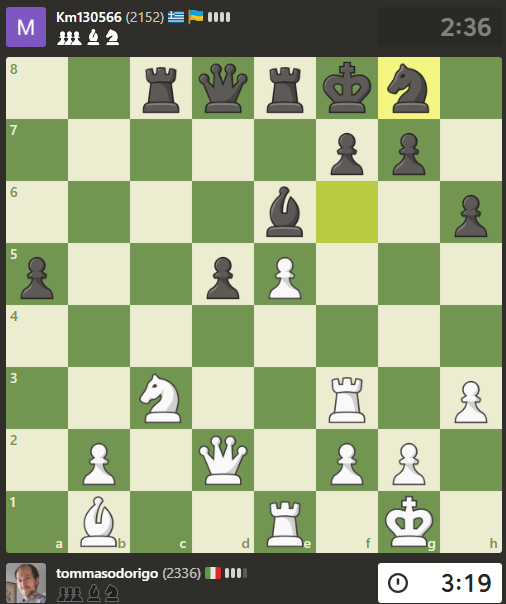
Well, not really a "true" queen sacrifice, but it is still a nice little combination the one I played against a strong 1st category player today at the "Baracchi Memorial" in Venice, a one-day rapid chess tournament which is held every May in Venice in memory of a young and promising member of our chess club, who died in a car accident.

The position after black's 15th move (15. ...Be6) is the one shown below. I am white.

T.Dorigo - L.Pasqualetto, Memorial Baracchi 20/5/2012