Fake Banner
Travel With Two Infants

The other day I traveled with Kalliopi and our two newborns to Padova from Lulea. After six full...

A Nice Little Combination

Although I have long retired from serious chess tournaments (they take too much time, a luxury...
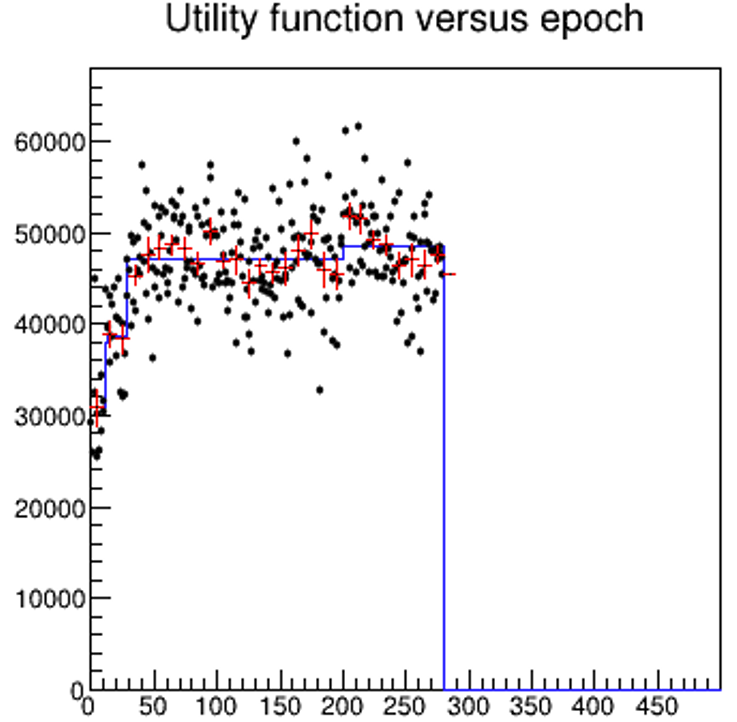
The Strange Case Of The Monotonous Running Average

These days I am putting the finishing touches on a hybrid algorithm that optimizes a system (a...

Turning 60

Strange how time goes by. And strange I would say that, since I know time does not flow, it is...

User picture.
picture for Hank Campbellpicture for Patrick Lockerbypicture for Heidi Hendersonpicture for Bente Lilja Byepicture for Sascha Vongehrpicture for Johannes Koelman
Tommaso DorigoRSS Feed of this column.

Tommaso Dorigo is an experimental particle physicist, who works for the INFN at the University of Padova, and collaborates with the CMS and the SWGO experiments. He is the president of the Read More »

Blogroll
Having interacted for a few months with ChatGPT 5 now, both for work-related problems and for private / self-learning tasks, I feel I might share some thoughts here on what these large models can tell us about our own thought processes. 

The sentence above is basically giving away my bottomline from square one, but I suppose I can elaborate a bit more on the concept. LLMs have revolutionized a wide range of information-processing tasks in just three or four years. Looking back, the only comparable breakthrough I can recall is the advent of internet search engines in the early 1990s. But as exciting and awesome this breakthrough is, it inspires me still more to ponder on how this is even possible. Let me unpack this.
Interna

Interna

Oct 08 2025 | comment(s)

With this post I would like to present a short update of my personal life to the few readers who are interested in that topic. You know, when I started writing online (over 20 years ago!), blogs used to contain a much more personal, sometimes introspective, description of the owner's private life and actions. Since long, they have been substituted by much more agile, quick-to-consume videos. But the old-fashioned bloggers who stuck with that medium continue to have a life - albeit certainly a less glamorous one than that of today's influencers; so some reporting of personal affairs is not out of place here. 

A preamble

Subnuclear physics obeys the laws of quantum mechanics, which are quite a far cry from those of classical mechanics we are accustomed to. For that reason, one might be inclined to believe that analogies based on everyday life cannot come close to explaining the behavior of elementary particles. But that is not true – in fact, many properties of elementary particles are understandable in analogy with the behavior of classical systems, without the need to delve into the intricacies of the quantum world. And if you have been reading this blog for a while, you know what I think – the analogy is a powerful didactical instrument, and it is indeed at the very core of our learning processes.

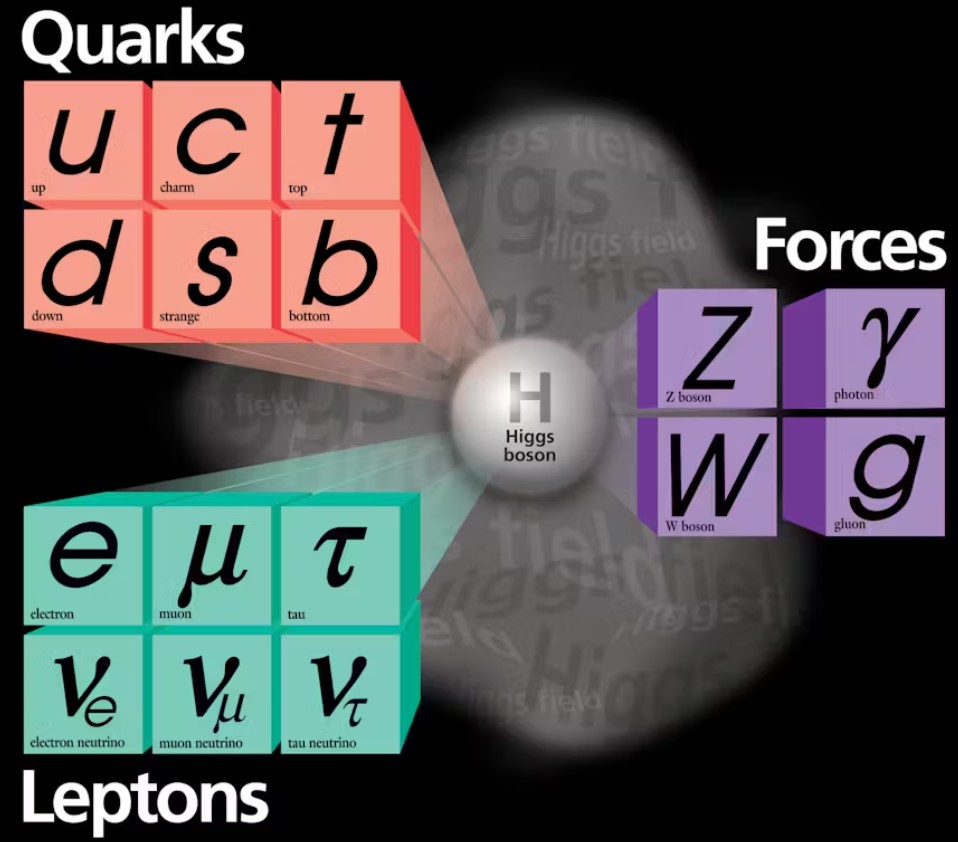
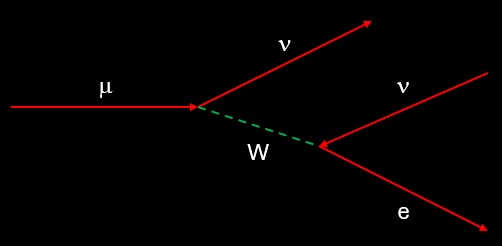
I recently ran into a description of the Mu3e experiment, and got curious about it and the physics it studies. So after giving it a look, I am able to explain that shortly here - I think it is a great example of how deep our studies of particle physics are getting; or, on the negative side, how deep our frustration has gotten with the unassailable agreement of our experiments with Standard Model predictions.

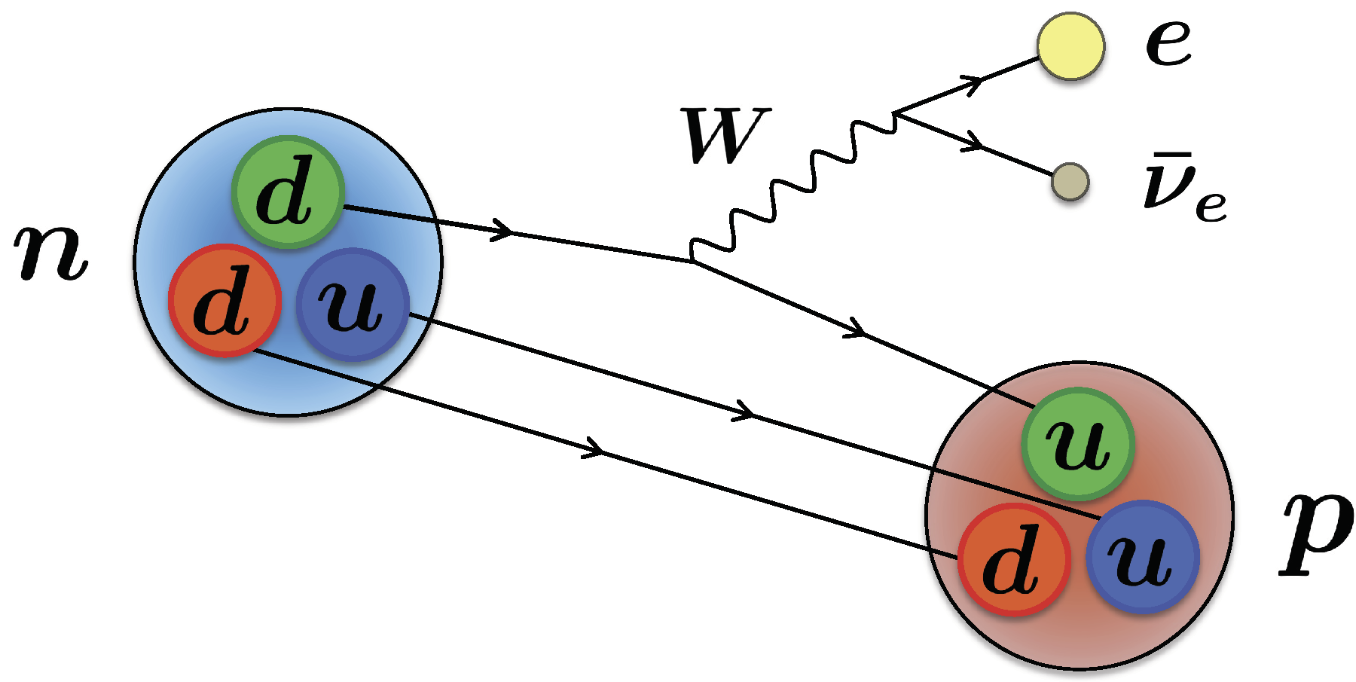
Matter stable and unstable in the Standard Model
The neutron is a fascinating particle, and one which has kept experimental physicists busy for almost a century now. Discovered by James Chadwick in 1932 in a cunning experiment which deserves a separate post (it is a promise, or a threat if you prefer),  the neutron has been all along a protagonist in the development of nuclear weapons as well as in the extraction of nuclear power from fission reactors. And of more relevance to our discussion here, it has powered endless studies both in the context of nuclear and subnuclear physics.
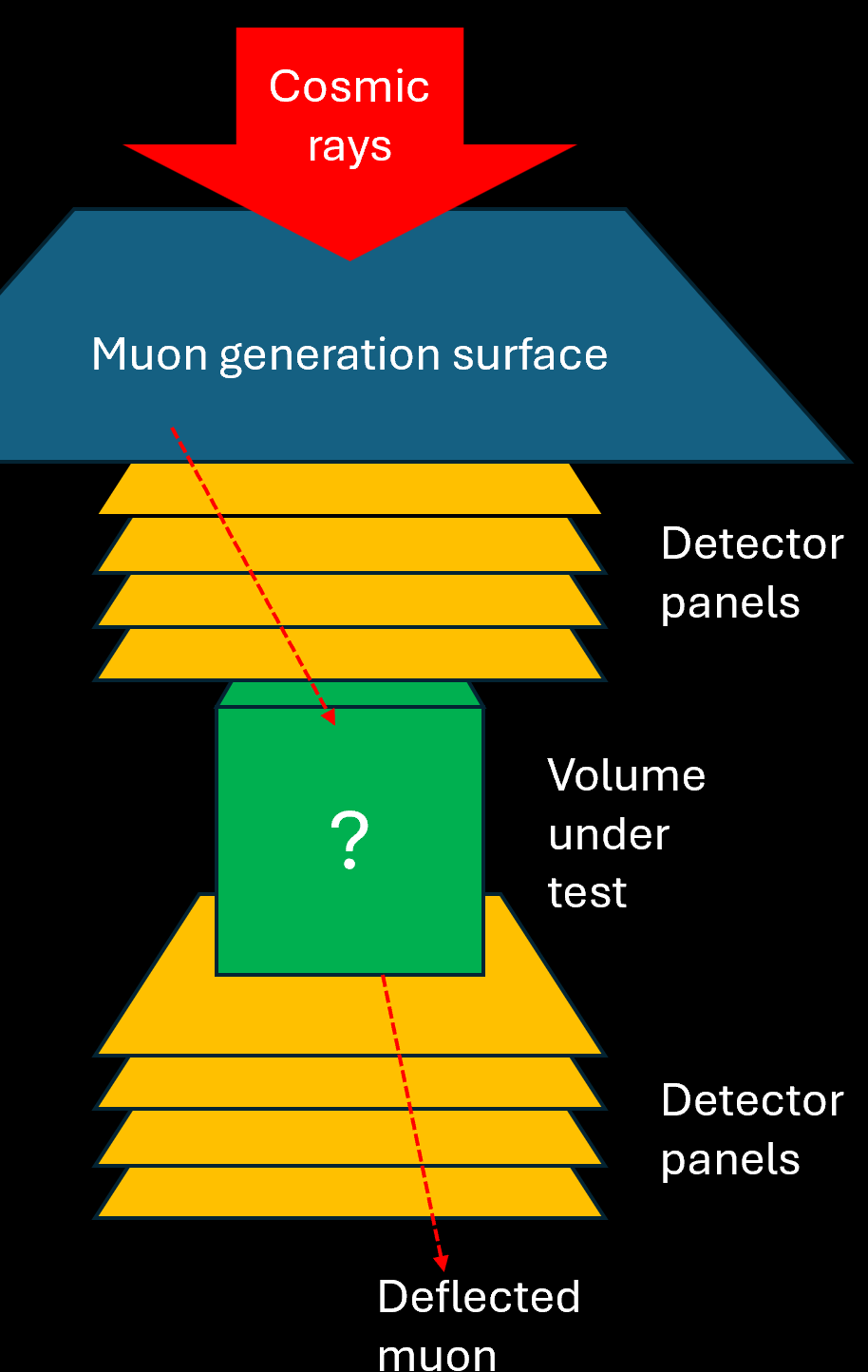
These days I am organizing a collaborative effort to write an article on holistic optimization of experiments and complex systems. "So what is the news," I could hear say by one of my twentythree  faithful readers (cit.) of this blog. Well, the news is that I am making some progress in focusing on the way the interplay of hardware design and software reconstruction plays out in some typical systems, and I was thinking I could share some of those thoughts here, to stimulate a discussion, and who knows, maybe get some brilliant insight.