Just a quick post today, to show the invariant mass distirbution of pairs of opposite-sign muons collected by the ATLAS and CMS experiment. Such plots are incredibly rich in information, as they contain the signal of ten different resonant states, and allow one to figure out the masses and production rates that these particles have, as well as the resolution of the detectors. I have shown an early such plot by CMS some time ago, but now the graph has been updated to contain all the relevant data collected in 2010 by the detector.
I was contacted a few weeks ago by Bruno Arpaia, an Italian jornalist, translator, and writer of several remarkable novels. He explained that he had just finished a novel, "L'energia del vuoto" (the energy of vacuum) centered on the LHC and the research in particle physics, and that he wanted to thank me for supplying a lot of useful information in this blog, from which he had learned a few details useful for the writing of the book. I was of course quite happy to receive such a compliment, and to be proven that sometimes this blog may be useful.
I just read with interest some slides portraying the situation of male/female differences in the employment at the Italian National Institute of Nuclear Physics, the institute I myself work for. I do not wish to make a summary here, but just paste a graph which I find interesting. The graph compares male and female employment in the University with the one in the INFN, for corresponding levels of employment.
At PhyStat 2011, currently being held at CERN, talks are informal and the atmosphere is friendly, but I have heard very few jokes from the participants so far. Just a minute ago I witnessed what might be a pretty strong bid at the best joke of the conference.
Kyle Cranmer was showing results of very CPU-intensive calculations of renormalization-group equations used to derive measurable parameters of Supersymmetry from the value of basic parameters at a high-energy scale. He was mentioning that the original calculation used to take 720 CPU-days, but that they had found a series of shortcuts using neural networks, and the result was a huge improvement in speed: this was now a 1-minute calculation!
Looks like particle physicists have finally digested the food of Christmas break by now. Just as I was reviewing a new paper on the arxiv on the Tevatron Higgs limits, I ran into
another hot preprint, titled "The Reactor Antineutrino Anomaly".
While listening to highly interesting talks on cutting-edge statistical issues at
PHYSTAT 2011, I have casually been reading this morning
a paper recently posted on the arxiv, which was pointed out to me by a Cypriot friend, Alex (thanks, Alex!).
The authors (
J. Baglio,
A. Djouadi,
S. Ferrag,


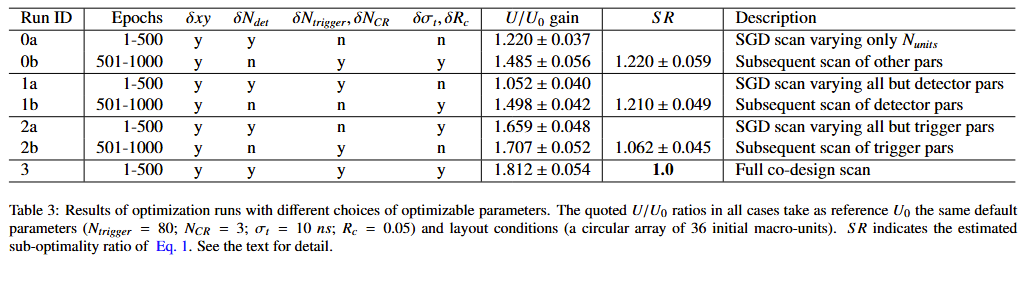 Co-Design Of Scientific Experiments
 Travel With Two Infants
 A Nice Little Combination
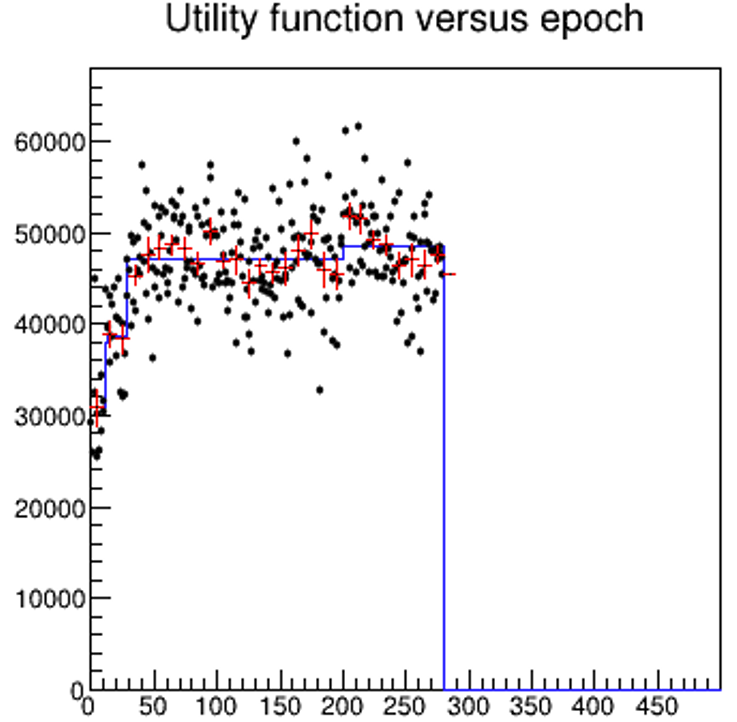 The Strange Case Of The Monotonous Running Average












