Fake Banner
Travel With Two Infants

The other day I traveled with Kalliopi and our two newborns to Padova from Lulea. After six full...

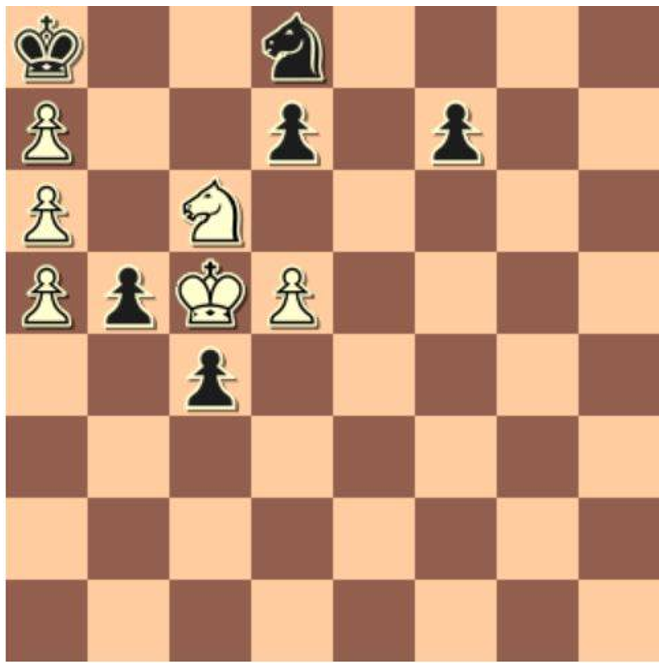
A Nice Little Combination

Although I have long retired from serious chess tournaments (they take too much time, a luxury...

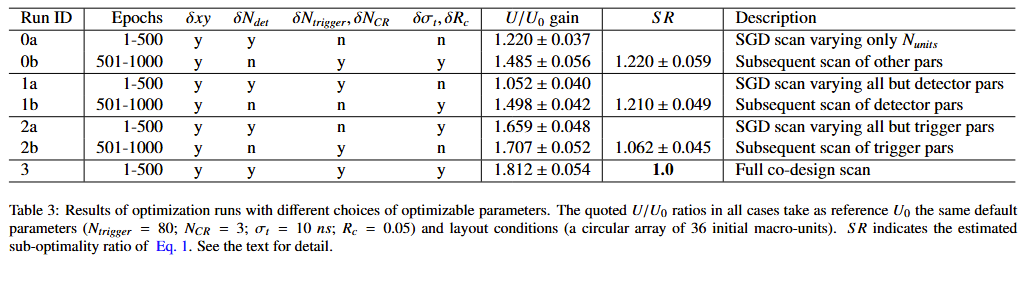
The Strange Case Of The Monotonous Running Average

These days I am putting the finishing touches on a hybrid algorithm that optimizes a system (a...

Turning 60

Strange how time goes by. And strange I would say that, since I know time does not flow, it is...

User picture.
picture for Hank Campbellpicture for Patrick Lockerbypicture for Heidi Hendersonpicture for Bente Lilja Byepicture for Sascha Vongehrpicture for Johannes Koelman
Tommaso DorigoRSS Feed of this column.

Tommaso Dorigo is an experimental particle physicist, who works for the INFN at the University of Padova, and collaborates with the CMS and the SWGO experiments. He is the president of the Read More »

Blogroll
I received yesterday a copy of the brand-new book by Ilya Narsky and Frank Porter, "Statistical Analysis Techniques in Particle Physics" (Wiley-vch 2014), and I would like to offer here my impressions and thoughts on the material.
Chapter 10 of the report on the 2013 community summer study held at Snowmass, titled "Communication, Education, and Outreach" is available since Jan 24th in the Cornell ArXiv. It is a 26-pages document describing the importance of outreach activities to foster the development of particle physics, and offering ideas and strategies to improve the communication between scientists and policy makers. This is none other than the problem I have often referred to as the one of "filling the gap" between science and the general media.
"The most important task at hand is experimental. Based on our considerations of dynamical symmetry breaking through preons and the assumption of universal size for all quarks and leptons, we are led to predict that quarks and leptons have an inverse size of the order of 2-3 TeV. This can be tested by high-luminosity 5-10 TeV machines in the near future by looking for form factors for quarks and leptons and for excess production of lepton pairs in pp or ppbar collisions."

Jogesh Pati, "Preons and their implications for the next-generation accelerators", Proceedings of  the third annual workshop of the ICTP Summer Workshop on Particle Physics, Trieste 1983, p. 399-459.
I must say I feel proud of myself tonight.

In Italy a unified procedure to rank candidates to the position of associate or full professor has been launched last year, and I of course participated to the qualification by sending a documentation of the work I performed and the articles I wrote in the course of my scientific career. With me, thousands of other candidates did the same.

Note that as a researcher for the Italian Institute of Nuclear Physics (INFN) I am presently following a career parallel to the one existing in the University. Despite that, in Italy everybody knows that titles such as the one granted by the selection mentioned above are important for one's career.
"Statistical power does not corrupt"

Leland Wilkinson, "Statistical Methods in Psychology Journals", in American Psychologist, August 1999.

[Note: "power" in the context of statistical tests measures the probability that a test rejects the null hypothesis when the alternate hypothesis is true). Thanks to Michael Schmitt for pointing out the quote]
Tetraquarks are hypothetical particles made up by four quarks (two quarks and two antiquarks). Unlike mesons (quark-antiquark pairs) and baryons (three-quark or three-antiquark systems), the quarks in a tetraquark are quite loosely bound within their confinement volume by strong interactions, as can be calculated with the help of quantum chromodynamics. Their tendence to separate into two quark-antiquark systems should yield a very short lifetime, making their observation quite difficult. However, some tentative evidence for their existence exists.