Fake Banner
Travel With Two Infants

The other day I traveled with Kalliopi and our two newborns to Padova from Lulea. After six full...

A Nice Little Combination

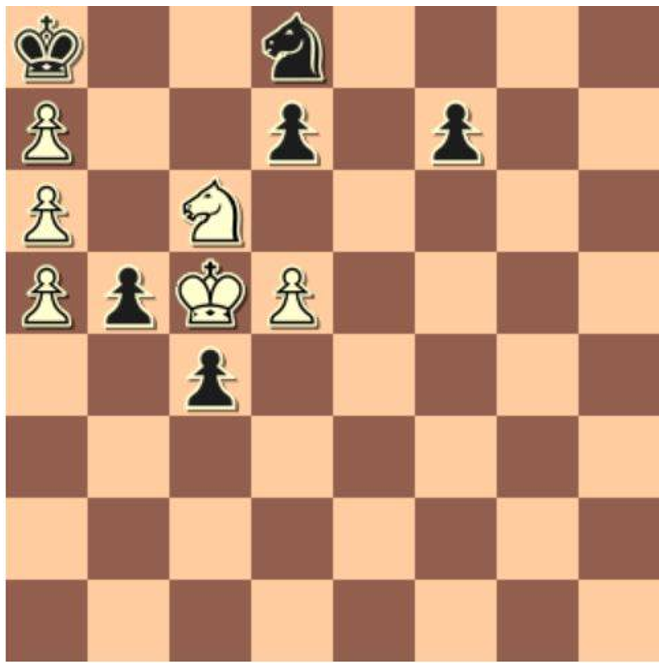
Although I have long retired from serious chess tournaments (they take too much time, a luxury...

The Strange Case Of The Monotonous Running Average

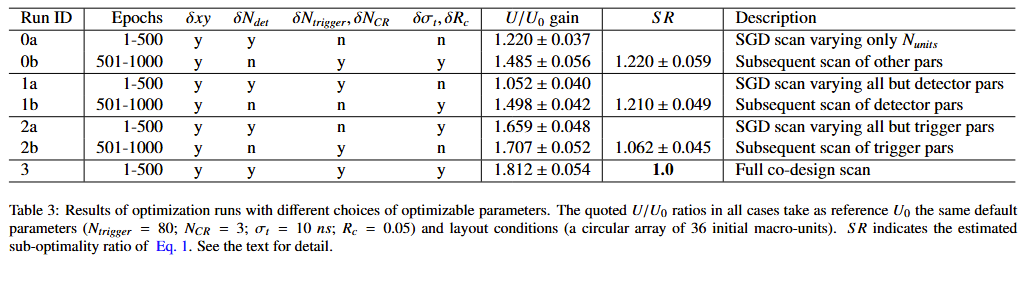
These days I am putting the finishing touches on a hybrid algorithm that optimizes a system (a...

Turning 60

Strange how time goes by. And strange I would say that, since I know time does not flow, it is...

User picture.
picture for Hank Campbellpicture for Patrick Lockerbypicture for Heidi Hendersonpicture for Bente Lilja Byepicture for Sascha Vongehrpicture for Johannes Koelman
Tommaso DorigoRSS Feed of this column.

Tommaso Dorigo is an experimental particle physicist, who works for the INFN at the University of Padova, and collaborates with the CMS and the SWGO experiments. He is the president of the Read More »

Blogroll
After fixing the Higgs boson mass to the best fit value mh = 125 GeV, the SM does not have any free parameter left to vary. Therefore all the anomalies in the present data must be statistical fluctuations and disappear with more statistics. This interpretation is supported by the fact that the average of all data agrees with the SM prediction [...] and the global χ2 is good: 16 for 15 dof (we recall that with n>>1 degrees of freedom one expects χ2 = n+-sqrt(n) ).
Whenever I try to explain something about particle physics to a layman, I run into the problem of mass/energy units. A Giga-electronVolt is not something you may expect people to be familiar with, and on the other hand it is not appealing to explain directly how it is defined: "if you take an electron and accelerate it by passing it through a potential difference of one billion Volts, that's the energy it has at the end: one GeV": this distracts the listeners by forcing them to focus on electrostatics, with the potential outcome that the conversation may diverge due to additional questions, like "Does the electric field need be uniform ?" or even, "What is a potential difference ?".
There is nothing like computer-assisted post-mortem analysis of your chess games to get you back to reality about the potential of your brain: the computer sees so much more than you do, and so much quicker, that you can't help throwing your hands up sometimes.
The ICARUS collaboration - operating a neutrino detector sitting not far from the OPERA experiment in the underground Laboratori del Gran Sasso in Italy - produced a refutation of the superluminality of neutrinos a while ago. That refutation was based on studying the energy spectrum of the neutrinos in the CNGS beam, coming from CERN through a trip of 700 km under the Earth's crust: superluminal neutrinos should have lost some energy due to electroweak radiation, which was not borne out by the data.
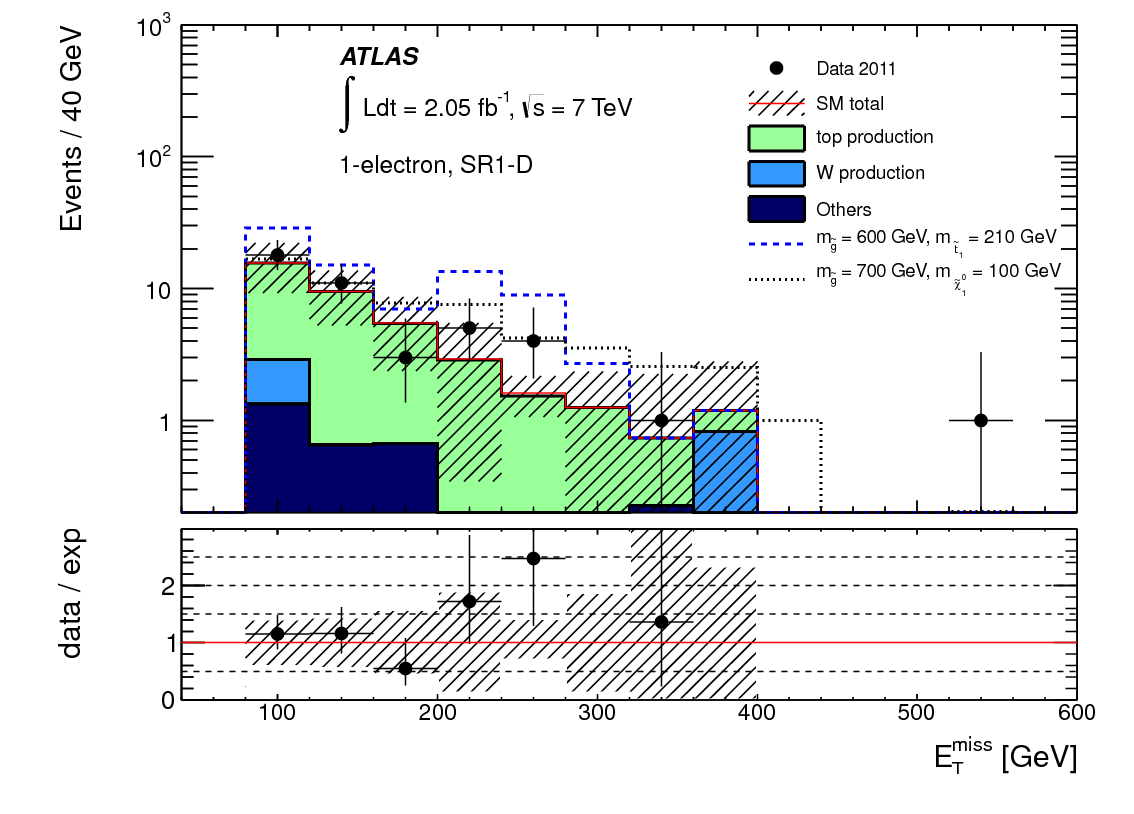
It is a gloomy winter for most SUSY phenomenologists: as they sit and watch, the LHC experiments continue to publish their search results for Supersymmetric particles, producing tighter and tighter direct bounds on the masses of squarks and gluinos for a variety of possible choices of the many free parameters defining the models under test. It looks as if the general feeling is "Today it's your preferred model going down the drain, tomorrow it might be my own".
2.2 standard deviations. That is what the combination of CDF and DZERO searches for the Higgs boson yield, according to a release of the interactions news wire.

The talks on Higgs searches are scheduled for this morning at the Moriond Electroweak conference in La Thuile, a nice ski resort in the Italian alps.

The money plot is the one below, which shows the upper limit on the Higgs boson production rate, in units of the Standard Model expectation (y=1 on the vertical axis corresponds to the SM Higgs production rate, for the particular mass identified by the abscissa in the graph).