Fake Banner
Choosing Your Bets: The Selection Bias

As some of the long-time readers of this blog know, in this column I have occasionally discussed...

Have A Master In Science, Want A Post-Doc Position Directly?

Do you have a master in Science, and want to start a Post-Doc position directly? You can have it...
A Chess Study Requiring Backpropagation

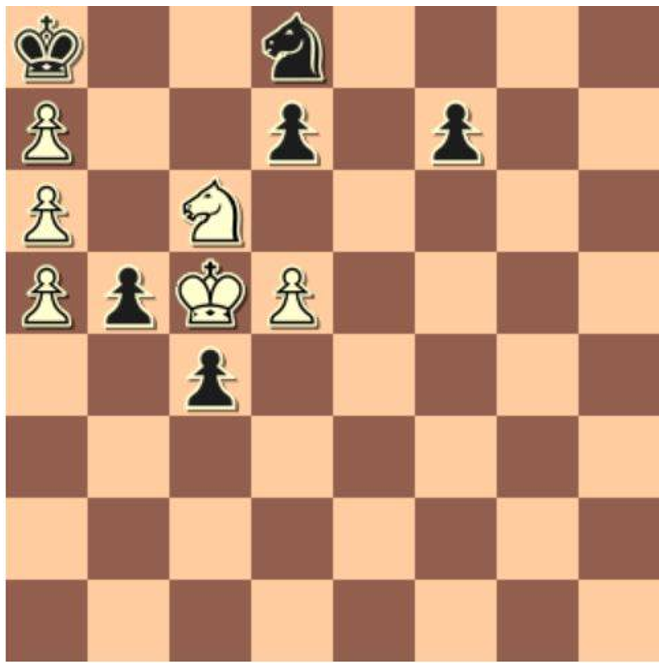
The following position is a win for white. But how?It seems like white is able to grab a knight...
Co-Design Of Scientific Experiments

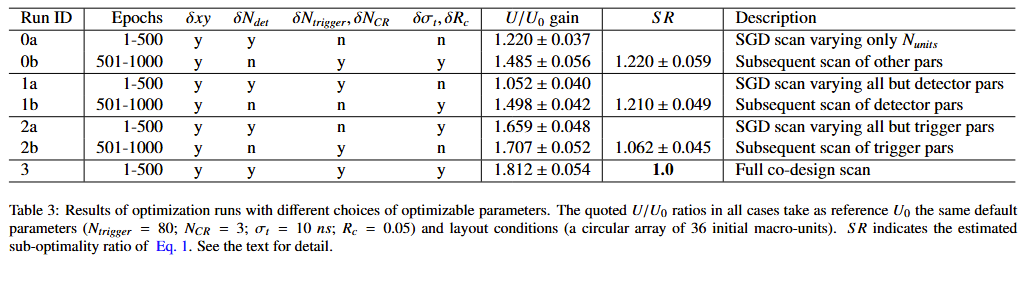
Next Monday, or Tuesday at the latest, you will find a new bulky paper in the arXiv. Titled "On...

User picture.
picture for Hank Campbellpicture for Heidi Hendersonpicture for Patrick Lockerbypicture for Bente Lilja Byepicture for Sascha Vongehrpicture for Johannes Koelman
Tommaso DorigoRSS Feed of this column.

Tommaso Dorigo is an experimental particle physicist, who works for the INFN at the University of Padova, and collaborates with the CMS and the SWGO experiments. He is the president of the Read More »

Blogroll
As today I have just published a piece on CP violation which lacks detail on the theoretical aspects of the issue, I think it is a good time to offer you here a post on the matter written by Carl Brannen, a independent researcher and now Ph.D. student who is a great example of how what is typically dubbed "crackpottery" can at times convert into accepted science. Carl has managed to get a few of his papers accepted for publication, but he remains "on the edge", dealing with issues that many frown upon. Maybe he is right, or maybe he is not, but I sympathize with his approach, so I occasionally offer him this site for his pieces [TD].
A long awaited confirmation that direct CP violation occurs in Bs mesons (particles composed of a b- and an s-quark) not unlike what happens to lighter mesons (the K0, the B0, and the D0) is coming from LHCb. In an article appeared yesterday in the Cornell arxiv, LHCb describe their measurement of direct CP violation in the decays of both B0 and Bs mesons to Kπ final states (a kaon and a pion). The former is now the best precision measurement we have of the phenomenon, the latter is also the most precise bid (only one former measurement of the effect exists).
Today Greenpeace issued the 52-page report "Lessons from Fukushima". In it the Japanese nuclear catastrophe is analyzed in detail, and its causes and consequences exposed. The report correctly focuses on a few crucial issues: the lack of accountability for the disastrous consequences of nuclear incidents, the lack of a correct approach to the potential risks involved in the production of nuclear energy, and the failure of proper emergency planning.
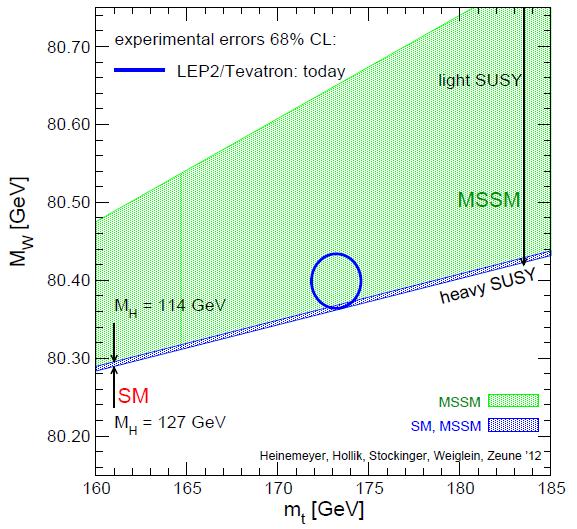
Thanks to Sven Heinemeyer and his colleagues, we can give a peek today at the status of the agreement of top and W boson masses with Standard Model predictions for the Higgs boson mass, and with SUSY predictions as well. The figure below is just one of the many versions he has produced.


Maybe I should not say "SUSY predictions", as it is clear, by inspecting the figure above, that the green band is quite wide, a result of the many free parameters whose value have an impact in determining the mass of the lightest Higgs scalar.
The Tevatron collider has been shut down for almost half a year now, but the CDF experiment is still busy producing world-class measurements of fundamental Standard Model parameters.

Actually, the above is not quite correct: CDF is re-defining "world class" in some cases. The measurement I am going to describe, which has just been made public (if you are quick you can follow live the seminar presented by Prof. Ashutosh Kotwal at Fermilab here), totally outperforms all previous determinations of a crucial ingredient of the Standard Model: the W boson mass.
This just in: the controversial Opera result on superluminal neutrinos is affected by a previously unaccounted for experimental error, which completely overturns the conclusions.

This is explained in detail here. Note that the source is James Gillies, head of Communications at CERN, and thus hardly a "unofficial leak". In fact, tomorrow there will be a CERN press release on the matter.

The relevant quote is the following: