A good part of basic research in fundamental physics focuses on the definition, the prediction, and the measurement of quantities which put the current theory -the standard model- to the test in the most stringent way possible. The choice of the quantities on which to base our comparisons between theory prediction and measurement is critical: it entails understanding what may make the comparison imprecise (i.e. experimental systematics affecting the measurement) or fruitless (i.e. theoretical assumptions or a bad definition of the quantity to measure).
One clear example, which I used last week in my lessons of Subnuclear Physics to undergraduates in Padova, is the measurement of the W and Z boson cross sections at the Tevatron proton-antiproton collider.
"The yield of muon pairs decreased rapidly from 1 GeV to the kinematic limit of nearly 6 GeV with the exception of a curious shoulder near 3GeV. The measurement of muons was by range as determined by liquid and plastic scintillation counters interspersed with steel shielding. Each angular bin (there were 18) had four range bins, and for two muons this made a total of only 5000 mass bins into which to sort the data. Multiple scattering in the minimum of 10 feet of steel
made finer binning useless. Thus we could only note that "Indeed, in the mass region near 3.5 GeV, the observed spectrum may be reproduced by a composite of a resonance and a steeper continuum." This 1968-1969 experiment was repeated in 1974 by Aubert et al. (1974), with a
I am presently into the second week of my lessons of Subnuclear Physics for the 2nd year of specialization in Physics, and I have just finished a lesson discussing the current searches for the Higgs boson at the Tevatron collider. Since the course has a focus on experimental techniques, I found it useful today to give as an exercise the determination of an order-of-magnitude estimate of cross section limits that the CDF experiments can set on a 160 GeV Higgs boson, with the data so far analyzed. It is an exercise I worked out by heart during my walk to the Physics Department: this should tell you it is not of overpowering difficulty.
These days the Higgs boson search is a bit over-hyped, with the impending competition between Tevatron and LHC on the discovery of the fabled boson making headlines every time there is a new, even minor, update in the results of the CDF and D0 experiment. But the hunt is on for many other, maybe even more interesting, rare processes.
A Sunday morning browsing through preprints recently posted in the Cornell Arxiv revealed interesting reading material. If you have a couple of hours to kill next week, why not having a look at the following papers ? It will definitely hurt you less than spending the time on your WII or watching Jerry Springer.
My statistics page depressingly shows that a large fraction of readers who visit this site do so for an average of 30 seconds. Maybe they were looking for something different, or maybe they do not like the content offered here. In any case, I have decided that my long, detailed articles about particle physics are not exactly meeting the demand of the audience. I am not going to change my writing style because of that, of course, but I will try to also offer some thirty-seconds physics bits here, every once in a while. So let me make a dry run, using a recent result by the CDF collaboration. The clock may start.


 Choosing Your Bets: The Selection Bias
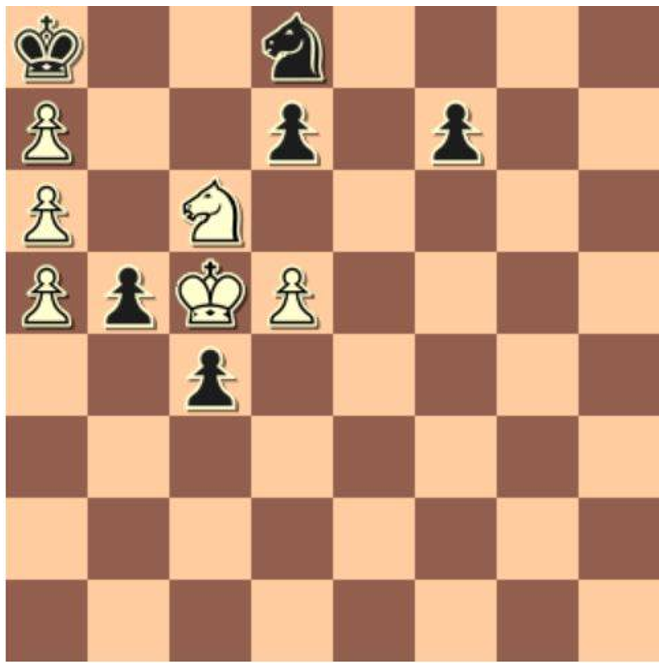 A Chess Study Requiring Backpropagation
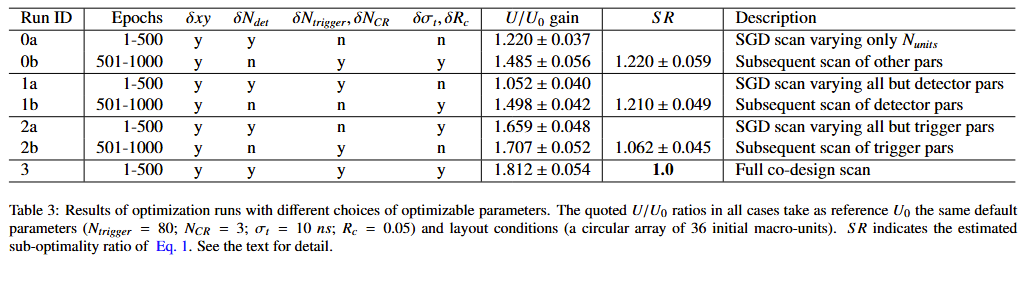 Co-Design Of Scientific Experiments