One of the funniest misnomers in particle physics is the naming of coupling strength parameters of the fundamental interactions as "constants".
We speak of a fine structure constant (alpha) to address one of the most important parameters of electromagnetism; and we call "strong coupling constant" the coupling strength parameter alpha_s of QCD. But these are not constants at all! In fact, they are parameters that show a quite distinct dependence on the energy of subatomic processes.
Four months ago I started a diet, as my weight had gone above my comfort zone (77kg, when my optimal weight is of about 70kg). I basically implemented a regime (which has worked in the past) of about 1300 calories a day, cutting mostly on extras (desserts, snacks, alcohol) and bread, and just eating a bit less of everything.
I remember a funny shirt I once saw at a physics conference - it gave 10 tips on what to do when "everything else fails". Here is the list:
10. Subtract Infinity
9. Add heavy fermions
8. Set all fermion masses to zero
7. Invent another symmetry
6. Throw it on the lattice
5. Blame it on the Planck scale
4. Recall the success of the SM
3. Invoke the Anthropic Principle
2. Wave hands a lot, speak with a strong accent
1. Manipulate the data
Yesterday I worked from scratch at a problem which certainly others have already solved in the past. I have mixed feelings with such situations: on one side I hate to reinvent the wheel, especially if there is an easy way to access a good solution; on the other I love to invent new ones...
Anyway this time I have decided I will ask you for some help, as collectively we may have a better idea of the optimal solution to the specific problem I am trying to address. But before I explain the problem, let me give you some background on the general context.
Searches for new physics at the LHC
A week ago I offered readers of this blog to review a paper I had just written, as its publication process did not include any form of screening (as opposed to what is customary for articles in particle physics, which receive multiple review stages). That's not the first time for me: in the past I did the same with other articles, and usually I received good feedback. So I knew this could work.
Bringing the concept of peer review to another dimension, I am offering you to read a review article I just wrote. You are invited to contribute to its review by suggesting improvements, corrections, changes or amendments to the text. I sort of need some scrutiny of this paper since it is not a report of CMS results -and thus I have not been forced by submit it for internal review to my collaboration.


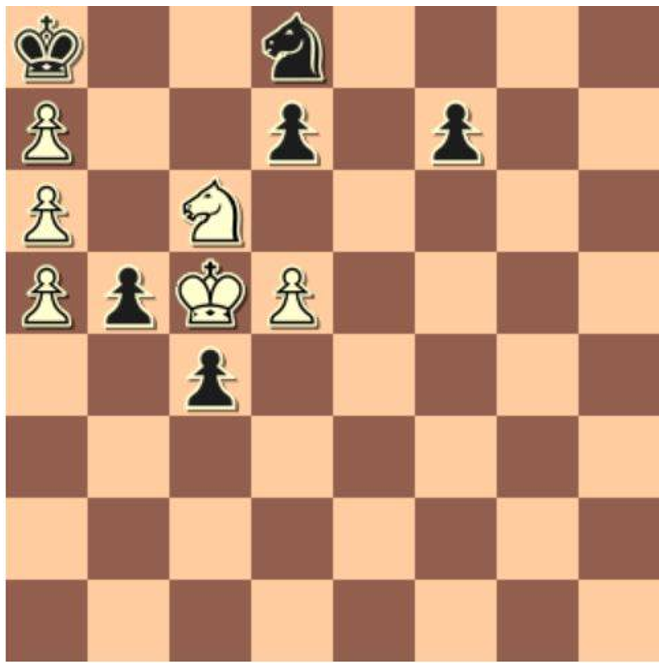 A Chess Study Requiring Backpropagation
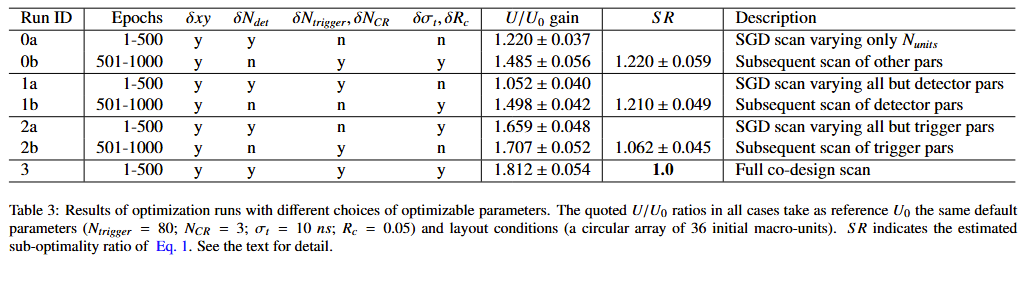 Co-Design Of Scientific Experiments
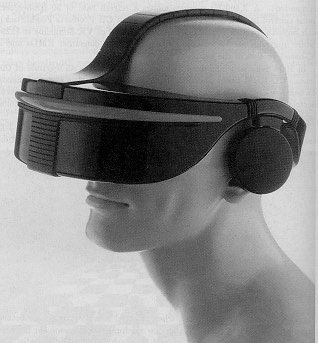 Travel With Two Infants
 A Nice Little Combination