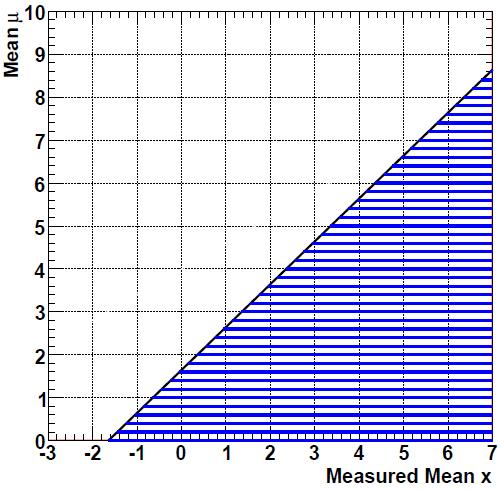
Last week I spent a few interesting days in the pleasant winter setting of Engelberg, a mountain location in the Swiss alps. There I attended the CHIPP 2012 winter school, an event organized by Vincenzo Chiochia from University of Zurich and Gabriella Pazstor from University of Geneva. They invited me to give a three-hour mini-course in Statistics for data analysis in High-Energy Physics, something which was a new experience for me. It took me the best part of the last couple of months to get prepared, but I was glad I did. In the end, the material I put together could have been used profitfully for five or six hours of lecture, but by skipping some of the topics I could get to the end without using a silly speed.
The CMS Collaboration has just
released the results of a deep study of their sample of lead-lead collisions, produced at a center-of-mass energy of 2.76 TeV per nucleon by the Large Hadron Collider.
The
CHIPP 2012 winter school of particle physics is over, and so is the
50th winter meeting on nuclear physics. The two events had three things in common: they were both held in renowned locations for winter sports in the Alps (Engelberg, Switzerland, and Bormio, Italy); they both ran from January 22nd to 27th; and I attended both as a lecturer.
This week's edition of the CMS Times features a
short piece by A.Rao,
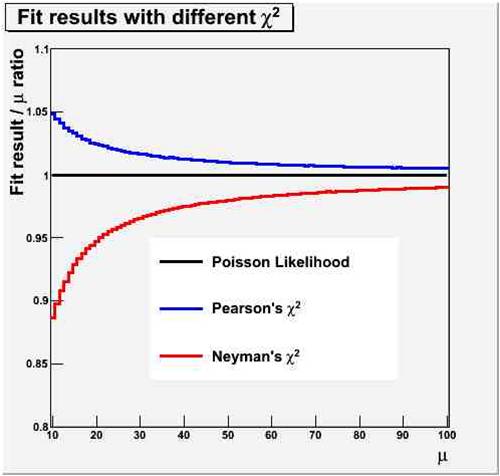
where some points are made on the issue of correct statistical analysis of high-energy physics data.
...and people who like sausages, should not ask how they are made.
As a member of two large scientific collaborations (CDF and CMS), I enjoy the benefit of seeing lots of scientific publications that carry my name as an author being produced at weekly rates. This is however also a burden, since I at the very least must try to ensure that I like the way the results are produced. I.e., that I agree with the details of how these scientific measurements are made.
Elsevier is spamming my mailbox. You would not expect that from a large publishing company who makes money from publishing scientific papers, but that's what happens. I think I am not alone in receiving automated emails with your name on the subject (a typical sign that the message is junk by the way):
Dr. Dorigo, your work has been cited.
Dear Dr. T. Dorigo,
It is our pleasure to inform you that your publication has been cited in a journal published by Elsevier.


 A Research Position In Neuromorphic Computing And Nanophotonics Open In Padova, Italy