Last Monday at 10.30AM I eagerly queued up at the International Red Cross site of Padova, the town where I live and work, to receive a first vaccination shot against Covid-19. I duly received my dose and went back home with some relief. Little did I know that my relief would turn to anger very soon.
My anger arose when I soon heard the news that the treatment with the vaccine I had been given, Astra-Zeneca, was being temporarily stopped, following the detection of a possible adverse reaction. But you should read on before you conclude that I am an idiot (as you indeed should, if the above was all there is to it).
The Italian
"Accademia Nazionale dei Lincei" is an old institution, founded in 1603 to promote and cultivate natural science studies. It counted Galileo Galilei as a member, and it has never ceased to pursue its goal. Nowadays, it is an excellence cultural centre and is among the advisors of the President of the Republic.
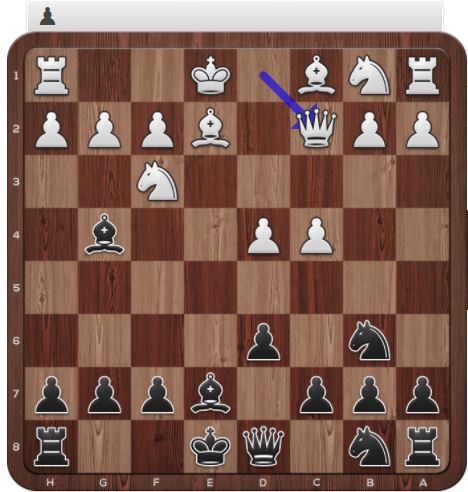
I have put this post under the "psychology" category, although it discusses a chess game, for one important reason. Chess is a game, an art, a sport - you can categorize it in many different ways. However, what characterizes chess the most, in my opinion (an educated one, as I am an amateur with a long past of chess tournaments) is the chance it gives to the players to mess up with each other's mind.
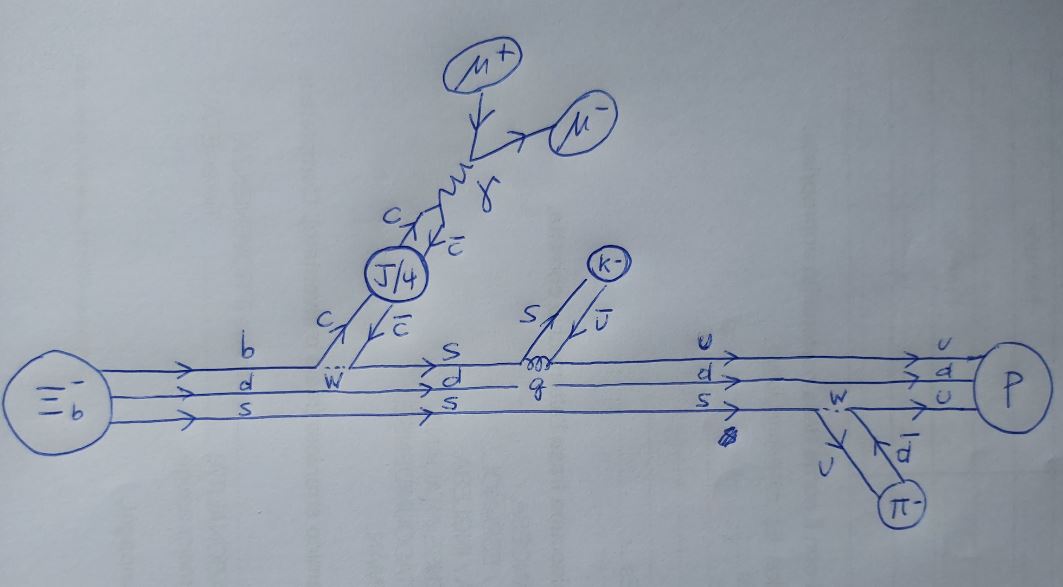
Wait, I can almost hear you say it: "Xi_b what? Let's move on, where's the sports section?" Ok, if you need to, please go. But do not underestimate excited Xi_b baryons. They are a helluva lot of fun to watch as they pop into existence and then decay in stages, as if stripping piece by piece, throwing out opaque layers of matter one by one, and finally exposing their naked beauty in full bloom.
Are you getting aroused yet? we are talking about a haDR-on here, don't be mistaken, but the matter is not less sexy than the stuff you'd get on the sports section anyway. For, you know, there is simply so much we still do not know about how quarks can create excited states of nuclear matter, that one cannot ignore any new development.
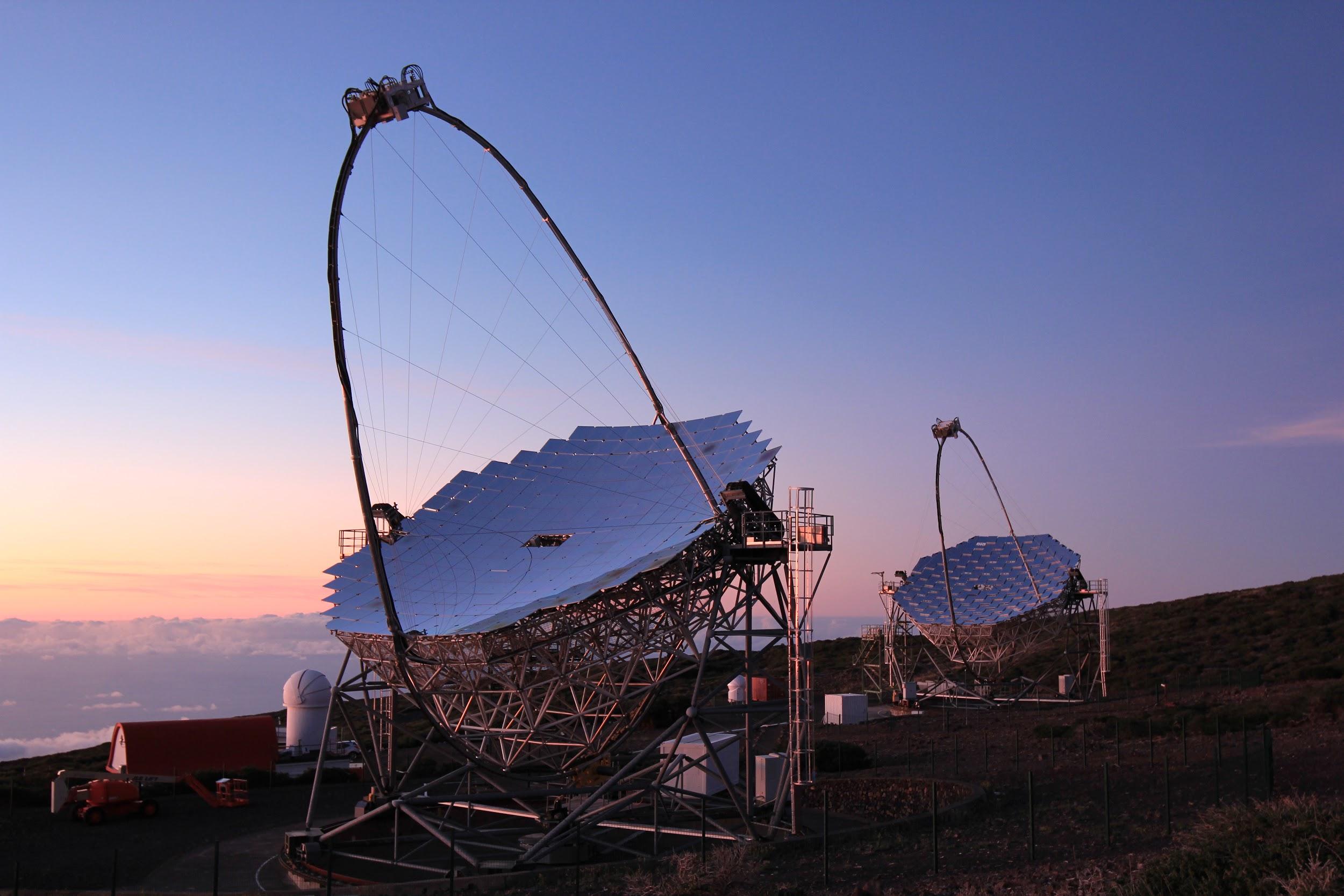
[This is the second part of a two-part article on Cosmic Messenger astrophysics. For part 1, please click here.]We can also "see" showers of secondary particles from cosmic rays thanks to the Cherenkov light they produce. Cherenkov light is emitted when charged particles travel in a medium at speeds higher than the speed of light itself! Light, in fact, slows down a little when it traverses a medium; energetic particles do not, so they create a conic "shock wave" similar to the boom of supersonic airplanes.


 A Research Position In Neuromorphic Computing And Nanophotonics Open In Padova, Italy