Fake Banner
A Research Position In Neuromorphic Computing And Nanophotonics Open In Padova, Italy

Five days are left to apply to a 2-year research position at INFN-Padova, to work in the context...

Apply For The USERN Prize, Win Cash, And Get A Keynote Talk In Astana

Nowadays it has become exceedingly hard to distinguish legitimate academic endeavours from scam...

A Record Of Past Activities

Every now and then, for one reason or another, an academic will have to update one's own CV. This...

Surviving Queues: 2 - On The Road

[For the first part of this two-part post, see here]...

User picture.
picture for Hank Campbellpicture for Heidi Hendersonpicture for Patrick Lockerbypicture for Bente Lilja Byepicture for Sascha Vongehrpicture for Johannes Koelman
Tommaso DorigoRSS Feed of this column.

Tommaso Dorigo is an experimental particle physicist, who works for the INFN at the University of Padova, and collaborates with a number of exxperiments in physics and astrophysics, including the... Read More »

Blogroll

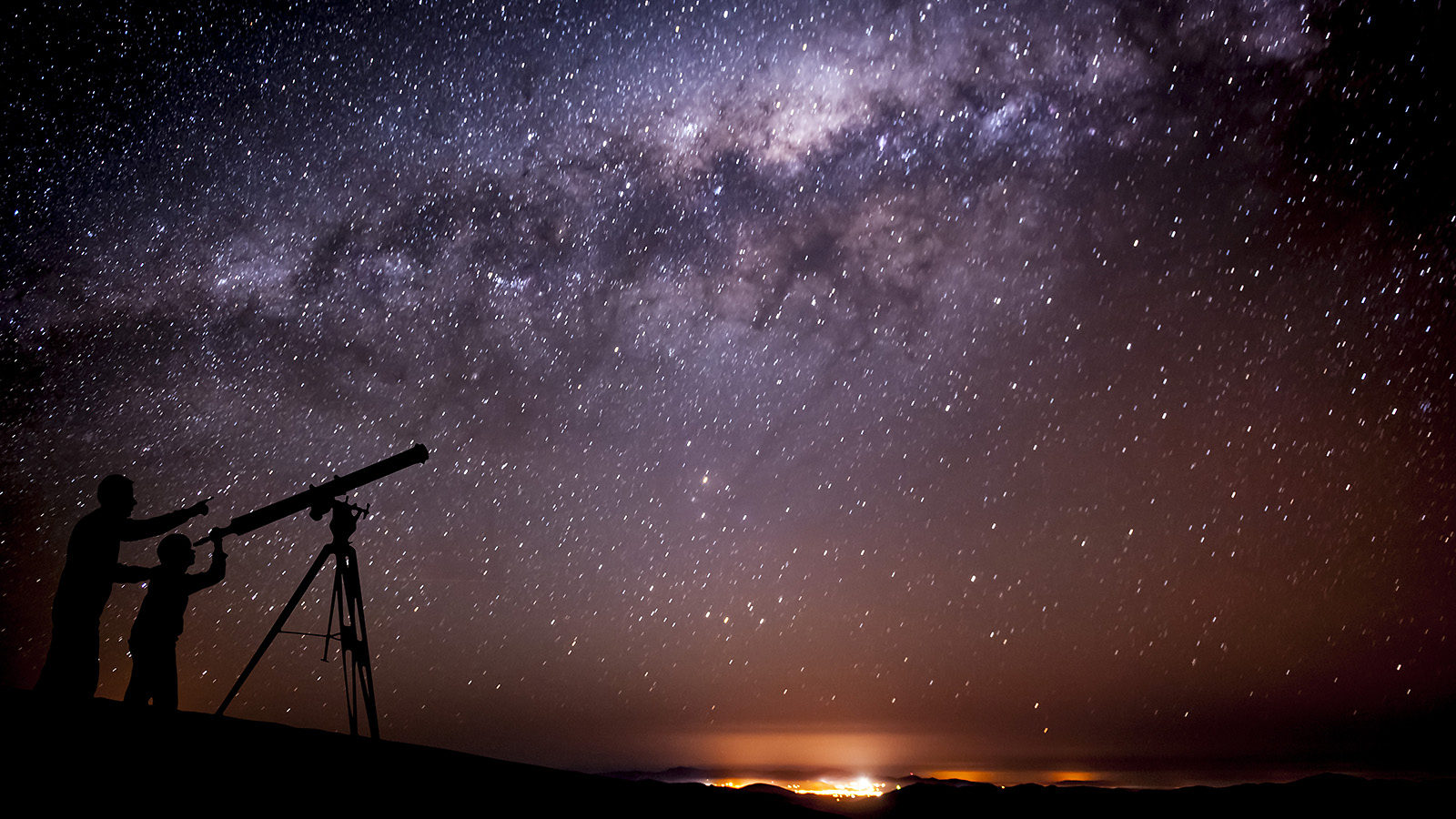
Have you ever looked up to a clear sky on a moonless night, in a place away from large cities? If you have, you will remember seeing hundreds of bright stars, and maybe even the faint collective glow of 250 billion more within the Milky Way, our own galaxy.

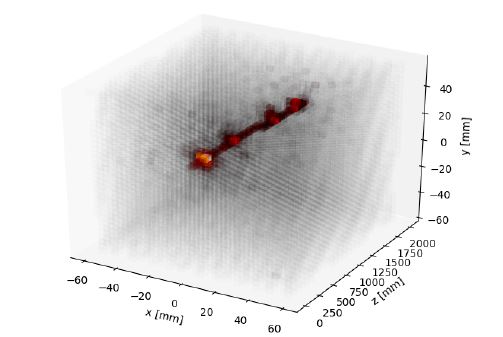
Today I wish to offer you, dear reader, the chance to contribute to scientific research in particle physics. And I claim you can do that by only leveraging basic high-school knowledge in mathematics and geometry. Let me explain what the problem is, first of all, and then I'll put you in the conditions of contributing!

Muons are subnuclear particles of high interest in collider physics. I could write about muons for ages, but it would not be of relevance for our problem of today, so let's just say they interact feebly with matter, so they traverse thick layers only depositing in them small amounts of energy (mainly in the form of electromagnetic radiation).
Eight years ago the CMS and ATLAS experiments, giant electronic eyes watching proton-proton collisions delivered in their interior by the CERN Large Hadron Collider (LHC), discovered the Higgs boson. That particle was the last piece of the subnuclear puzzle of elementary particles predicted by the so-called "Standard Model", a revered theory devised by Glashow, Salam and Weinberg in 1967 to describe electromagnetic, weak, and then strong interactions between matter bodies. 
The Higgs boson itself is even older, having been hypothesized by a few theorists as far back as 1964 to explain an apparent paradox with massive vector bosons, particles that had to be massless in order to not violate a symmetry principle that could in no way be waived.
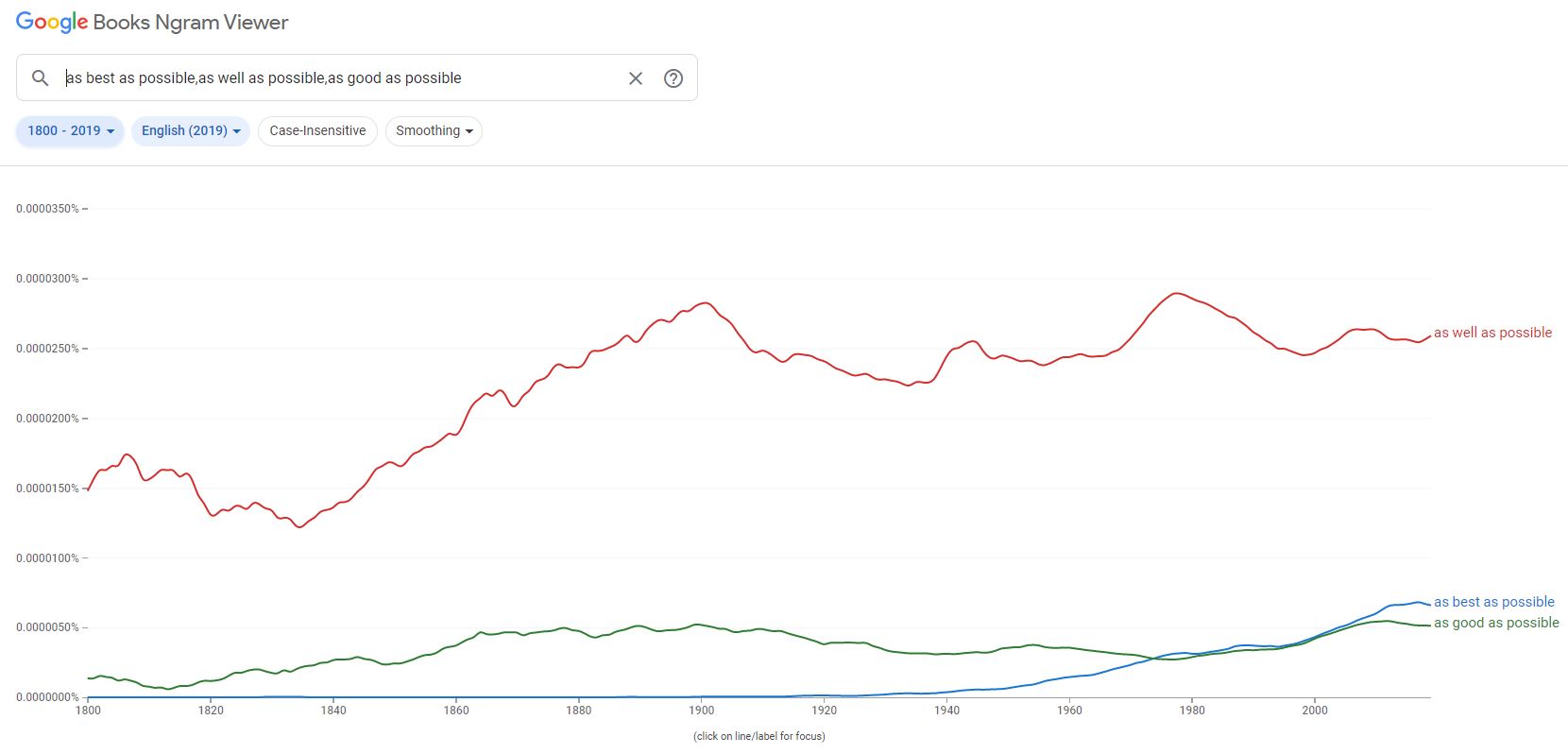
I know, Google has been around for decades by now, and nobody should be surprised to learn how easy they have made the life of information seekers, among other things (I am also an addict of their search engine, scholar, maps, trends, and gmail utilities). But my mouth still dropped today as I discovered their "ngram viewer". 
It happened by chance. I was trying to find out whether "as best as possible" is really a correct English phrase, or if it is just a tad slang, and the google search pointed to a page where the matter was settled by a cool graph:


Broadly speaking, radioactivity is not something one should mess with just as a pastime. Indeed, ionizing radiation has the potential of causing carcinogenic mutations in your cells DNA, as well as produce damage to cell tissue. Indeed, it makes me chuckle that until 50 years ago or so kids could play with it by purchasing stuff like that shown below...


If you know what you are dealing with and take the necessary precautions, however, radiation _can_ be fun to study at home. The tools and the primary matter are not found at the corner grocery, though, so you need to have a specific interest in it before you get ready to start. 
Everybody would agree that 2020 was a difficult time for all of us - the pandemic forced on us dramatic changes in our way of living, working, and interacting with one another; and let's leave alone the horrible, avoidable death toll that came with it. Notwithstanding, for some reason it was a productive year for me, and one which has potentially paved the ground for an even more productive future. Below I will summarize, if only for myself, the most important work milestones of the past year, and the ones that lay ahead in the forthcoming months. But I will also touch on a few ancillary activities and their outcome, for the record.

Geometry optimization of a muon-electron scattering experiment (MUonE)