Tommaso Dorigo is an experimental particle physicist, who works for the INFN at the University of Padova, and collaborates with a number of exxperiments in physics and astrophysics, including the... Read More »
Although you probably did not notice, this blog has been inactive during the past three weeks. The reason is simple: I took a break, treating myself to a 24-day trip to Thailand and the Philippines. Anticipating that many of the places I would visit would offer non-existent or very bad internet connection, I decided that it was going to be frustrating to pretend I could blog during the trip, and just left my laptop at home (or rather, in the Bangkok hotel which I first visited for a conference, before leaving for the tour).
I am currently in Bangkok, where the final 2019 meeting of the CMS collaboration started today. The meeting was inaugurated this morning with an official visit of Her Royal Highness Princess Maha Chakri Sirindhorn, giving me the rare opportunity to miss an appointment with a princess, something that was still missing from my repertoire. Checked now.
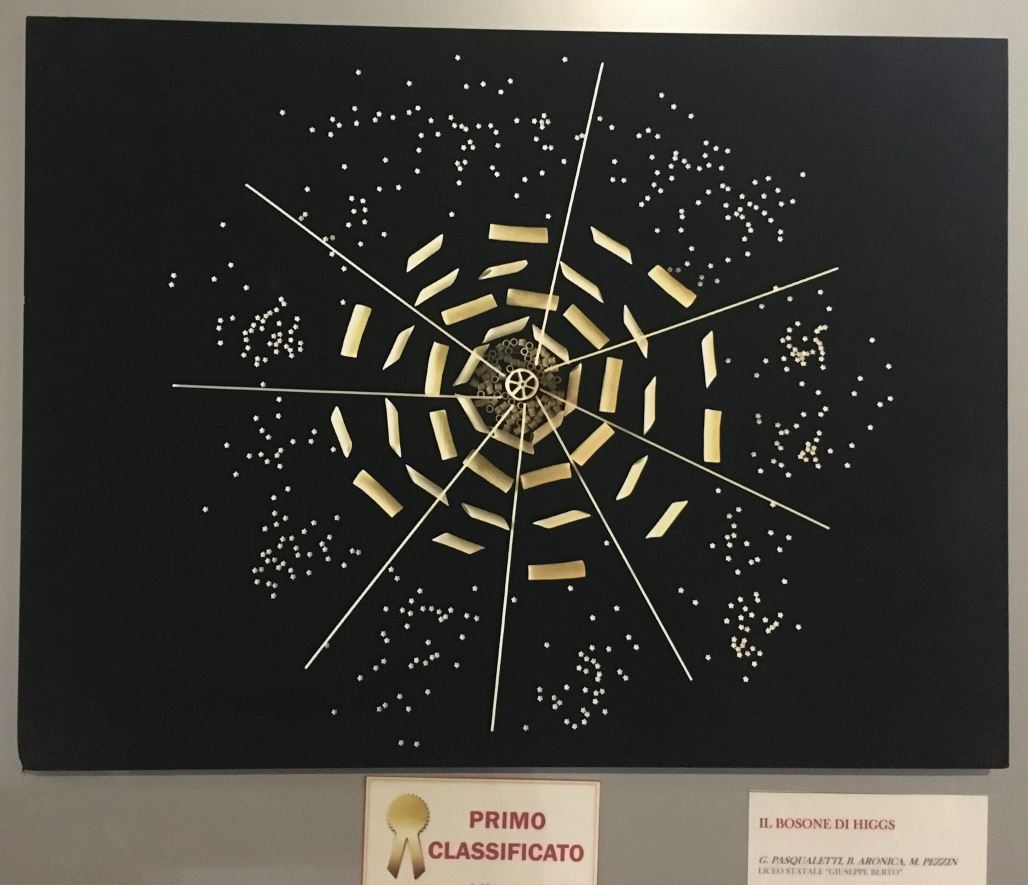
Last month the Museum of Natural History of Venice hosted, in the last room of the exhibit called "room of the cetaceans" (where a large skeleton of a whale hangs from the ceiling), an exhibit of artwork produced by high-school students from the Venice area. The event, which belongs to the "Art and Science across Italy" project, was the culminating point of a series of lectures on particle physics, on science in art, and related topics which involved the students and INFN personnel from the Padova section.
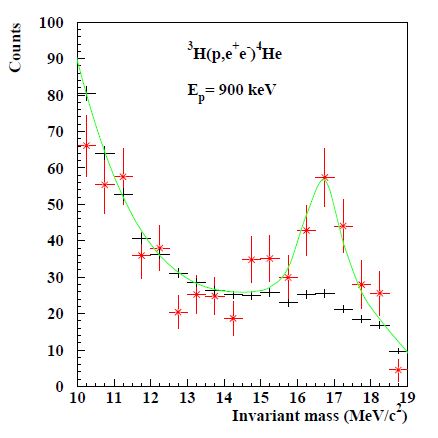
Is there a fifth force of Nature, beyond the four we know about ? This question has been around ever since it was understood that 1 - electric charges attract and repel, and influence one another, due to the action of the electromagnetic force;
2 - hadronic matter is held together by the strong force;
3 - quarks transmute into other quarks due to the action of the weak force (and leptons do that too);
4 - bodies carrying mass feel attracted to one another, although very weakly, by the gravitational force.
Last November 12 the city of Venice was flooded by the second-highest tide in recorded history. The sea level, pushed by 60 mph SE winds and intense rainfalls, surged to +187 cm above average, a mere 7cm less than the disastrous event of November 4 1966, which put the city and its surroundings to their knees.
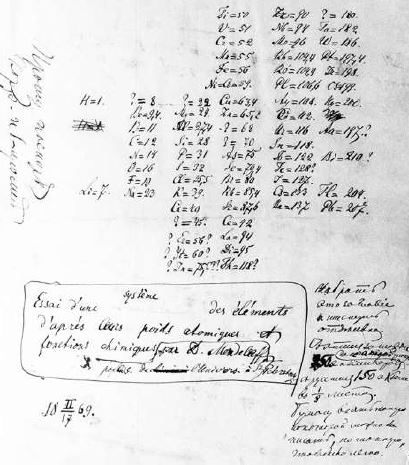
This year marks the 150th anniversary of the Periodic Table of Elements, whose inventor is Dmitrii Mendeleev, a Russian physicist who is famous for that achievement but who actually gave enormous contributions to Physics in a number of different areas of experimental research. It is also well known, but actually a misconception, that Mendeleev "invented" the correct recipe for the Russian national drink, vodka. In fact, he studied the mixture of water and alcohol in detail, discovering several of its interesting properties, but vodka was appreciated before him, as it did after.


 A Research Position In Neuromorphic Computing And Nanophotonics Open In Padova, Italy