The isolation that most of the civilized world has been subjected to, during the past few weeks, has produced a number of nasty effects, first and foremost on our economies, but it has also had a few positive ones. One of them is, at least in my case, an urge to use the extra time I have in my hands in a creative way.
In
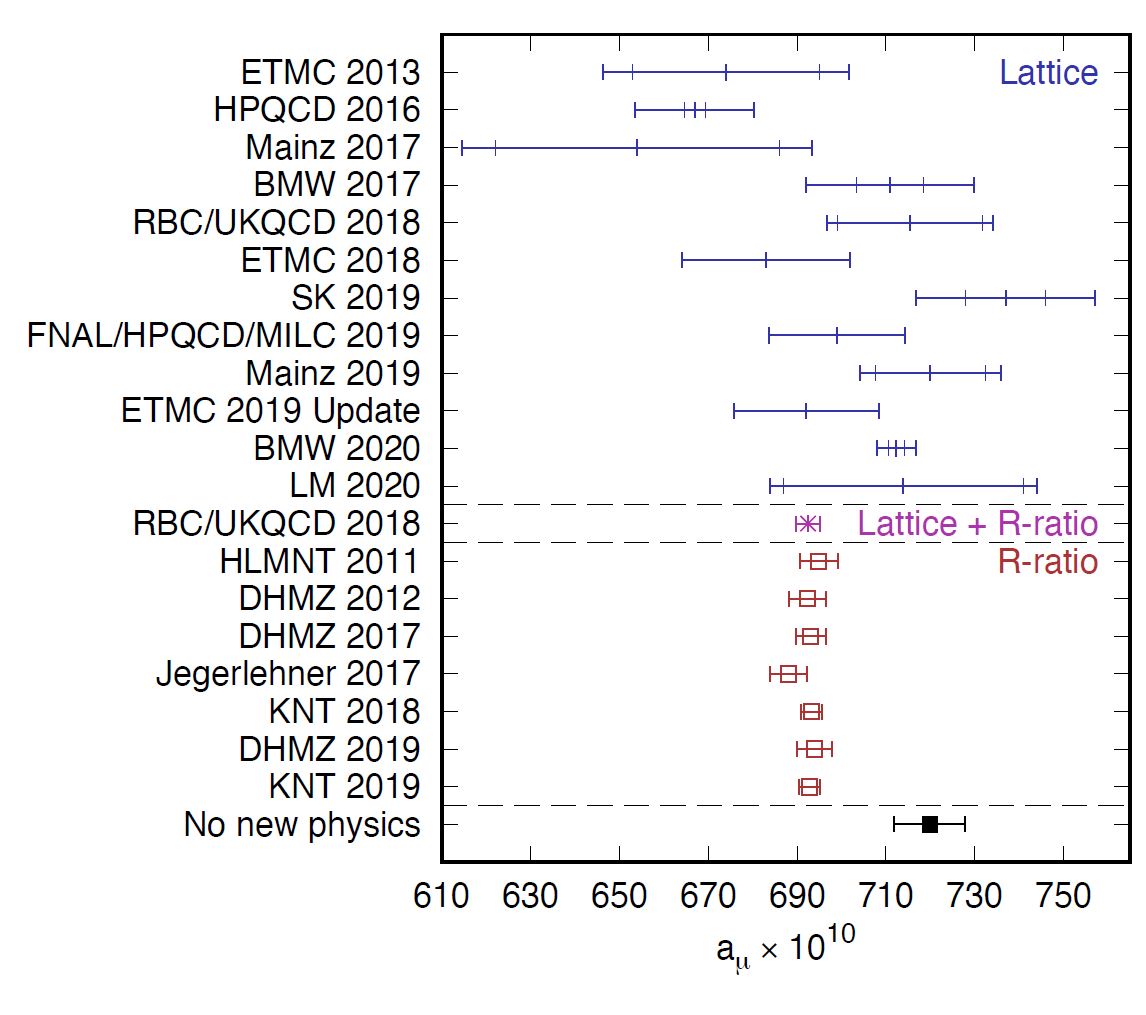
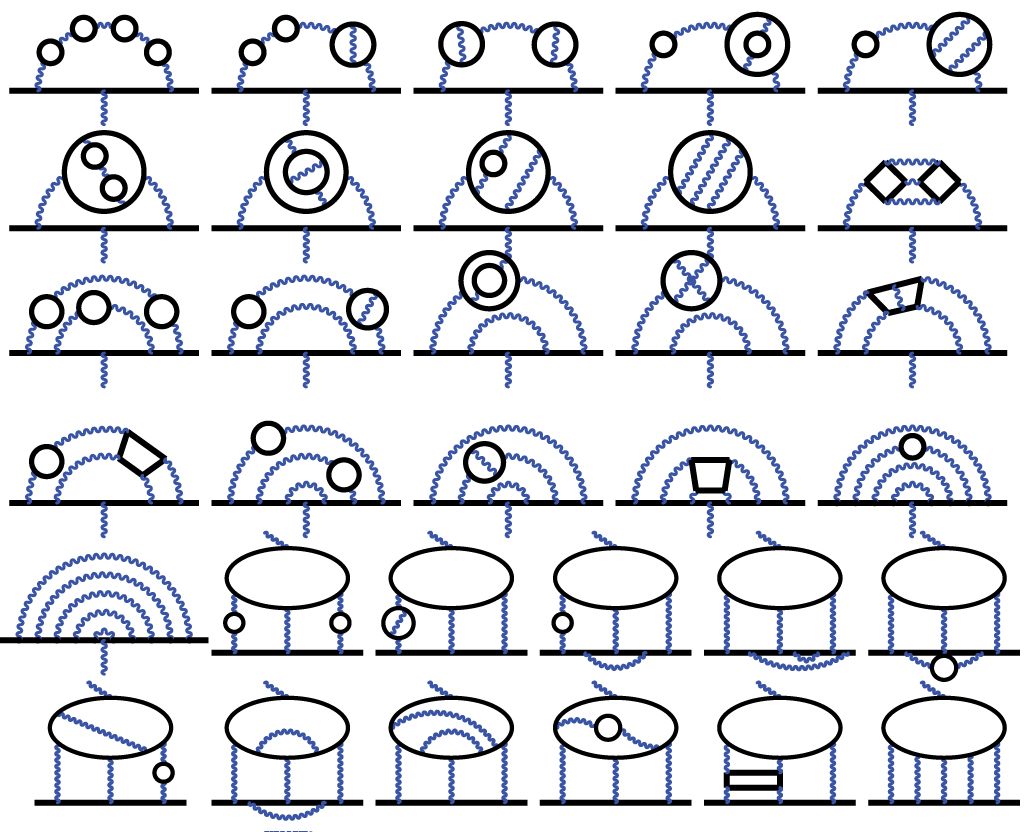
a recent post I discussed the conclusions of a study aimed at computing a small but very important correction to the theoretical prediction of the anomalous magnetic moment of the muon. The interest of this lays in the fact that the latter quantity is virtually the only one for which the Standard Model prediction exhibits a tension with the current experimental measurements among all the measurable parameters of the subnuclear world.
First off, let me say I do not wish to sound disrespectful to anybody here, leave alone my colleagues, to most of which goes my full esteem and respect (yes, not all of them, doh). Yet, I feel compelled to write today about a sociological datum I have paid attention to, in these difficult times of isolation, when all of us turn to the internet as our main outlet for rants, logorrhea, or to make the impending threat of a global catastrophe less heavy by sharing it with our peers, to exorcise our fears.
After the outbreak in China of the COVID-19 virus, Italy has fallen in the middle of the most acute sanitary emergency we ever experienced in a long while. And what's worse, other countries are sadly joining it. As I write this piece, over 15,000 Italians have tested positive to the virus, and over 1000 have already died. Based on very convincing analysis of data from China, we know that the real number of cases is higher by at least a factor 20, if not 100. In these conditions, individuals have to protect themselves and help reduce the spread of the virus with all possible means - most importantly, by staying home and cutting all social contacts.
A new long article which
appeared on the arXiv preprint repository last week is sending ripples around the world of particle physics phenomenology, as its main result -if proven correct- will completely wipe off the table the one and only long-standing inconsistency of the Standard Model of particle physics, the one existing between theoretical and experimental estimates of the so-called
anomalous magnetic moment of the muon.
Tomorrow morning the Cornell arXiv will publish the preprint of a long scientific article, the result of 4.5 months of painstaking work by yours truly. So I thought I would give you a preview of its contents. Of course, it will take more than a single post to do a good job - I guess I can describe the generalities here, and leave it to another time the plunging into technical details that may only be interesting to insiders.
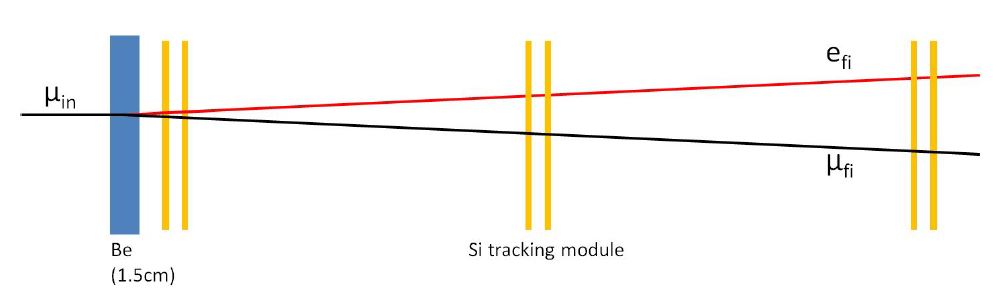
First of all, what experiment are we talking about? It is called "MUonE", and it aims at measuring with the utmost precision the rate at which muons scatter elastically off electrons, as a function of the transferred energy of the scattering reaction.


 A Research Position In Neuromorphic Computing And Nanophotonics Open In Padova, Italy