Fake Banner
Co-Design Of Scientific Experiments

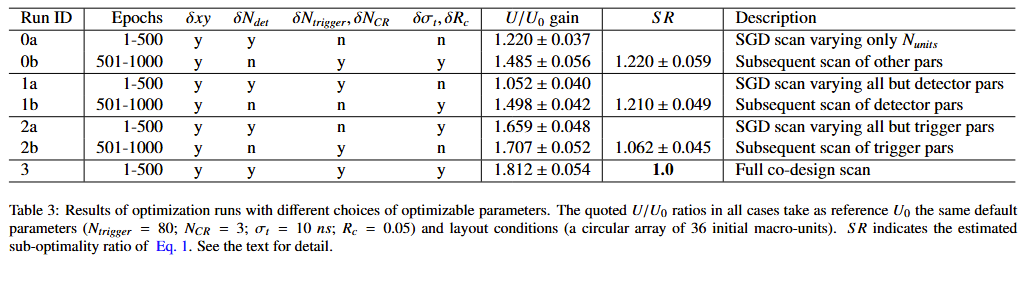
Next Monday, or Tuesday at the latest, you will find a new bulky paper in the arXiv. Titled "On...
Travel With Two Infants

The other day I traveled with Kalliopi and our two newborns to Padova from Lulea. After six full...
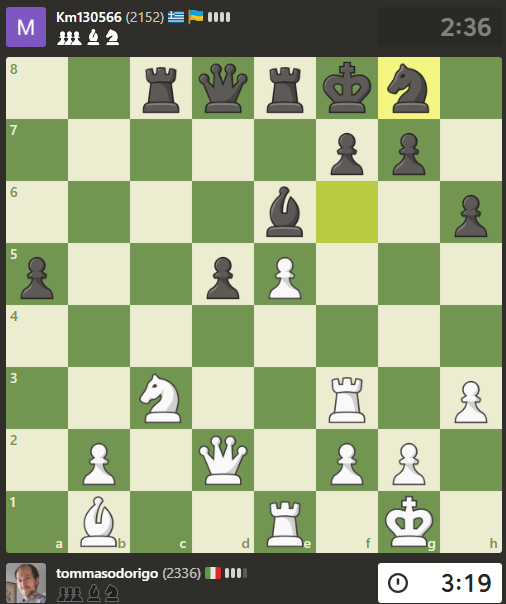
A Nice Little Combination

Although I have long retired from serious chess tournaments (they take too much time, a luxury...
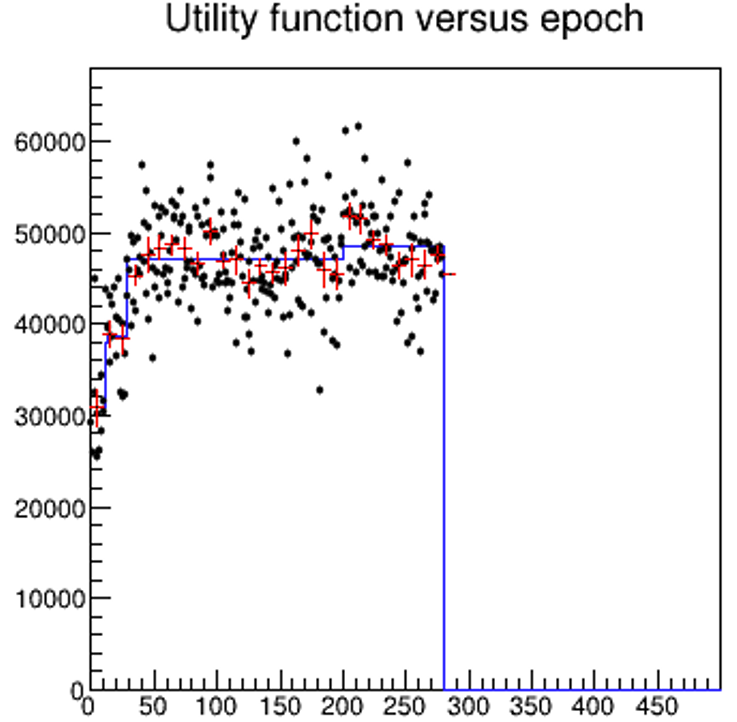
The Strange Case Of The Monotonous Running Average

These days I am putting the finishing touches on a hybrid algorithm that optimizes a system (a...

User picture.
picture for Hank Campbellpicture for Patrick Lockerbypicture for Heidi Hendersonpicture for Bente Lilja Byepicture for Sascha Vongehrpicture for Johannes Koelman
Tommaso DorigoRSS Feed of this column.

Tommaso Dorigo is an experimental particle physicist, who works for the INFN at the University of Padova, and collaborates with the CMS and the SWGO experiments. He is the president of the Read More »

Blogroll
UPDATE (4/7): I posted a link to a nice animated GIF which shows the (approximate) effect of scaling up the MC/data jet energy scale factor on the CDF new particle signal. See here.

UPDATE (4/7):
I added some considerations on the tentative CDF signal in a separate post today (4/7). You can find there a comparison with older semileptonic diboson searches at CDF and DZERO.
I have recently dusted off an algorithm I had invented eight years ago, one I dubbed "Hyperball algorithm". It might come handy for predicting the b-tagging rate in CMS events with jets, for an analysis I am thinking of doing. Since saying more would violate a dozen rules so let's leave it at that, and let me instead describe the old idea... Just for fun.

Predictions for the Higgs at the Tevatron
This is my last post of my blog.

I have decided to totally quit my blogging activities after the last incident. My participation in the scientific collaborations CDF and CMS has always been a problem, since whenever I discussed a topic here even mildly related to their business there was the potential of receiving heat from those colleagues of mine who believe that the scientific integrity of the experiment can be harmed by a blog post, or who imagine that grant reviewers be influenced by what is written by a collaborator in a private blog.
On today's online version of the highest-diffusion newspaper in Italy, Il Corriere Della Sera (a bit too right-winged for me, but still an important source) stands a piece signed by none less than Carlo Rubbia, Physics Nobel prize in 1984 for the discovery of W and Z bosons. Despite his not so young age any more, Carlo is still extremely active in the field of high-energy physics, where he has moved his interest into neutrino physics.
It has been a while since I last wrote about results from the DZERO collaboration, and I am happy to be given a chance to do so by my casual Monday morning browsing of the most recent Arxiv preprints.
"The observed exclusion limit is found from the point where the 95% quantile (dotted
line) crosses the median value of the distribution of Q values for the QCD prediction
(dashed line). This occurs at Lambda = 9.5 TeV. The expected limit is Lambda = 5.7 TeV. [...]
As a cross-check, a Bayesian analysis of F(mjj) has been performed, [...]. This analysis sets a 95% credibility level of Lambda > 6.7 TeV. The expected limit from this Bayesian analysis is 5.7 TeV, comparable to the CLs+b expected limit. While the observed limit from CLs+b analysis is significantly higher than the Bayesian results, we have no basis on which to exclude the CLs+b result a posteriori."