Fake Banner
Choosing Your Bets: The Selection Bias

As some of the long-time readers of this blog know, in this column I have occasionally discussed...

Have A Master In Science, Want A Post-Doc Position Directly?

Do you have a master in Science, and want to start a Post-Doc position directly? You can have it...
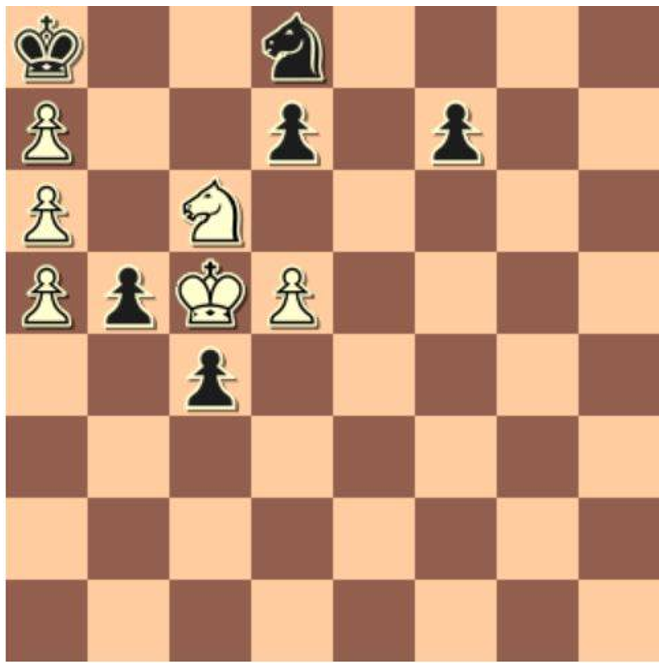
A Chess Study Requiring Backpropagation

The following position is a win for white. But how?It seems like white is able to grab a knight...
Co-Design Of Scientific Experiments

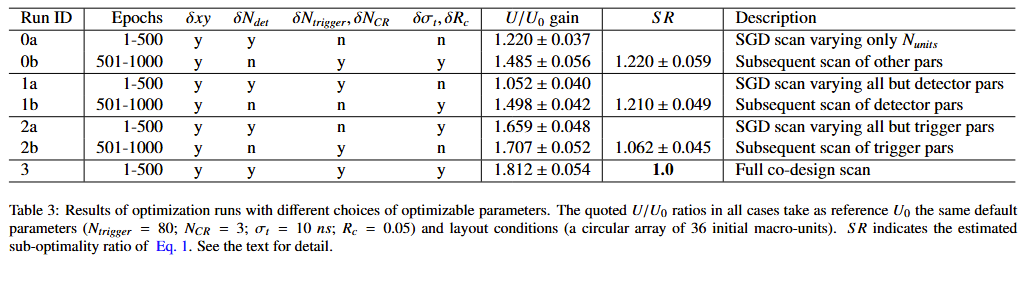
Next Monday, or Tuesday at the latest, you will find a new bulky paper in the arXiv. Titled "On...

User picture.
picture for Hank Campbellpicture for Heidi Hendersonpicture for Patrick Lockerbypicture for Bente Lilja Byepicture for Sascha Vongehrpicture for Johannes Koelman
Tommaso DorigoRSS Feed of this column.

Tommaso Dorigo is an experimental particle physicist, who works for the INFN at the University of Padova, and collaborates with the CMS and the SWGO experiments. He is the president of the Read More »

Blogroll
I received the following comment from Bo Thide', one of the authors of the paper where Fabrizio Tamburini and collaborators explain their novel method to multiply the transmission of information via EM waves (see here). I think his points are of interest to many so I decided to elect his comment to a independent posting here.

By the way, Bo Thide' is a Swedish professor at the Uppsala department of Physics and Astronomy. For his CV see here.

Comments welcome...

----
From Bo Thide':
At 125 GeV of mass, the Higgs boson is a very heavy particle; yet its natural width is predicted to be of just 4.15 MeV in the standard model, a value much smaller than that of particles of similar mass. The top quark, for instance, has a width of 1.5 GeV; and the Z boson has a width of 2.5 GeV: three orders of magnitude larger.
The tau lepton is a particle of very complex phenomenology. Although point-like as its lighter counterparts - the electron and the muon - the tau has a quite respectable mass, 1.77 GeV, which makes all the difference from the other charged leptons.

The tau was discovered in 1975 by Martin Perl at the SPEAR electron-positron collider. The acceptance of that observation was quite slow: the events found by Perl and his team were complicated because of the peculiar properties of the newfound particle. Perl had found an excess of events featuring an electron and a muon and an energy imbalance, which were hard to explain unless hypothesizing the creation of a pair of short-lived, heavy leptons.
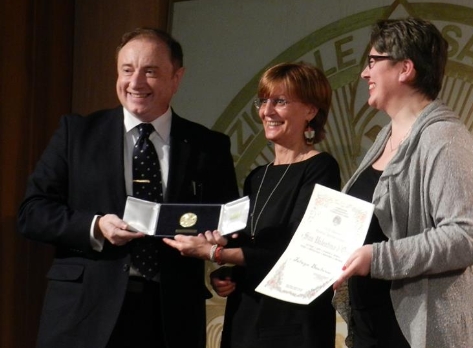
Fabrizio Tamburini, the Italian researcher who has discovered an innovative way to multiply the transmission of electromagnetic signals by exploiting the vorticity of photons, has received last Saturday the "San Valentino prize" at Palazzo Gazzolli in Terni, Italy.

The annual prize was founded in 1969 by Agostino Pensa and is meant to recognize the professional devotion of scientist and artists to their work. In the past years the prize has gone, among others, to several distinguished physicists: Ugo Amaldi, Carlo Rubbia, Emilio Segre', Tullio Regge. 

It is nice to see that the Tevatron experiments are continuing to produce excellent scientific measurements well after the demise of the detectors. Of course the CDF and DZERO collaborations have shrunk in size and in available man-years for data analysis since the end of data taking, as most researchers have increased and gradually maxed their participations to
other experiments - typically the ones at the Large Hadro Collider; but a hard core of dedicated physicists remains actively involved in the analysis of the 10 inverse femtobarns of proton-antiproton collisions acquired in Run 2, in the conviction that the Tevatron data still provides a basis for scientific results that cannot be obtained elsewhere.
Did you know about that dyslectic guy with an impotence problem who once came to Fermilab ? He said he'd been advised to go there as he wanted to get a hadron.