Inspired by my friend
Peter Woit's openness in discussing his work in progress (a thick textbook on the foundations of quantum mechanics), I feel compelled to come out here about my own project.
Just a quick link to allow you to browse a very nice set of pictures taken at CERN by Andri Pol. The subjects are physicists in their daily activities - brainstorming at the blackboard, cycling around the lab, bitching about the mess in the common coffee room, or working at various pieces of hardware:
you can
see them here. Enjoy!
Last Tuesday I was in Mantova, a pleasant little town in northern Italy, rich of monuments and treasures like the Palazzo Ducale, which hosts a vast collection of paintings and frescoes from reinassance artists. But I was not there for a private visit; I was in fact invited to comment and provide answers to questions that the audience of a movie, "The Hunt for the Higgs", were invited to ask after seeing it.
The host of the event was the "Cinema del Carbone", a small movie theater near the center of the town. The organizers called me there because they knew me from my previous participation to last years' Festivaletteratura, a literature festival which takes place yearly in September, where authors of books and other media get in touch with their public.
"We haven't the foggiest idea what drives the new high-temperature
superconductors, or what makes a snowflake, or how the mind or the
economy works. What is more, nothing high energy physics can do will ever be of the slightest direct help in solving these overwhelmingly hard problems"
Philip Anderson, The Case Against the SSC, 1987(Anderson was one of the theorists who are credited for discovering the "Higgs mechanism" in the early 1960s. He is a 1977 Nobel laureate in Physics for his studies of the electron structure of magnetic systems)
It has taken 19.5 years to Italy to sanate a wound to its democratic fabric, one which made the country look like a sort of Banana republic, where a tycoon could acquire consensus through his mediatic power, rule unchallenged, and break the law without punishment. But finally we got around it yesterday afternoon, where a vote of the Senate of Republic has decreed that Silvio Berlusconi is unfit to hold a seat in the Parliament.


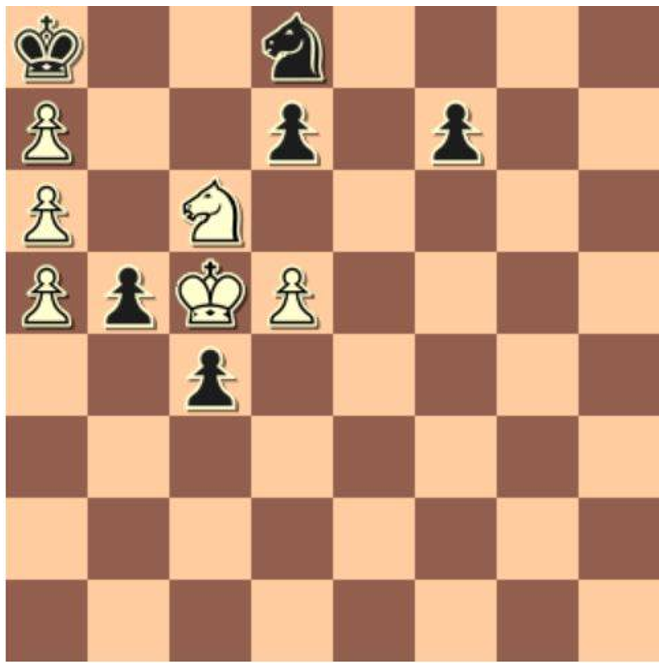 A Chess Study Requiring Backpropagation
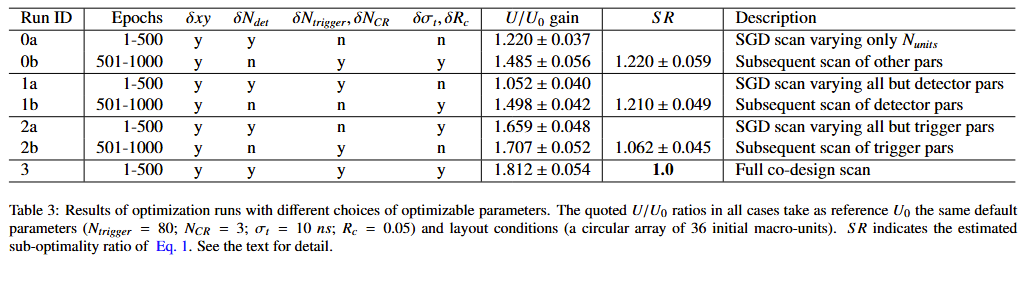 Co-Design Of Scientific Experiments
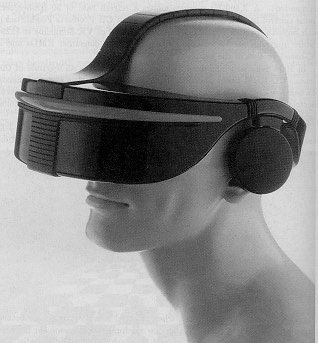 Travel With Two Infants
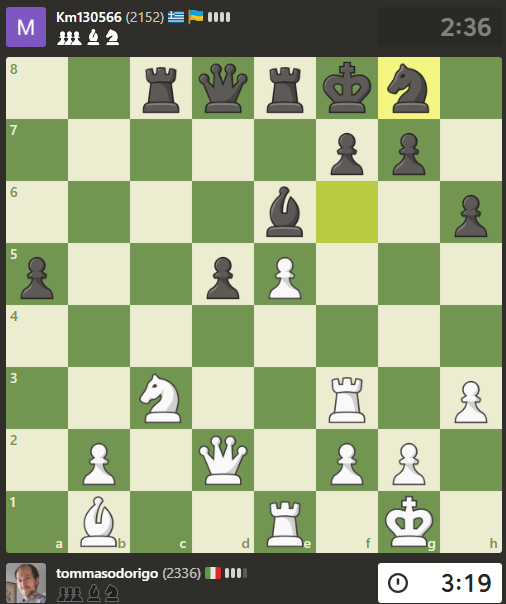 A Nice Little Combination