Fake Banner
The Strange Case Of The Monotonous Running Average

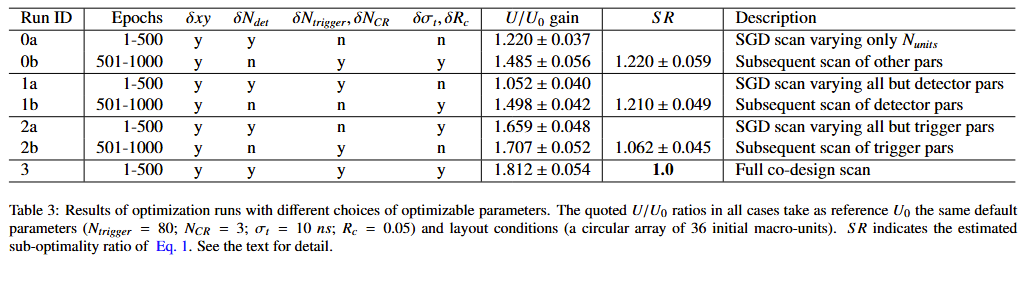
These days I am putting the finishing touches on a hybrid algorithm that optimizes a system (a...

Turning 60

Strange how time goes by. And strange I would say that, since I know time does not flow, it is...

On The Illusion Of Time And The Strange Economy Of Existence

I recently listened again to Richard Feynman explaining why the flowing of time is probably an...

RIP - Hans Jensen

Today I was saddened to hear of the passing of Hans Jensen, a physicist and former colleague in...

User picture.
picture for Hank Campbellpicture for Patrick Lockerbypicture for Heidi Hendersonpicture for Bente Lilja Byepicture for Sascha Vongehrpicture for Johannes Koelman
Tommaso DorigoRSS Feed of this column.

Tommaso Dorigo is an experimental particle physicist, who works for the INFN at the University of Padova, and collaborates with the CMS and the SWGO experiments. He is the president of the Read More »

Blogroll
A new paper by Davison Soper and Michael Spannowsky has been sent to the Cornell preprint ArXiv last week. It proposes a new technique to reconstruct the decay of heavy particles within hadronic jets, and shows how this can improve the sensitivity to heavy new particles by studying in particular the case of a heavy Z' boson decaying to boosted top quark pairs. I believe the technique is very interesting and I will try to give a few impressions of it here; before I do, let me introduce the topic for outsiders.
Yesterday I visited a high school in Treviso, a small centre in north-west Italy. The students of the last two years participate in a program called "masterclasses" which includes lessons on particle physics and astrophysics and a visit to the department of Physics in Padova, where they will be taught how to distinguish particle decays using real LHC data.
On January 25th 1996 the CDF collaboration submitted for publication to Physical Review Letters  the result of their measurement of the rate of jet production as a function of jet transverse energy, performed on 20 inverse picobarns of data collected by the experiment in the 1992-93 run of the Tevatron collider. That measurement deviated at its high-energy tail from predictions of quantum chromodynamics, suggesting that the underlying model -and most likely, the parton distribution functions (PDF) which describe the probability of finding partons with given fractions of their parent momentum- was at fault.
Black holes are all the rage these days, with theorists arguing about firewalls and Hawking's paper being handled by the press in rather improper ways. Meanwhile at the Large Hadron Collider ATLAS and CMS are furthering their searches for microscopic versions of the same objects, which could exist if the energy scale at which quantum gravity effects make themselves felt is orders of magnitude smaller than the place where they ought to be -i.e., at the Planck energy.
I received yesterday a copy of the brand-new book by Ilya Narsky and Frank Porter, "Statistical Analysis Techniques in Particle Physics" (Wiley-vch 2014), and I would like to offer here my impressions and thoughts on the material.
Chapter 10 of the report on the 2013 community summer study held at Snowmass, titled "Communication, Education, and Outreach" is available since Jan 24th in the Cornell ArXiv. It is a 26-pages document describing the importance of outreach activities to foster the development of particle physics, and offering ideas and strategies to improve the communication between scientists and policy makers. This is none other than the problem I have often referred to as the one of "filling the gap" between science and the general media.