Fake Banner
A Chess Study Requiring Backpropagation

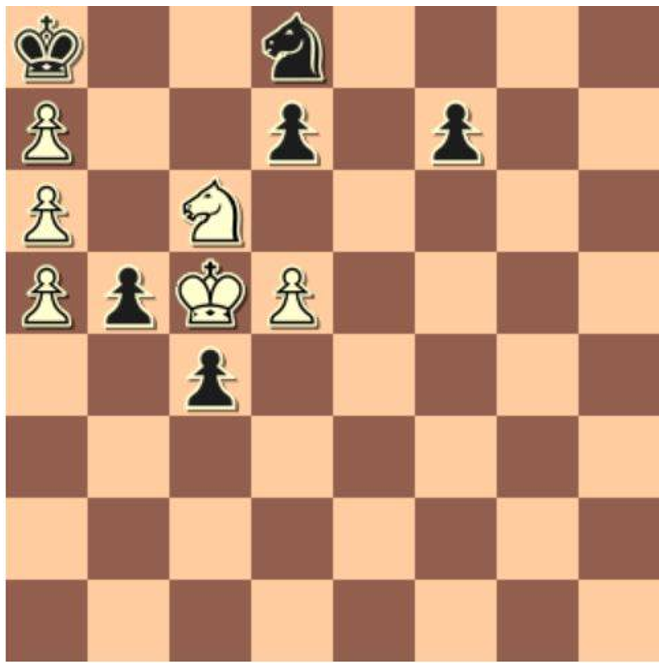
The following position is a win for white. But how?It seems like white is able to grab a knight...
Co-Design Of Scientific Experiments

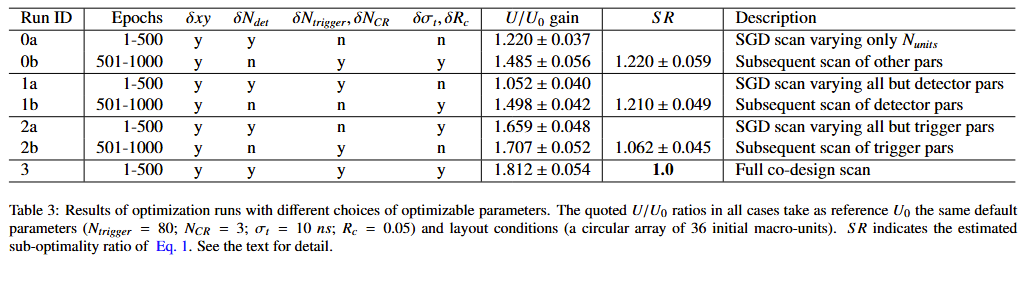
Next Monday, or Tuesday at the latest, you will find a new bulky paper in the arXiv. Titled "On...

Travel With Two Infants

The other day I traveled with Kalliopi and our two newborns to Padova from Lulea. After six full...
A Nice Little Combination

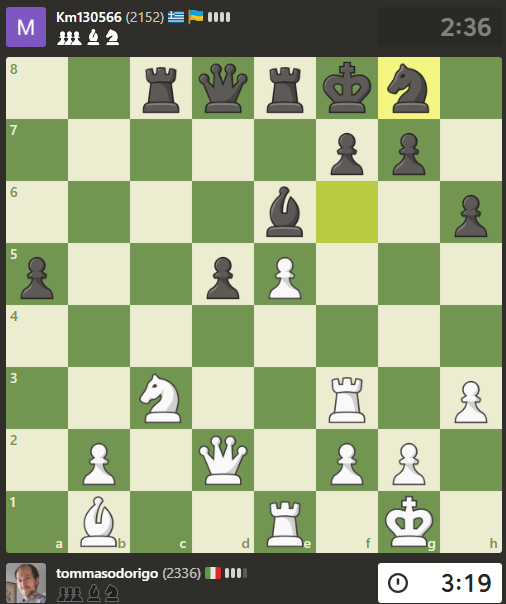
Although I have long retired from serious chess tournaments (they take too much time, a luxury...

User picture.
picture for Hank Campbellpicture for Heidi Hendersonpicture for Patrick Lockerbypicture for Bente Lilja Byepicture for Sascha Vongehrpicture for Johannes Koelman
Tommaso DorigoRSS Feed of this column.

Tommaso Dorigo is an experimental particle physicist, who works for the INFN at the University of Padova, and collaborates with the CMS and the SWGO experiments. He is the president of the Read More »

Blogroll

Particle Physics had a short fling with Numerology in its young years, but the two have never met again since then.

TD

It happens in the best families, so they say. Two experiments work 24/7 to produce an improved result on the Higgs search, and the result is disappointing, to say the least.

I am talking about the Tevatron, of course. For a little while longer, CDF and D0 will have the exclusive on Higgs boson searches. Last March, we all rejoyced when we saw that the Tevatron was starting to become sensitive to a high-mass Higgs, and indeed it excluded its existence in a range of masses between 160 and 170 GeV. We were waiting for more exclusions for the winter conferences of 2010, when more data would be used to produce improved results. Instead, no improvement, but actually, a retractatio. How is that possible ??

I recently discussed here the Tevatron results of searches for new Z bosons in electron-positron or dimuon samples collected by CDF and DZERO, pointing out that there seem to be a couple of intriguing upward fluctuations in the data. One of the dielectron fluctuations sits at a mass of 240 GeV, the other, also in the dielectron spectrum, is at about 720 GeV. Neither is compelling.
Today CNN features a short video with an interview to Professor Nielsen, the mastermind behind the whole "Higgs comes back from the future to prevent its own creation" crap.  I wrote about the matter a couple of times in the past, and will not reiterate here that I think his suggestions to pull out cards from a deck to decide whether to carry on basic research with the LHC is a unmitigated pile of you know what.
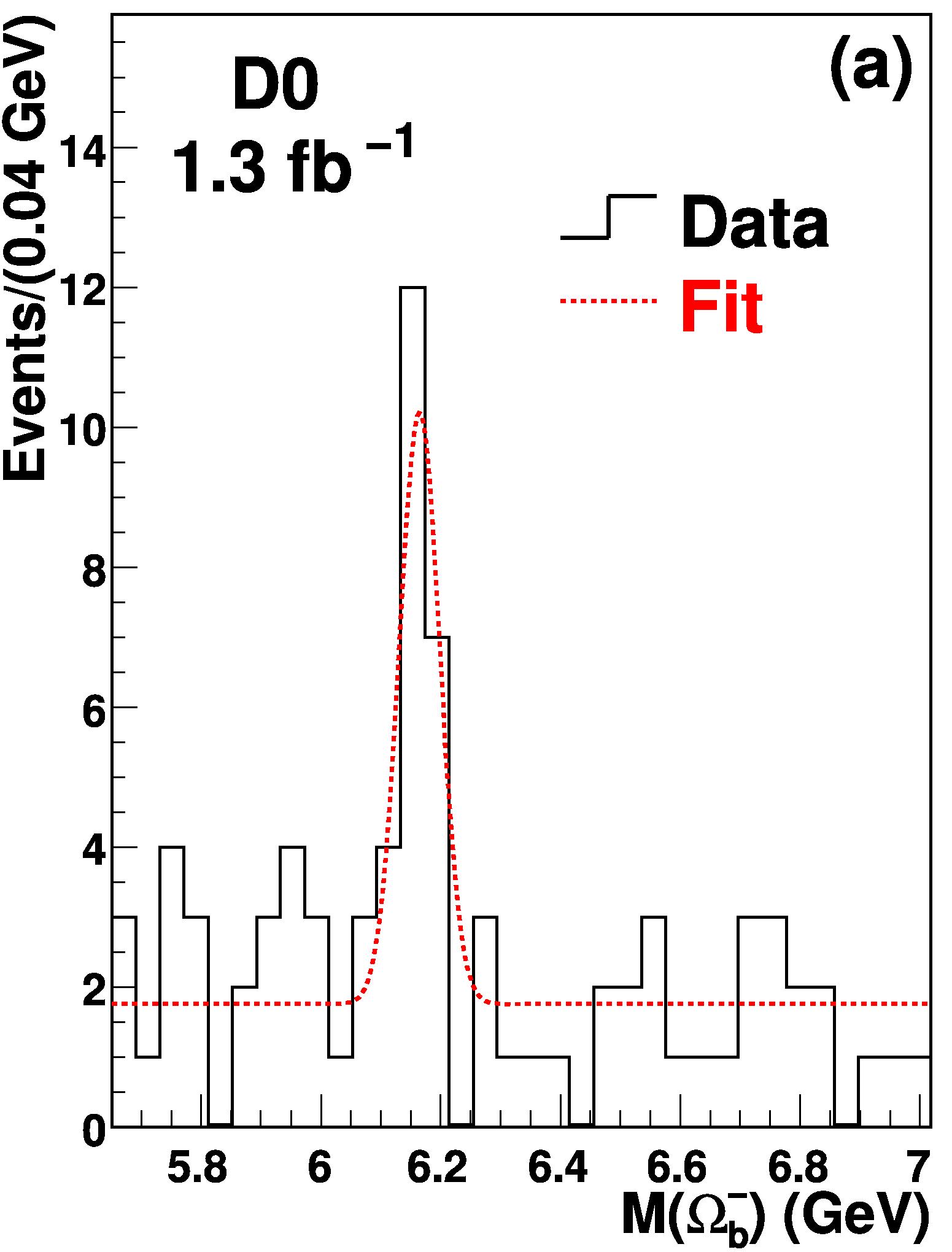
Last May the CDF collaboration published their observation of the  baryon, a particle made by a very exotic "bss" quark triplet. The CDF result came almost one year after a similar measurement was published by the competitor experiment, D0.
I wish to report here the moves of a game of chess I played on the Internet Chess Club a moment ago, against a similarly rated opponent. This was a 5' game -all your moves have to be done in five minutes, or you lose on time. Under such circumstances, games are ridden with mistakes of all kinds, oversights, strategical blunders, howlers. But sometimes, a game which can be shown with pride appears magically out of sudden inspiration. Here is such an instance.

Tonno - datigoneptraskam, ICC 2009

1.e4 c6 2.d4 d5 3.exd5 cxd5 4.c4 Nf6 5.Nc3 g6