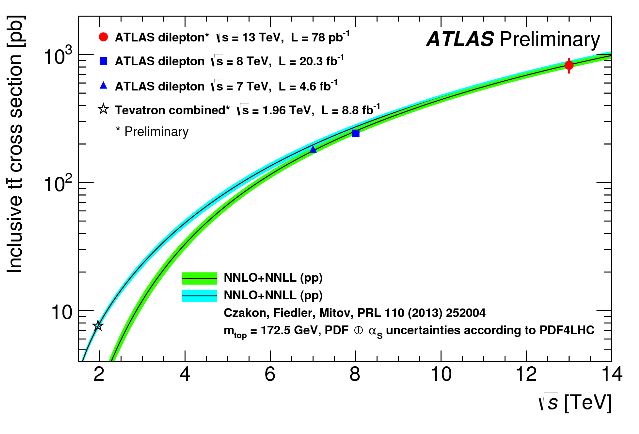
The 13 TeV data from LHC collisions taken this summer is quickly going through analysis programs and being used for new physics results, and everybody is wondering whether there are surprises in store... Of course that will require some more time to be ascertained.
For the time being, I can offer a couple of very inspiring pictures. CMS recorded a spectacular event featuring two extremely high-energy jets in the first 40 inverse picobarns of data that was collected and reconstructed by the experiment with all detector component properly working.
Are you a post-lauream student in Physics, interested in pursuing a career in particle physics, and maybe with interest in advanced machine learning applications, with an eye to a great job after your PhD ? Then this posting is for you.
Well, as some of you
may have heard, the restart of the LHC has not been as smooth as we had hoped. In a machine as complex as this the chance that something gets in the way of a well-followed schedule is quite significant. So there have been slight delays, but the important thing is that the data at 13 TeV centre-of-mass energy are coming, and the first results are being extracted from them.
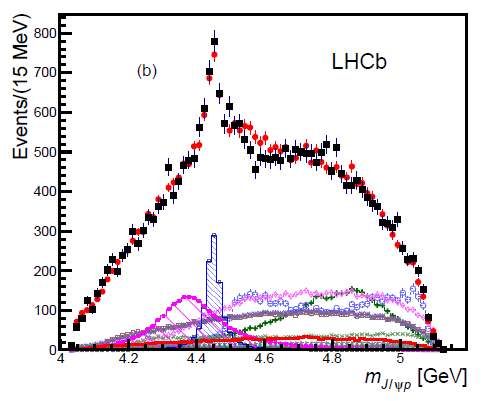
The reported observation of a resonant state of a J/psi meson and a proton in the decay of the Lambda_b baryon by the LHCb collaboration, broadcast by CERN today, is a very intriguing new piece of the puzzle of hadron spectroscopy - a topic on which many brilliant minds have spent their life in the course of the last half century.
The CERN Director General Rolf Heuer issued the following statement today, reporting the discovery of exotic pentaquark states by the LHCb collaboration:
Geneva, 14 July 2015. Today, the LHCb experiment at CERN’s Large Hadron Collider has reported the discovery of a class of particles known as pentaquarks. [...]
Working as an experimental particle physicist in a large scientific collaboration, such as the 3000-strong CMS experiment at the CERN LHC, is a (not too uncommon) privilege, for several reasons.
One of those reasons is of purely numerical kind: the number of publications that bear your name grows by the day, and may reach four-figure values in the course of a couple of decades (I am about to cross that point with my publication list, in fact). But what value do those thousand articles have for the sake of assessing your value as a scientist ? Very little, indeed, and in fact all the selection to which I have participated in my career required one to specify one's specific contribution to all the papers one wished to boast about.


 Have A Master In Science, Want A Post-Doc Position Directly?
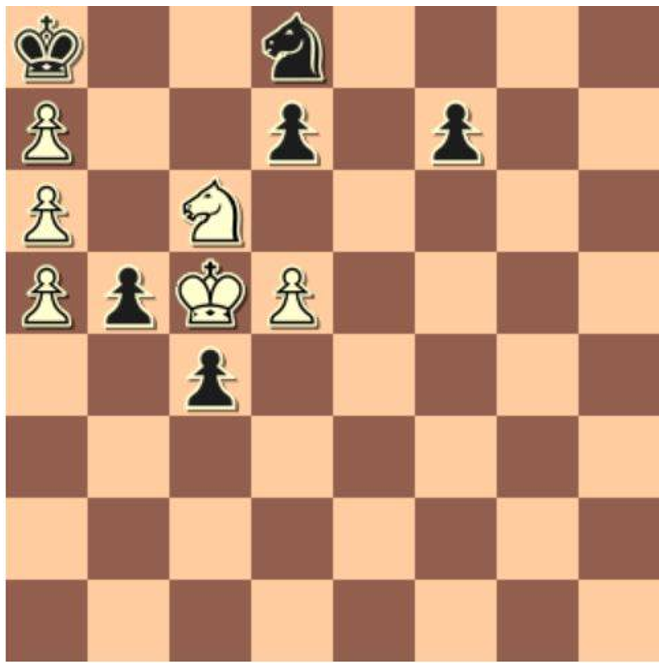 A Chess Study Requiring Backpropagation
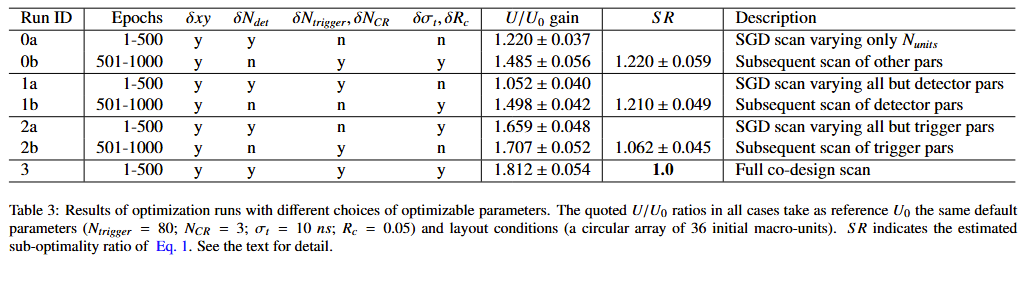 Co-Design Of Scientific Experiments
 Travel With Two Infants