Sometimes I write stuff here not because I know things, but rather, because I would like to know more, and I think the audience of this blog may help me find the material I need to become more knowledgeable on some topic. Having a blog is a privilege, in the sense that the one-to-many communication it establishes between the writer and the readers allows the owner to sometimes have access to the (all together vast) knowledge of his or her readers. Thanks to you, dear reader, to your comments, reactions, and suggestions expressed in the comments thread, I learn more on topics I do not have an expertise on. I cherish this one-to-many communcation means and I am grateful to you for it.
As yesterday in Italy was the equivalent of Labor Day, and today is a Saturday, with people around me exploiting the three-day rest for a recreational trip, I do not feel in a very productive mood, so rather than writing something original here I will exploit other people's work, pointing at what I found interesting or anyway worth my attention among the papers appeared on the Cornell Arxiv in the last few days, and other assorted material.
"La belle Hélène" is a beautiful operetta by Jacques Offenbach. Now for the first time it has been translated and performed in Greek in Athens, by a group of very talented singers under the artistic direction of Panagiotis Adam. I saw "Η Ωράια Ελένη" yesterday at the Olvio theatre in Athens, and I enjoyed it a whole lot.
The story unfolds as Eleni, the wife of Sparta's king Menelaos, lives in a world where men only concern with warfare and neglect love. As Paris, the prince of Troy, arrives disguised as a sheperd, and catches her attention. Eleni's flirt with Paris is discovered by Menelaos, but the two manage to escape together.
I am presently in Athens for a few days, to give a seminar and meet the local group of CMS physicists. So I took the chance to visit yesterday evening the Astrophysics department of the University of Athens, where at the top floor is housed a nice 40cm Cassegrain telescope (see picture below). There I joined a small crowd which professor Kosmas Gazeas entertained with views of Jupiter, the Moon, Venus, and a few other celestial targets. I need to thank my friend Nadia, a fellow physicist and amateur astronomer, for inviting us to the event.


 Have A Master In Science, Want A Post-Doc Position Directly?
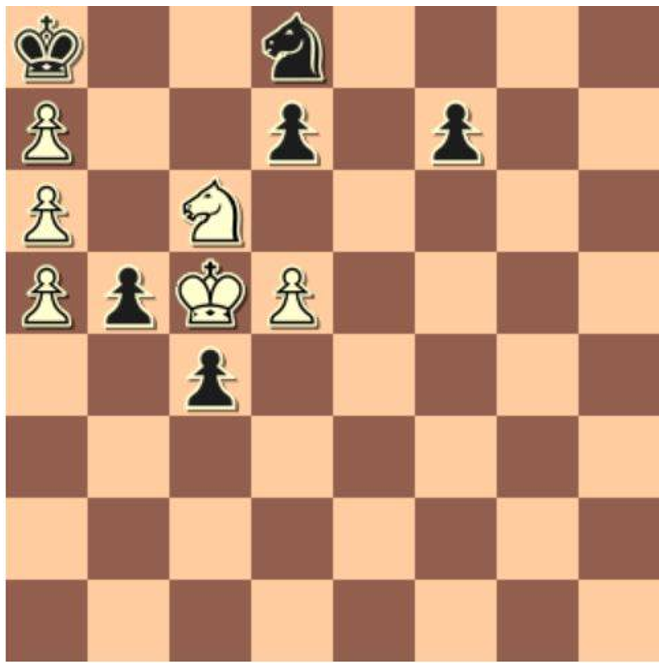 A Chess Study Requiring Backpropagation
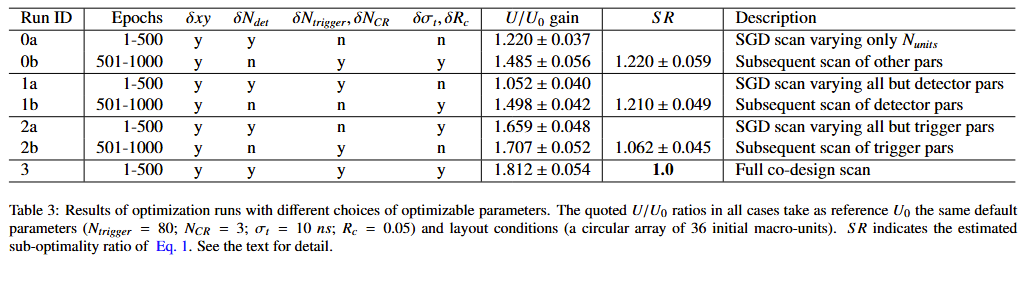 Co-Design Of Scientific Experiments
 Travel With Two Infants