When you create an energetic collision between two protons, as the Large Hadron Collider does at large rates and very high energy, the question is what is the chance that a rare process is generated. In the quantum world, everything that is possible is also mandatory - but it happens with a probability that is sometimes very hard to calculate.
Apologizing for a hiatus due to vacations, I am posting today a tentative logo of the Marie-Curie network I am coordinating, AMVA4NewPhysics. A brief explanation of the symbols at the basis of the logo is given below, in order for you to propose changes or even help by offering different ideas (and if you're a graphic designer, then maybe you consider producing a better one for us ?).
I was saddened today to hear of the death of David Cline. I do not have much to say here - I am not good with obituaries - but I do remember meeting him at a conference in Albuquerque in 2008, where we chatted on several topics, among them the history of the CDF experiment, a topic on which I had just started to write a book.
Perhaps the best I can do here as a way to remember Cline, whose contributions to particle physics can and will certainly be better described by many others (for example,
The Marie-Curie network I am coordinating, AMVA4NewPhysics, is going to start very soon, and with its start several things are going to happen. One you should not be concerned with is the arrival of the first tranche of the 2.4Meuros that the European Research Council has granted us. Something more interesting to you, if you have a degree in Physics or Statistics, is the fact that the network will soon start hiring ten skilled post-lauream researchers across Europe, with the aim of providing them with an exceptional plan of advanced training in particle physics, data analysis, statistics, machine learning, and more.
Have you ever seen Venus in full daylight ? It's a fun experience. Of course we are accustomed to see even a small crescent Moon in daylight -it is large and although of the same colour of clouds, it cannot be missed in a clear sky. But Venus is a small dot, and although it can be quite bright after the sunset or before dawn, during the day it is just a unconspicuous, tiny white dot which you never see, unless you look exactly in its direction.
In 1992 I started working at my undergraduate thesis, the search for all-hadronic top quark pairs in CDF data. The CDF experiment was just starting to collect proton-antiproton collision data with the brand-new silicon vertex detector in what was called Run 1a, which ended in 1993 and produced the data on which the first evidence claim of top quarks was based. But I was still working on the Run 0 data: 4 inverse picobarns of collisions -the very first collisions at the unprecedented energy of 1.8 TeV. And I was not alone: many analyses of those data were still in full swing.


 Have A Master In Science, Want A Post-Doc Position Directly?
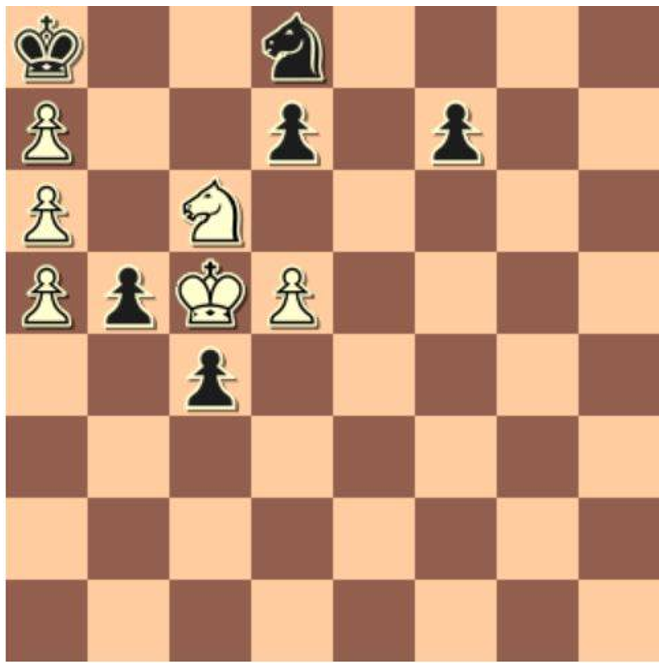 A Chess Study Requiring Backpropagation
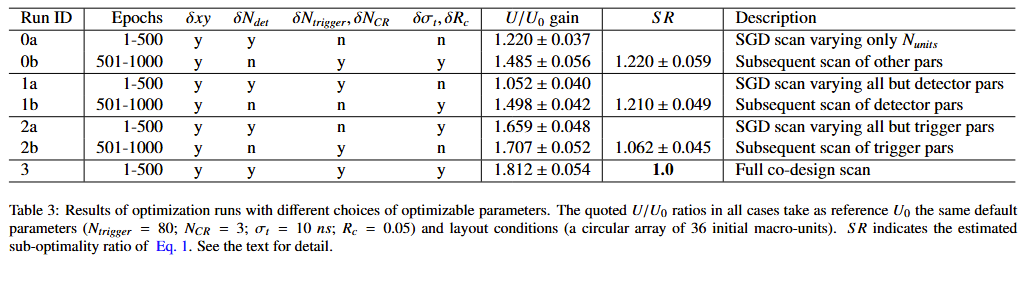 Co-Design Of Scientific Experiments
 Travel With Two Infants